How Did Celtic Allow This to Happen? Months to Prepare, Millions Available and a Threadbare Squad for LASK
Celtic had months to address obvious weaknesses, yet Martin O'Neill approaches a potentially £40million Champions League showdown with major holes still remaining in his squad.
 Phillip Cooney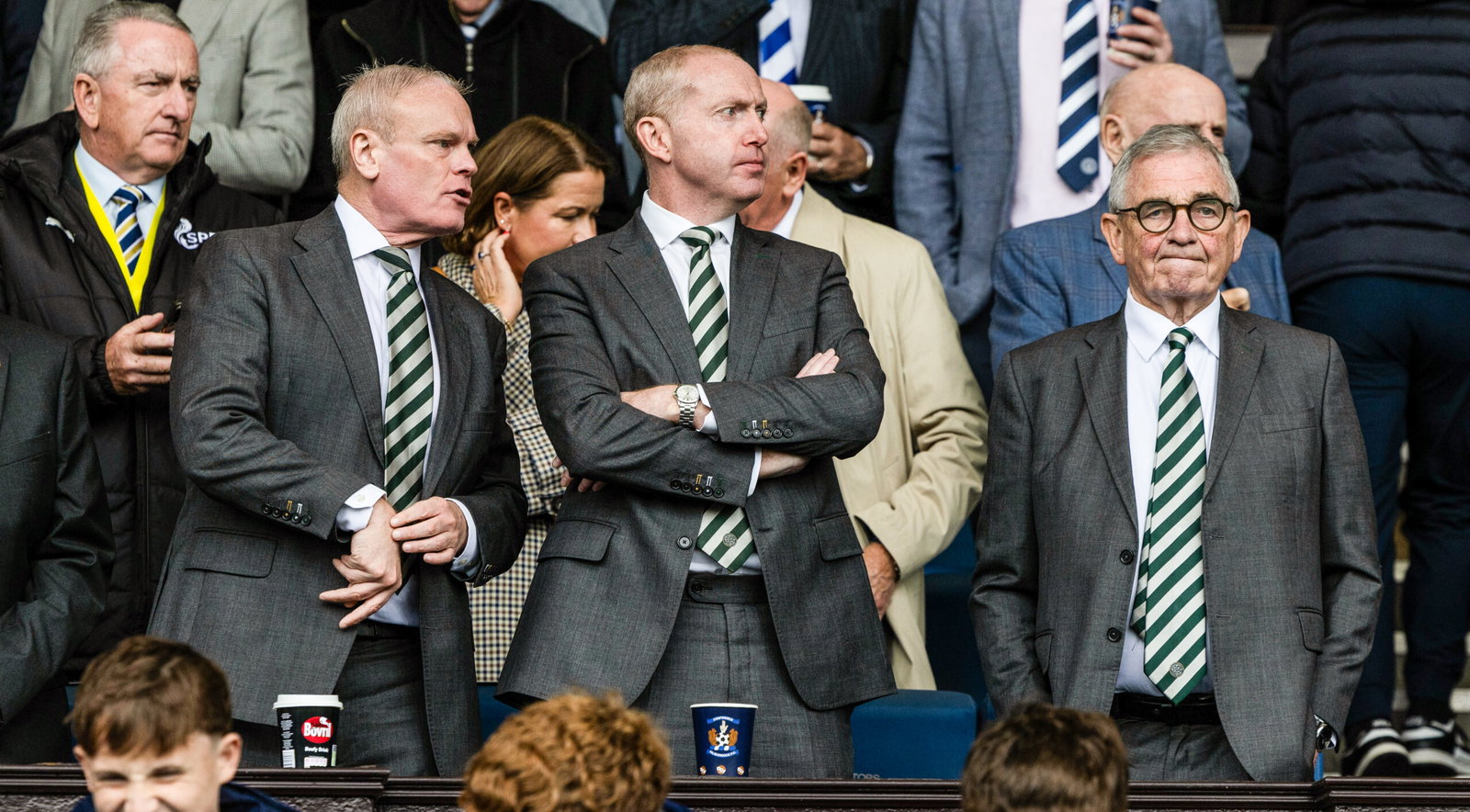
KILMARNOCK, SCOTLAND - AUGUST 09: (L-R) Celtic financial officer Chris McKay, chief executive Michael Nicholson and chairman Brian Wilson during a William Hill Premiership match between Kilmarnock and Celtic at BBSP Stadium Rugby Park, on August 09, 2026, in Kilmarnock, Scotland. (Photo by Craig Williamson/SNS Group via Getty Images)
For a few glorious days, the feel-good factor was back at Celtic.
New signings arrived, Kasper Høgh smashed in a hat-trick and supporters finally had reasons to believe momentum was building.
Then came the reality check.
Celtic face LASK tomorrow night in a huge Champions League qualifier with potentially around £40million riding on reaching the league phase.
Yet, somehow, Celtic approach it with glaring holes in a squad that the board had months to address.
That is the most infuriating part.
These problems did not suddenly appear this week. Everyone could see them coming.
Celtic board Champions League gamble was avoidable
Arne Engels has gone to West Ham for a reported £22million.
His departure cannot possibly have caught Celtic by surprise.
Nottingham Forest reportedly offered around £25million for the midfielder in January. Celtic rejected that approach, but interest at that level should have triggered succession planning immediately.
Seven months later, Engels has been sold and Celtic have reached one of their biggest games without an established replacement ready to take his place.
Alex Oxlade-Chamberlain is also suspended for the European qualifiers.
Consequently, Martin O’Neill’s midfield options have been reduced at precisely the wrong moment.
Callum McGregor and Benjamin Nygren could start, with Reo Hatate, Luke McCowan or new arrival Mika Baur competing for another position.
Baur has barely had time to settle.
How can a club with Celtic’s resources continually reach major European deadlines still scrambling for solutions?
The problems don’t end in midfield.
Alistair Johnston’s injury has weakened the right-back position, leaving Anthony Ralston and young Colby Donovan as the alternatives.
Kieran Tierney remains the only established senior specialist at left-back.
Tierney has been excellent and remains one of Celtic’s most important players. However, his injury history makes the absence of genuine cover even more difficult to understand.
The goalkeeper situation raises another question.
Celtic have known for months that Kasper Schmeichel would need replaced, yet another goalkeeper has still been on the recruitment agenda approaching this crucial European tie.
This isn’t unfortunate timing.
It is inadequate preparation.
Celtic board cannot plead poverty
Financial circumstances make the situation considerably harder to defend.
Celtic’s published interim accounts showed £67.4million in cash at 31 December 2025.
That doesn’t mean every penny is available for transfers. Football clubs have significant operating costs and financial commitments.
Nevertheless, Celtic are unquestionably operating from a position of enormous financial strength by Scottish football standards.
Reported transfer figures also suggest Celtic have generated more in player sales this window than they have spent on incoming transfer fees.
Engels alone has reportedly brought approximately £22million into the club.
Other departures have added further income.
Celtic have spent significant money on new players, and supporters were right to feel excited by those arrivals.
However, completing several transfers does not automatically constitute successful squad planning.
The question isn’t simply how many players Celtic have signed.
It’s whether the squad was properly prepared for tomorrow night.
Right now, that answer is difficult to defend.
Michael Nicholson needs to deliver, not receive applause
Michael Nicholson is Celtic’s chief executive.
Ultimately, senior executives must accept responsibility for the football operation they oversee.
Supporters shouldn’t be expected to shower executives with praise simply because transfers eventually get completed.
To borrow Roy Keane’s famous philosophy: do your job.
Celtic supporters do theirs.
They buy season tickets, merchandise and European packages. They travel across Scotland and Europe following their club.
Why, then, does Celtic’s recruitment operation repeatedly appear to be reacting rather than anticipating?
Questions also remain over the precise decision-making structure involving Nicholson and Dermot Desmond.
How much authority does Nicholson have over major transfers?
Does Desmond become involved when substantial fees are discussed?
Are potential deals slowed by an unnecessarily complicated approval process?
Without transparency from Celtic, supporters can only ask those questions rather than state the answers as fact.
What cannot be disputed is the outcome.
The squad has holes.
The money exists.
The warning signs existed months ago.
And the Champions League qualifier has arrived anyway.
Supporting Celtic Football Club does not require unconditional support for whichever directors happen to occupy the boardroom.
The club and its custodians are two different things.
Tomorrow night, Martin O’Neill and his players will be expected to deliver.
If they overcome LASK, everyone connected with Celtic will celebrate.
But qualification should not suddenly rewrite what happened beforehand.
Celtic should never have been left this vulnerable.
If this gamble eventually costs the club Champions League football and tens of millions in revenue, accountability cannot simply be pushed towards the manager or players.
This time, the questions must go straight upstairs.
Key Takeaways
- Celtic approach the LASK qualifier with several important areas of the squad still lacking established cover.
- Arne Engels’ departure was foreseeable after significant interest emerged months earlier.
- Celtic’s published accounts showed £67.4million in cash at the end of December 2025.
- The issue is not simply spending money. It is having the right players available before the biggest games arrive.
- Michael Nicholson and Celtic’s board must ultimately answer questions about recruitment planning.
- Supporting Celtic Football Club does not mean supporters must automatically defend the people running it.
- Failure against LASK would intensify scrutiny of a Champions League gamble that was entirely avoidable.