
The SFA chickens out of enforcing McInnes’ touchline ban for the League Cup tie against Celtic. No shocks there…
 Eric Knott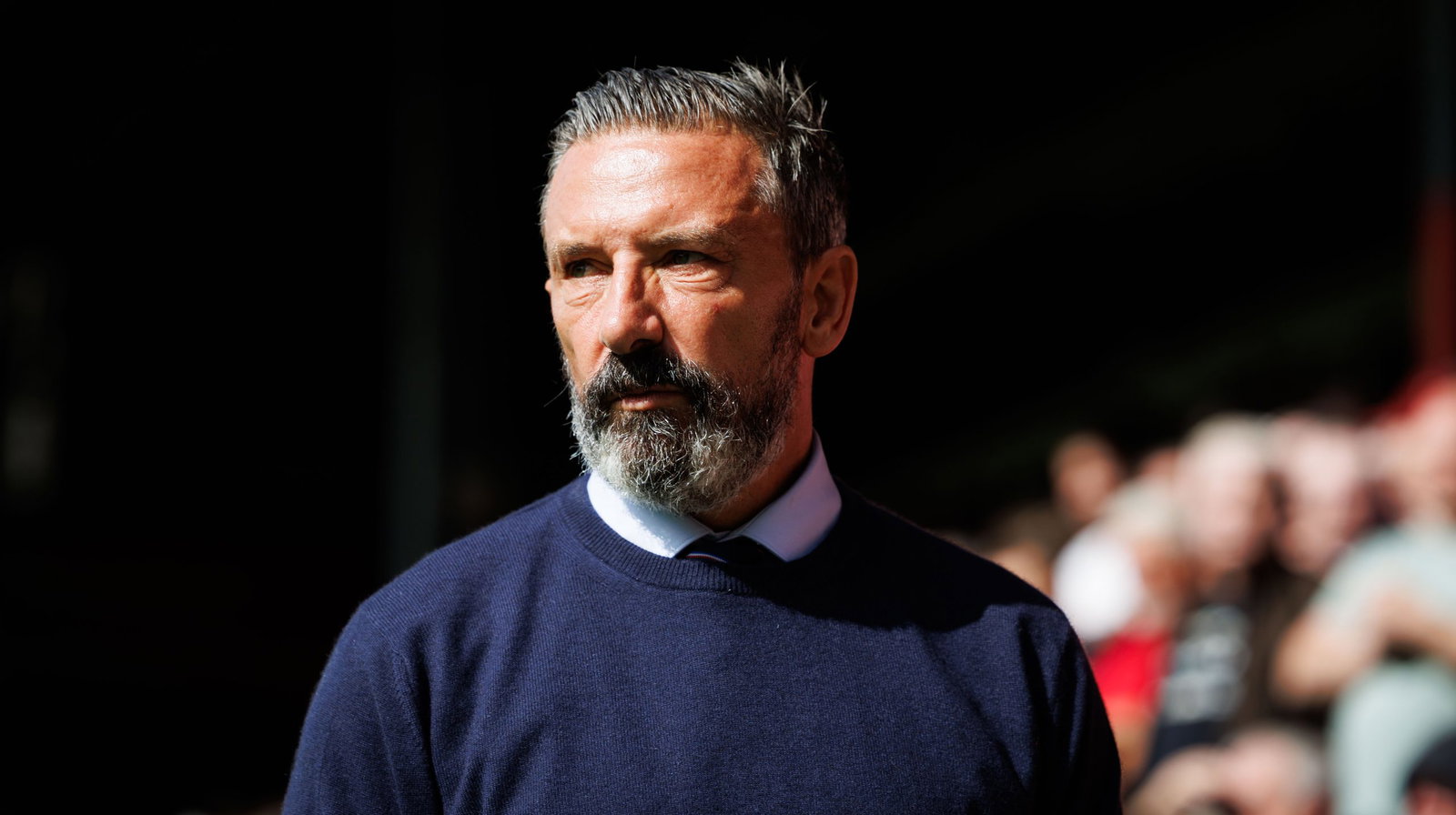
ABERDEEN, SCOTLAND - AUGUST 30: Rangers manager Derek McInnes during a William Hill Premiership match between Aberdeen and Rangers at Pittodrie Stadium, on August 30, 2026, in Aberdeen, Scotland. (Photo by Ross Parker/SNS Group via Getty Images)
Yesterday, the SFA quietly got round to telling us what they’d decided about Derek McInnes and his four game touchline ban, and the Record had the outcome up before most of us had finished our tea.
Partially upheld, apparently.
Two matches immediate, two matches suspended until the end of season 2026/27.
And wouldn’t you know it – he’ll be sat in the Ibrox dugout for the Premier Sports Cup quarter final against us.
Of course he will.
Because that’s how this always goes, isn’t it?
Let’s remind ourselves what he was actually cited for.
McInnes, then of Hearts, described the decision to award Celtic a late penalty at Fir Park as “disgusting.”
Not a slip of the tongue in a tunnel somewhere.
A manager on camera calling an officiating decision disgusting, which under Disciplinary Rule 72 is precisely the thing you get done for.
The blazers handed him four games back in July, with one suspended.
Then Ibrox appealed immediately, which conveniently left him free to start the season in the dugout.
And now, six weeks later, the punishment has been trimmed again.
Every single stage of this process has moved in one direction, and it isn’t the direction that inconveniences the Ibrox side.
That’s not a conspiracy theory.
That’s just reading the timeline.
He was charged in July and he has missed nothing.
He beat Aberdeen 1-0 at the weekend through a Lawrence Shankland penalty, from the dugout, with a live ban hanging over him.
Now he sits out Wednesday at Falkirk and the home game with Motherwell on Saturday.
Two games against Falkirk and Motherwell.
Riveting stuff.
Is that what passes for a deterrent at Hampden these days?
Then he’s free again, in time for the only fixture where his presence on that touchline actually means anything.
Here’s the bit that really tells you everything, and it’s in the appeal ruling itself:
Appeal Partially Upheld. The original sanction is replaced with the following:
Four match suspension to be applied as follows: Two matches immediate and two matches suspended until the end of season 2026/27, applicable only should Derek McInnes further breach Disciplinary Rule 72 within this period.
Read that last line again.
The remaining two games only ever apply if he does it all over again.
So in reality, this isn’t a four match ban at all.
It’s a two match ban with a warning stapled to it.
And what exactly is a warning worth to a man who has already worked out that appealing gets you halfway there?
The SFA had one chance to show that a punishment means something, and they folded before anybody even raised their voice.
And the truly galling part?
Even the original sanction wouldn’t have kept him out of the cup tie.
Not one version of this punishment, at any stage, was ever going to cost him the Celtic game.
Then you look at the fixture list and it gets funnier.
The home match with St Mirren was originally down for Sunday 22 August.
It has been moved to next Wednesday.
Which means the suspension gets burned off nicely and neatly before we come calling on cup business.
Funny how these things always seem to fall the right way for the club at Ibrox, isn’t it?
Now, I’m not going to sit here and claim the SFA personally rearranged that fixture.
Clubs move games for all sorts of reasons and Ibrox will have their own.
But the governing body signs these things off.
They see the calendar.
They knew exactly what the effect would be, and they nodded it through anyway.
Try to picture Brendan Rodgers or Martin O’Neill calling an SFA decision “disgusting” and serving his ban against Falkirk and Motherwell.
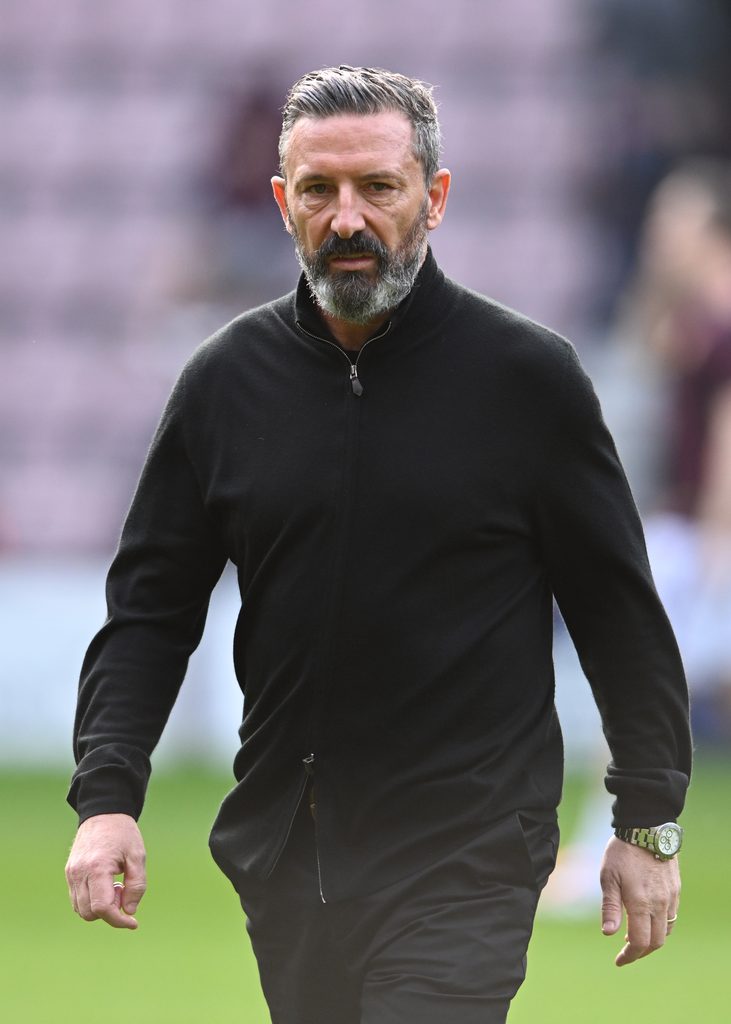
Derek McInnes Manager of Hearts during the Hearts vs Dundee Scottish Premiership match at Tynecastle Park, Edinburgh. Picture credit should read: Neil Hanna / Sportimage
You can’t, can you?
We’d have had a fortnight of Keevins, a fortnight of Tom English, and a ban that landed square on the derby.
The pundits’ panel would have been wheeled out.
There’d have been columns about respect for officials and the example set to grassroots football.
We’d never have heard the end of it.
Instead, this one has been dealt with in a paragraph and a half, and the SMSM have gone straight back to talking about that penalty at Fir Park.
Which, let’s not forget, is the decision that started this whole thing.
Andrew Dallas on VAR, John Beaton in the middle, Sam Nicholson judged to have handled it.
Kelechi Iheanacho scored, we went to Parkhead needing a win, and Callum Osmand made it 3-1 with the last kick of the season.
Four months on and a manager who wasn’t even at Ibrox at the time is still being processed for complaining about it.
And even that has been watered down.
I’ll give McInnes this much – he didn’t award himself the appeal.
He said his piece, his club lodged the paperwork, and the governing body did what the governing body always does.
The gutlessness is not his.
It belongs entirely to the people at Hampden who had a rule, applied it, and then couldn’t hold their nerve for six weeks.
Because that’s what this is.
Not corruption, not brown envelopes, just a total absence of spine whenever the Ibrox side is on the other side of the desk.
We all know how it works by now.
The rules exist.
They’re just applied with a wee bit more flexibility depending on who’s in the dock.
So McInnes will be in his dugout for the quarter final, roaring at the fourth official, and nobody at Hampden will lose a minute’s sleep over it.
No shocks there.
Key Takeaways
- Derek McInnes received a four-game touchline ban, but SFA partially upheld his appeal, allowing him to sit in the dugout for key matches.
- The suspension includes two immediate games and two more that are only applicable if he breaches rules again.
- Critics argue that the SFA’s handling of the ban lacks consistencies and serves to benefit Ibrox, undermining the disciplinary process.
- McInnes’s ban does not prevent him from coaching during significant fixtures, raising questions about the fairness of the decision.
- The situation highlights a perceived bias in SFA rulings, with calls for more rigorous application of discipline in football.
Choose Read Celtic as a ‘Preferred Source’ on Google News for quick access to the news you value.


Over at the daily Record there’s Inaction ..wee Scotty ..big Andy ..Gav the deputy…and Frase from the print section all high fiving each other texting ‘attaboys ‘ to each one after the news that the SFA capitulated on theRangers appeal to the McInnes touchline ban …by generously and sympathetically reducing Del Billy Boys’ slap on the wrist punishment ? Naturally ! There even was the biggest Cheshire Cat grin on the ticket who read out the BBC Scottish version of news’ autocue on the 6.30 Reporting Scotland football section last night telling us about the reduction of punishmt . Like a great news on a miserable wet Monday piece from the national broadcaster ..using our money for the privilege !
Nothing unusual there then, it’s the same with the playing behind close doors were servco are responsible for security and policing yet we get handed a behind close doors ban and fine for something that has everything to do with service failures, we should appeal everything in my opinion.
The SFA? Sevco Football Association
It’s not our board penny pinching or panic buying they have learned a lot in four transfer windows givedus looks like signing from Torino For £9,000,000 so that was our top target divaney has was a good deal loan to buy But now we have the player chasing all transfer window sold Reo had one good season but was always wanting to move not the player he was kenny found it hard to play in front of a big support win or nothing he will be better with a club where a draw is a good result theres no place for hiding at Celtic park board have taking abuse hate that word its mostly cause we don’t hear nothing from them share holders meeting was a shambles anarchists ruined it and desmonds boy made it worse anarchists for some reason have got into Celtic support just at the curve where they cost trouble bullying a security man and two police woman cause they were in a place where there ticket was for somewhere else so the could get there banner hamas next to curve not in it but people think it yes Lebanon people are having it bad but to fly that flag that does more bad than good in there country ive noticed this season not seen it I hope supporters relise they are getting used by people not many but organised football is what Celtic is about leave political banners out we are where we are but the board has done great remember we are in a league that needs us but hates everything we believe in cutting our ticket allocation because they following one establishment and leaving there ground three quarters full at best the Rangers are the only ones that can one thing I loved away games on your supporters bus