CELTIC VAR SCANDAL: Four Goal Controversies in 11 Days — So Where Is the Outrage Now?
Three Celtic goals have been disallowed and another was wrongly flagged before VAR rescued it. Four major goal controversies in 11 days — yet where is the outrage now?
 Phillip Cooney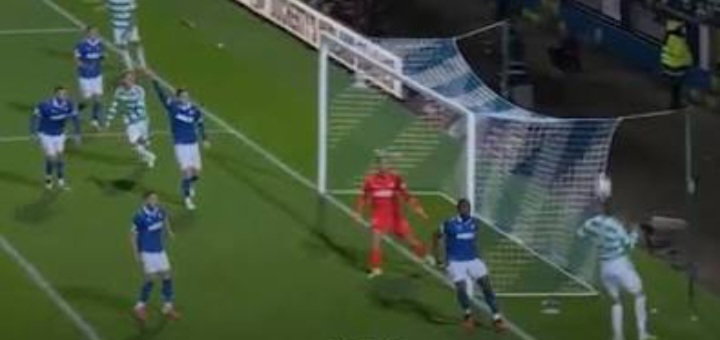
The Celtic VAR scandal is no longer about one marginal call or one unfortunate afternoon.
In just 11 days, Celtic have been involved in four major goal controversies. Three goals have ultimately been disallowed, while another was initially ruled out before VAR corrected an assistant referee’s mistake.
That sequence deserves far more scrutiny than it is receiving.
Against Falkirk, Camilo Durán scored after Scott Bain lost control outside his goal. The assistant referee raised the flag for offside.
VAR checked the decision and awarded the goal.
The important point is simple: the original call was wrong.
In tight offside situations, assistants are instructed to delay the flag when there is an immediate goalscoring opportunity. On this occasion, VAR prevented Celtic from losing a legitimate goal.
Then came Paisley.
Celtic VAR scandal raises serious questions
Against St Mirren, Durán had an equaliser ruled out after an extremely tight VAR offside review.
The decision immediately raised questions about the evidence available and the frame used to determine when the ball was played.
Later, Shim Mheuka thought he had scored another Celtic goal.
However, the usual virtual offside-line technology could not provide the normal calibrated lines.
The goal was still overturned.
That is where the questions become impossible to ignore.
The SPFL VAR protocol states that when virtual offside lines cannot be used, VAR should intervene only when there has been a clear and obvious error.
Otherwise, the original decision should stand.
If the technology cannot provide factual offside evidence, Celtic supporters are perfectly entitled to ask what evidence existed to make the decision clear and obvious enough to remove a goal.
Four days later, another Celtic goal disappeared.
Haissem Hassan scored against St Johnstone after Kasper Høgh headed Sebastian Tounekti’s cross back across goal.
The assistant ruled that the ball had already crossed the byline.
VAR then could not conclusively establish whether the ball had gone out because the ball disappeared from the available camera frame at the crucial moment.
Think about that.
Scottish football is using video technology to determine whether goals worth points, trophies and potentially millions of pounds should stand, yet the system could not even keep the football in the picture.
The original decision therefore survived because VAR could not prove the assistant wrong.
Even Kris Boyd believed the ball had stayed in play, while Chris Sutton was left baffled by the decision.
To be accurate, this was different from the delayed offside flag against Falkirk. An assistant who believes the ball has crossed the line is entitled to signal.
But that exposes another problem entirely.
VAR did not have the camera coverage required to establish what actually happened.
Celtic VAR scandal: where is Scotland’s outrage now?
Now compare this with Celtic’s controversial late penalty against Motherwell last season.
That decision became a national football story almost instantly.
Derek McInnes called it “disgusting” and claimed Hearts were “up against everybody”.
Pundits, broadcasters and newspapers dissected the incident repeatedly. Gary Lineker even described it as potentially one of the worst VAR decisions he had seen.
There was nothing wrong with that scrutiny.
Controversial decisions should be scrutinised.
So where is that same forensic examination now?
Where are the demands for answers?
Where is the outrage?
This is not an argument that every decision against Celtic proves bias. It does not.
It is an argument about consistency, technology and standards.
In little more than a week, Celtic have had one incorrect offside flag rescued by VAR, two goals removed against St Mirren amid serious questions over the available offside evidence, and another goal disallowed when VAR could not even keep the ball in frame.
That simply is not good enough.
Scottish football cannot sell VAR as a system designed to provide certainty while repeatedly producing uncertainty.
If officials are removing goals, the evidence must be convincing.
If the technology cannot supply that evidence, Scottish football has a VAR system that is simply not fit for the enormous responsibility it has been given.
And if Scottish football demanded a forensic inquest when Celtic benefited from one controversial decision, it should demand exactly the same standards when Celtic are on the receiving end.