
Martin O’Neill Got Celtic’s Biggest Calls Horribly Wrong — But This Board Built the Disaster
Martin O’Neill made major selection mistakes at Ibrox, but Celtic’s disastrous afternoon also exposed a football structure that increasingly looks stuck in another era.
 Phillip Cooney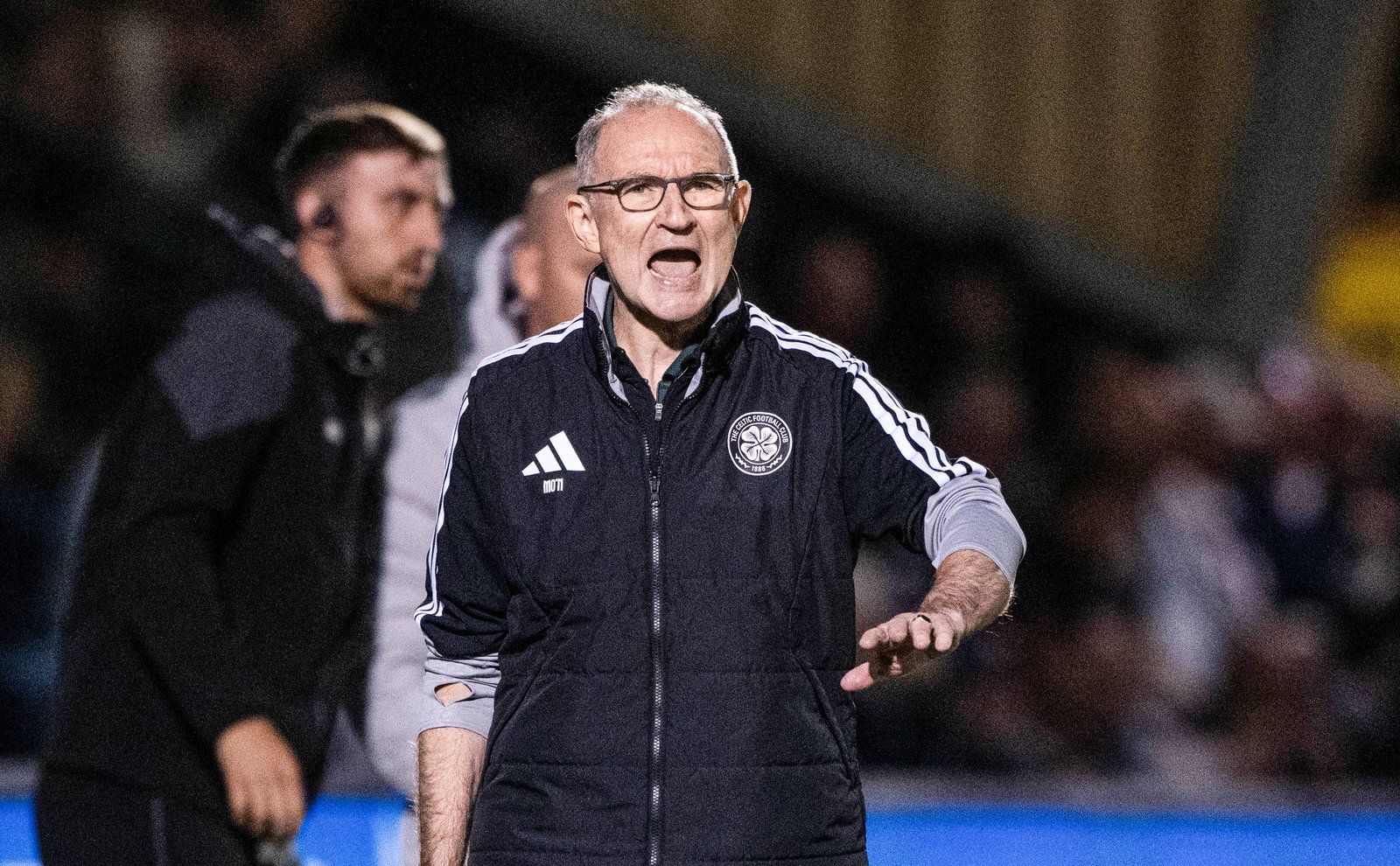
PAISLEY, SCOTLAND - SEPTEMBER 05: Celtic Manager Martin O'Neill during a William Hill Premiership match between St Mirren and Celtic at The Marbill Coaches Stadium, on September 05, 2026, in Paisley, Scotland. (Photo by Paul Devlin/SNS Group via Getty Images)
Martin O’Neill Got Celtic’s Biggest Calls Horribly Wrong — But This Board Built the Disaster
Martin O’Neill’s Celtic team selection at Ibrox was indefensible.
Rangers deserved their 3-0 victory. Celtic were comprehensively outplayed, bullied and tactically beaten.
This time, much of the responsibility belongs to O’Neill.
Sam Johnstone was handed arguably Celtic’s biggest domestic game after making one competitive appearance for the club.
Johnstone had played well against St Johnstone four days earlier, but Ibrox was his second Celtic appearance. Meanwhile, Viljami Sinisalo had already kept four clean sheets in eight games.
Why change goalkeeper for that game?
Then there was Sebastian Tounekti.
Martin O’Neill’s Celtic team selection backfired spectacularly
Tounekti had struggled badly at McDiarmid Park. BBC analysis noted he lost possession 23 times.
Yet O’Neill started him at Ibrox.
Dujon Sterling dominated him and Tounekti was removed at half-time.
Haissem Hassan replaced him. Afterwards, O’Neill revealed Hassan had suffered an overnight problem and had not got much sleep.
That may explain the decision medically or physically, but it does not make the wider selection convincing.
Celtic went into Ibrox looking like a team being experimented with rather than one selected to win a cup quarter-final.
O’Neill himself admitted Celtic were “well beaten”.
He was right.
This defeat belongs heavily to the manager.
Martin O’Neill’s Celtic problems start above him
However, nobody inside Celtic’s boardroom gets to hide behind him.
This squad is the product of a football operation that has looked increasingly stale and reactive.
Dermot Desmond remains Celtic’s dominant shareholder. Brian Wilson is interim chairman. Michael Nicholson and Chris McKay occupy two of the most powerful executive positions.
Yet Celtic continue to operate like a club whose structures belong to another era.
A modern football institution should be aggressive, specialised and relentlessly forward-looking.
Celtic too often appear cautious, comfortable and painfully slow.
O’Neill knew the squad had weaknesses. He publicly admitted Celtic were “well short” only days ago.
That was when he needed to lay down the law.
If he required more quality, he should have made that position impossible for the board to ignore.
Because managers eventually carry the consequences.
Boards survive.
When results collapse, directors do not walk onto the pitch and face 60,000 angry supporters.
The manager does.
The Celtic hierarchy will happily allow O’Neill to absorb every punch if this deteriorates.
Sunday’s selection was his mistake.
But the environment that produced this mess has been years in the making.
Celtic need more than another reaction to one humiliating defeat.
They need a football operation fit for the modern game.



It could get really pure pure fu**in ugly for Lucan and Sly McKay on Sunday…
For obvious reasons I pray it doesn’t !