
Celtic’s £143m Football Structure Exposed: Why Are a Lawyer and Billionaire Making the Big Decisions?
Celtic possess enormous financial strength but still lack the coherent football department Martin O’Neill should have around him.
 Phillip Cooney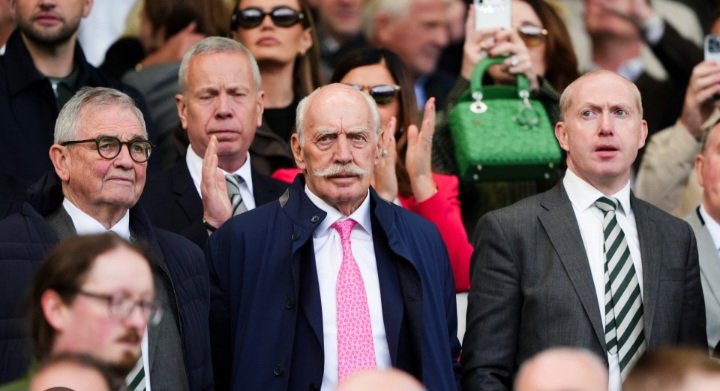
Celtic’s football structure is dysfunctional.
There is no permanent sporting director, no publicly identified Head of Football Operations and no obvious senior specialist accountable for recruitment, scouting, succession planning, data or the club’s long-term football identity.
Instead, major football decisions appear to lead back to Michael Nicholson and Dermot Desmond.
Nicholson is an accomplished sports lawyer. Before joining Celtic, he spent 11 years as a partner at Harper Macleod. Desmond is an enormously successful businessman and investor.
Neither man, however, possesses an elite record in coaching, scouting, recruitment, performance science or constructing a modern football department.
Business intelligence? Certainly.
Legal intelligence? Absolutely.
But where is Celtic’s independent football intelligence?
Celtic are leaving Martin O’Neill exposed
Martin O’Neill has Shaun Maloney, Mark Fotheringham, Stephen McManus and Stevie Woods providing coaching assistance.
However, coaching support is not the same as a coherent Celtic football structure.
Gavin Strachan left for West Bromwich Albion during the summer after six years at Celtic. No direct replacement was publicly announced.
Paul Tisdale departed as Head of Football Operations in January. No permanent successor has been named.
Who is leading recruitment? Who is planning for future transfer windows? Who is overseeing analytics, sports science, player development and managerial succession?
O’Neill previously admitted: “There are only so many calls I can make in a day.”
That statement should have humiliated the Celtic board into immediate action.
A manager in his seventies should not be operating as Celtic’s emergency recruitment network while the club holds tens of millions in cash. He should be coaching the team.
A properly qualified sporting director and recruitment department should be building it.
Smaller clubs have superior departments
Bodø/Glimt publicly list around 25 employees within their men’s first-team operation. That includes a sporting administrator, several coaches, three physical-performance specialists, two scouts and extensive medical support.
This is a club from a Norwegian city with a population of roughly 50,000, playing in a stadium holding around 8,000 supporters.
Yet their football department appears more coherent than Celtic’s.
PSV employ a Director of Football Affairs and a Manager of Football Vision. Their structure also includes sports science, performance, nutrition, analysis and player-support specialists.
Feyenoord list a dedicated set-piece coach, two video analysts, two data and innovation analysts, a Head of Medical and Performance and several performance specialists.
Anderlecht have a Performance Director, performance-data analyst, strength-and-conditioning coach and three video analysts.
These clubs distribute responsibility among qualified specialists. Celtic concentrate power at the top and apparently expect the manager to compensate for everything missing underneath.
Celtic’s hierarchy protects itself
Dominic McKay arrived in 2021 promising a structure capable of carrying Celtic through the next decade. He lasted only 72 days.
Celtic said McKay departed for personal reasons, and any alternative explanation remains unproven. Nevertheless, the promised modernisation disappeared with him.
Dermot Desmond is Celtic’s largest shareholder, not its owner. Yet his influence over major appointments and football decisions appears extraordinary.
Why should Celtic’s football future depend so heavily upon the judgement of a billionaire investor and a sports lawyer? Why is there no authoritative sporting director with the independence, experience and expertise to challenge decisions?
This is not an attack on Nicholson’s legal ability or Desmond’s business success. It is an attack on a hierarchy seemingly incapable of recognising that those qualities are not substitutes for elite football expertise.
Celtic generated £143.6 million in revenue and held £77.3 million in cash. The club can afford an outstanding sporting director, a modern scouting network and specialist departments comparable with PSV and Feyenoord.
Bodø/Glimt achieved it with considerably fewer natural advantages.
Celtic’s problem is not poverty.
It is control, complacency and a refusal to construct a football department worthy of the club.
Key Takeaways
- Celtic have no publicly identified permanent sporting director or Head of Football Operations.
- Michael Nicholson is an experienced sports lawyer, not an established football strategist.
- Martin O’Neill lacks the complete specialist structure enjoyed by comparable European managers.
- Bodø/Glimt operate an extensive first-team department despite having fewer financial advantages.
- PSV, Feyenoord and Anderlecht divide responsibilities among football specialists.
- Celtic possess the money to modernise but continue concentrating authority at boardroom level.

Never hated anyone as much as theese two i wish they would just fuck off and never be seen again it’s only a matter of time till someone takes their frustration out on theese cunts and I wish them good luck and don’t get caught
Fucking Football Cronyism & nepotism along with severe shameful incompetence & an unwillingness 2 delegate power for the good of the club & happiness & pride for/to the fans.
DD & his Mock Boardroom are a laughing stock & a CLOWN CAR SHOW
That would involve moving ahead of The Rangers*…….