
Celtic Could Make £40 Million On An Academy Player. So Why Can’t We Give Our Youngsters an Education?
 Aodhán Ó Conchobhair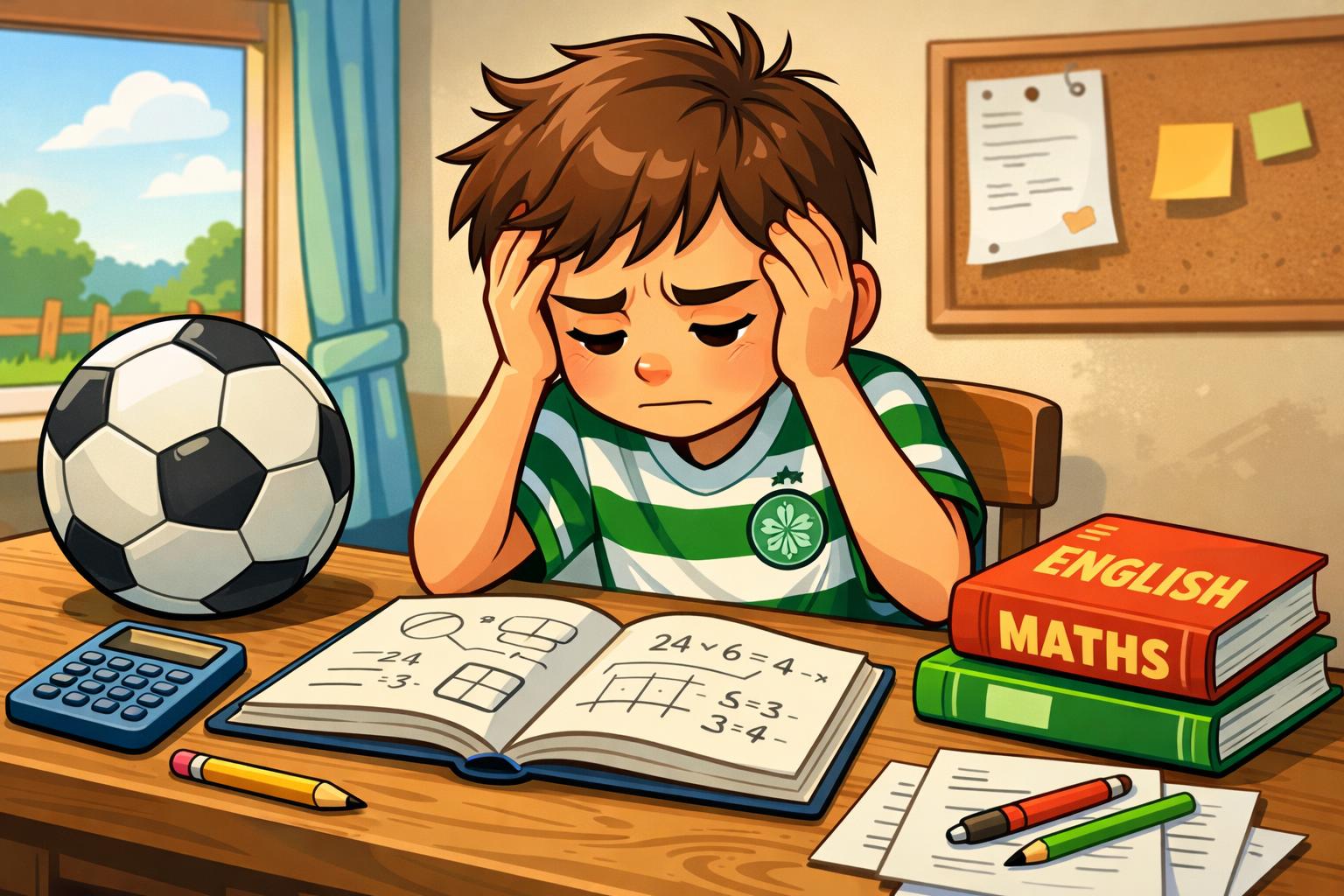
Auto Draft
There is something seriously wrong with football when we ask 16 and 17-year-olds to make decisions that could define the rest of their lives, yet do so little to prepare them for the possibility that football might not work out.
At Celtic, we talk constantly about developing talent. We invest in training facilities, coaches, recruitment networks and the search for the next star. We can spend millions trying to find a player who might help us in the Champions League.
But what happens to the boy who doesn’t make it?
What happens to the teenager who turns down further education because he believes his future is in football, only to find himself released at 19 or 20 with no professional contract, no qualifications and no clear idea what comes next?
That is the question Celtic should be asking themselves.
Because further education should not be mutually exclusive with becoming a footballer.
The £40 million question
Football is a ruthless business. For every young player who makes it to the top, there are countless others who spend years working towards the same dream before discovering that professional football isn’t going to be their career.
Even the most talented youngsters can suffer serious injuries. Some stop developing physically. Others simply don’t get the opportunities they need. Sometimes a club decides they aren’t good enough, and that’s that.
We can talk about determination, mentality and hard work all we want, but none of those things guarantees a professional career.
Yet we ask boys of 16 and 17 to make enormous sacrifices in pursuit of that dream.
They might turn down university offers. They might abandon qualifications. They might put everything into football because they believe they have a genuine chance of making it at Celtic.
And who can blame them? When you’re that age, the prospect of playing for your boyhood club is difficult to turn down.
But surely the responsibility of a football club is to protect these young people as well as develop them as players.
If Celtic can invest millions in the hope that one signing might become a £40 million footballer capable of starring in the Champions League, we should be able to invest in making sure our academy players have a future if football doesn’t work out.
This isn’t about discouraging ambition.
It’s about making sure ambition doesn’t come at the expense of everything else.
Jim Craig showed it can be done
We don’t even need to look far for examples of footballers who managed to combine education with the game.
Jim Craig, one of the Lisbon Lions, studied dentistry at the University of Glasgow while playing for Celtic. He initially joined the club as an amateur so he could continue his studies, eventually turning professional while still completing his degree. He went on to make 231 appearances for Celtic and help us win the European Cup in 1967.
My gran worked with Jim Craig, which makes his story particularly interesting to me. Here was a man who reached the pinnacle of European football while building a professional career beyond the game.
He didn’t have to choose between being a footballer and having a future outside football.
Then there’s Sócrates, the legendary Brazilian midfielder who qualified as a doctor. His father had insisted that he should not sacrifice his education for football, ensuring he had a qualification he could use if the game didn’t work out.
Think about that for a moment.
One of the most gifted footballers of his generation understood that there was more to life than what happened on a football pitch.
These examples aren’t proof that every young player can complete a demanding degree while training full-time. Modern football is incredibly intensive, and some courses require commitments that simply won’t fit around an elite academy schedule.
But they demonstrate the principle: being a talented footballer does not mean you should be expected to abandon your education.
And Celtic should be doing more to make that possible.
Sean Daly’s Story
I remember my dad telling me about Sean Daly, who played for Motherwell youth and was a good footballer.
Daly had the opportunity to study dentistry at Dundee University, and he took it. The reason was simple: there was nothing for players to fall back on if football didn’t work out.
That decision says a lot about the reality young footballers face.
Even someone good enough to play at a high level has to think about what happens when the football stops. A career can end through injury, circumstances can change, and not every player gets the chance to earn enough money to retire comfortably.
The point isn’t that every young player should choose dentistry. Nor is it that football should become secondary to education for somebody with a genuine chance of making it.
It’s that they should have options.
We are asking 16- and 17-year-olds to make life-defining decisions at precisely the age when they have the least experience of the world. They are being asked to bet on their own potential, often without any realistic guarantee that they will ever get near the Celtic first team.
And for every youngster who breaks through, others will be released.
What happens to them?
Celtic should not simply shrug their shoulders and say that professional football is competitive. Everyone understands that. The club knows better than anyone that academy football is about identifying the small percentage who will make it.
That makes the responsibility to the others even greater.
If we know that most academy players will not become established first-team footballers, why aren’t we doing everything possible to prepare them for another career?
A partnership with Glasgow or Strathclyde
This is where Celtic could take a genuinely progressive step.
Why not establish a formal education partnership with the University of Glasgow or the University of Strathclyde, allowing academy players to pursue qualifications alongside their football development?
It wouldn’t have to mean every player enrolling on a full-time degree. There could be flexible learning options, part-time study, foundation courses and recognised qualifications that fit around training and match schedules.
The important thing is that they have the opportunity to explore interests without being made to feel that doing so means they aren’t committed to becoming professional footballers.
Why shouldn’t a young player have an individual development plan that covers not only his footballing targets but also his educational progress and future career options?
And why shouldn’t every player approaching the age where contracts and career decisions become serious have access to proper advice about qualifications, apprenticeships and alternative pathways?
This is not an impossible problem to solve. It requires planning, investment and a genuine commitment to the young people Celtic recruit.
If university isn’t for them, give them a trade
Of course, university isn’t for everyone.
We shouldn’t pretend that every teenager wants a degree or that academic study is the only respectable alternative to football.
For some players, a trade could be a much better option.
Electrical work, plumbing, carpentry, engineering and other vocational routes can provide practical skills and a career for life. Apprenticeships and technical qualifications could give young players something tangible to fall back on without demanding that they follow an academic path that doesn’t suit them.
The club could work with colleges, employers and training providers to offer flexible opportunities, with players able to continue developing their football while gaining recognised qualifications.
And if a player is released, he shouldn’t be left to start from scratch.
There should be support with CVs, career advice, applications and the transition into education or employment. The club should be able to say that, even if a player didn’t make it at Celtic, his time at the academy still helped prepare him for the rest of his life.
That would be a meaningful measure of success.
Because the academy should be about developing people, not simply producing assets.
Celtic should be setting the standard
Stuart Armstrong, one of Celtic’s best midfielders of the last decade but also a lawyer, is another example worth considering when we talk about the different paths footballers can take beyond the game.
The point is not that every player must become a dentist or a lawyer. It’s that football should not close off those possibilities before a youngster has even had the chance to explore them.
Celtic are a club with a huge reach, a proud history and the resources to make a difference. We talk about our values and our responsibility to the community. We celebrate the development of young talent and take pride when one of our own makes the first team.
We should take just as much pride in ensuring that the boys who don’t make it are still equipped to succeed elsewhere.
Imagine being able to tell parents that sending their child to Celtic’s academy means he will receive elite football coaching and a serious commitment to his education.
Imagine being able to reassure a 16-year-old that pursuing a degree or a trade won’t automatically mean giving up on his football dream.
That would make Celtic an even more attractive proposition for young talent and their families.
And it would show that the club understands the responsibility that comes with asking children to dedicate so much of their lives to football.
Football is not forever
Ultimately, we need to stop treating education as though it is an obstacle to football.
For some players, the professional game will become their livelihood. For others, it will be a short chapter in their lives. For many, it will remain a dream that never quite becomes reality.
None of that should determine whether they leave the academy with the skills and qualifications needed to build a future.
Celtic can aspire to develop Champions League footballers. We can dream of producing the next great talent to emerge from Lennoxtown.
But we should also be asking what we are doing for the 16-year-old who doesn’t make it.
Because that boy matters too.
Key Takeaways
- Celtic must reconsider its approach to young players, as aspiring footballers often neglect education for uncertain careers.
- Many talented youths face harsh realities, with professional football being highly competitive and often unyielding.
- Celtic should invest in educational partnerships to provide academy players with viable career options alongside training.
- Successful players like Jim Craig show that balancing football with education is possible and beneficial.
- The club has a responsibility to ensure every young talent has a future, even if they don’t make it in football.



Couldn’t agree more.
Ive often harboured the concept that clubs should (across the UK) set up their own schools.
The mantra would be “focus on your education first and foremost, if you don’t, you’re out”
It would instill the importance of education and protect the young person if football didn’t work out.
The clubs take so much from the communities that feed them, it’s high time they paid back.