
Martin O’Neill Sounds Like The Manager Celtic Needed Again — Hassan, Høgh And Duran Show His Ambition Is Already Changing The Club
 Bhoycie
There was something about Martin O’Neill’s latest interview that felt different. Not different from the man we have watched since he returned to Celtic, but different from the version some perhaps expected when he came back.
The jokes are still there when the occasion calls for them. The personality hasn’t disappeared. Yet when O’Neill starts talking football now, there is a seriousness and clarity about him that reminds me far more of the manager who first walked into Celtic Park all those years ago.
Focused. Demanding. Ambitious.
And increasingly, it looks like Celtic are beginning to resemble those characteristics in the transfer market too.
Hassan wasn’t an afterthought.
O’Neill’s comments on Haissem Hassan were particularly revealing because he made a point of stressing that this wasn’t some name Celtic suddenly discovered with the transfer window clock ticking.
They had been tracking him since January. When you consider the same goes for Kasper, you start to wonder what on earth happened in the winter transfer window last season. That’s a conversation for another day though.
Celtic have spent far too many summer windows reaching the final weeks seemingly scrambling through lists, moving from one target to another and eventually settling for whoever remained available. O’Neill was making it clear that Hassan was different.
This was a player the manager wanted.
More importantly, listen to why O’Neill wanted him.
He spoke enthusiastically about Hassan’s ability to go past opponents, describing beating your man as something of a “dying art”. He talked about causing havoc, creating goals and hopefully scoring a few himself.
That sounds like a manager describing exactly how he wants his Celtic team to attack.
We have spent plenty of time discussing systems, recruitment models and transfer valuations, but sometimes football can be wonderfully straightforward.
Get players who frighten defenders. Find footballers prepared to take responsibility. Give supporters somebody who gets them out of their seat.
Hassan appears to have been signed with exactly that intention.
Put Hassan alongside Kasper Høgh and Duran and something else becomes increasingly difficult to ignore.
These don’t look like speculative investments selected primarily because somebody believes Celtic might sell them for considerably more money three years from now.
They look like football signings.
Players recruited because Martin O’Neill believes they can improve his team now to win football matches.
O’Neill’s comments about quality over quantity therefore stood out. He even acknowledged how difficult it is to replace departing players with footballers capable of matching — or surpassing — their quality without spending enormous amounts of money.
There was no pretending otherwise.
And anyone still thinking O’Neill isn’t front, left and centre of this change in recruitment direction isn’t paying attention.
This Sounds Like The Old Martin O’Neill.
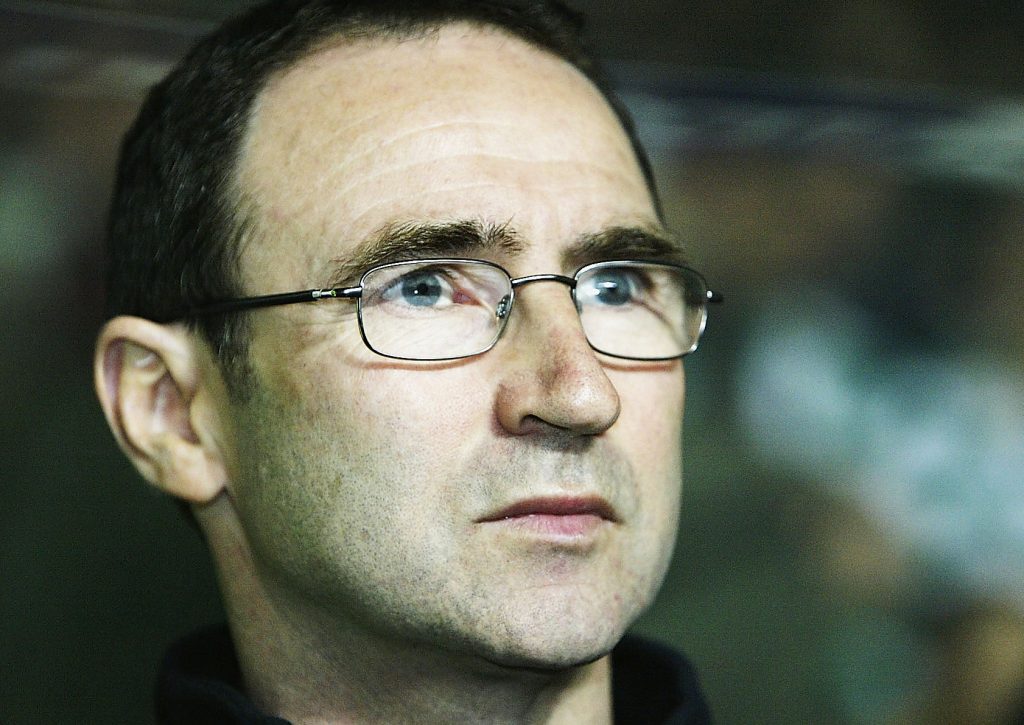
Another fascinating part of the interview came when O’Neill discussed Duran.
Rather than forcing a player permanently into one position because it suits a system, he suggested Duran may ultimately be a centre-forward or someone capable of playing off another striker.
Then came perhaps the biggest tactical hint.
That we need to be more flexible with our shape and formation, and I totally agree.
He acknowledged the team has operated within a fairly rigid structure for years — successfully, as he rightly pointed out — but suggested having players with different qualities should allow Celtic to change shape and find different ways to hurt opponents.
Two up top is happening this season, be excited!
It doesn’t sound either like a manager simply keeping the seat warm. It sounds like someone thinking seriously about how he can build a Celtic side capable of doing damage.
Even his discussion of Høgh was revealing. O’Neill appreciates having a centre-forward who can hold the ball, attack crosses and give Celtic an alternative to trying to manufacture the perfect goal every time.
O’Neill is so tired of the modern game, and it’s fluff. You can just tell.
None of this means I suddenly believe Celtic have completed their summer business perfectly.
Far from it.
There are still areas needing strengthened and O’Neill himself may have dropped another intriguing little breadcrumb when discussing the games ahead.
“Might have somebody else in as well by that stage. Who knows?”
Welcome to Celtic, Mika Baur.
You don’t get to casually throw that into an interview during a Celtic transfer window and expect nobody to notice. That deal is done.
What matters more is the overall message coming from the manager.
He wants quality. He wants players capable of contributing immediately. He wants different attacking options. He wants Celtic capable of changing their approach when games demand it.
Most importantly, he sounds utterly invested in making this team better.
That is why I’m so glad Martin O’Neill is back, and back healthy.
The nostalgia was lovely at first. The stories were great. Seeing him around Celtic again felt right.
But nostalgia isn’t what is exciting me anymore.
I’m watching a manager who appears to have looked at Celtic, identified what was missing and started demanding footballers capable of fixing it.
Those aren’t three random transfer deals.
They are beginning to look suspiciously like a plan.
And the Martin O’Neill I’m hearing now doesn’t sound like a Celtic legend enjoying one final lap around the track.
He sounds like a manager trying to build another Celtic team in his own image.
That should excite Celtic supporters — and perhaps make a few people inside that boardroom slightly uncomfortable.
Doubt him at your peril.