
Celtic Injury Double Standard Exposed as Rangers Woes Dominate Scottish Media
Derek McInnes' mounting Rangers injury list is dominating the headlines, but Celtic have spent weeks without several first-choice players of their own.
 Phillip Cooney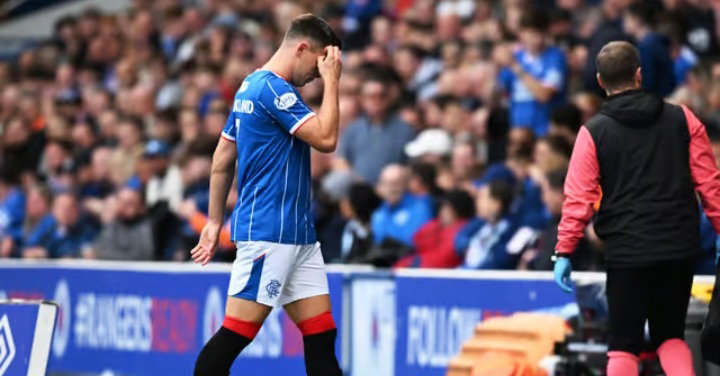
There appears to be a remarkable difference in the way Celtic and Rangers injury problems are presented by sections of the Scottish mainstream media.
Rangers have suffered several genuine injury blows. Lawrence Shankland faces three to four months out with a hamstring tear, Youssef Chermiti is recovering from an ACL injury, Daisuke Yokota has suffered a groin problem and Tuur Rommens is still working his way back.
Nobody is suggesting those injuries should not be reported.
The question is why the collective narrative surrounding Rangers feels so different.
Rangers injury woes become the story
Look across the coverage and Derek McInnes’ injury problems have become a storyline in themselves.
Sky Sports has given Shankland’s absence significant prominence, while the Scottish Sun has reported Rangers’ “injury worries” growing ahead of their forthcoming matches, including the clashes with Celtic.
Shankland’s injury is undoubtedly serious.
But where was this sustained sense of crisis when Martin O’Neill was attempting to negotiate Celtic’s own injury list?
Celtic have recently been without Kieran Tierney, Kasper Høgh, Alistair Johnston, Jota and Callum Osmand.
Tierney and Høgh have only just returned to training after missing matches against Aberdeen and St Mirren. Johnston remains on his way back from a hamstring injury, Jota continues his rehabilitation from a serious knee injury and Osmand has been ruled out for several weeks with an ankle problem.
These are not fringe players.
A fully-fit Tierney, Johnston, Jota and Høgh would all have serious claims to starting places in O’Neill’s strongest Celtic side.
Celtic injuries deserve the same context
There is another uncomfortable point.
Rangers have just completed an extraordinary recruitment drive. Fourteen players arrived during the summer, with the Scottish Sun describing it as a record-spending window.
That matters.
When Celtic lose several first-team players, the expectation invariably seems to be that O’Neill should simply cope.
When Rangers lose players, suddenly the conversation becomes about McInnes’ “woes”, selection headaches and the difficult hand he has been dealt.
That is the double standard Celtic supporters are entitled to question.
Reporting Rangers’ injuries is perfectly legitimate. Turning them into a running tale of adversity while Celtic’s comparable problems are treated largely as routine team news is something else entirely.
Injuries do not become more significant simply because the player wearing the tracksuit in the technical area is Derek McInnes.
Celtic have been dealing with their own problems for weeks.
Perhaps they deserve the same sympathy.