
Ibrox Sectarianism: Scotland Has Heard It for Generations — Why Are the Authorities Still Looking Away?
For generations Scotland has recognised the poison of anti-Catholic and anti-Irish sectarianism. After another afternoon of abuse at Ibrox, the question is why recognition still so rarely produces meaningful consequences.
 Phillip Cooney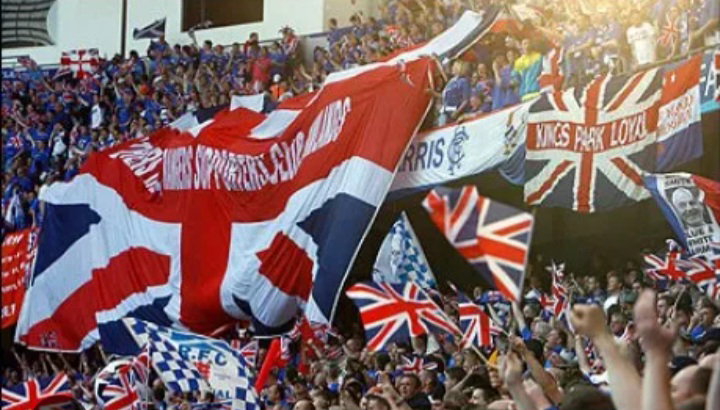
Ibrox Sectarianism: Scotland Has Heard It for Generations — Why Are the Authorities Still Looking Away?
Rangers deserved to beat Celtic on Sunday. They were better on the pitch and won 3-0.
None of that excuses what could be heard coming from the stands.
Once again, Ibrox sectarianism became part of the soundtrack to one of Scottish football’s biggest occasions. Once again, the question has to be asked: how much longer is Scotland prepared to tolerate this?
Graham Spiers deserves credit for calling attention to the sectarian abuse directed at Martin O’Neill.
The remarkable thing is that doing so still feels unusual.
It should be routine.
If thousands of people directed discriminatory abuse towards Muslims, Jews or another minority at a major sporting event, would broadcasters delicately describe it as an “unsavoury songbook”?
Of course they shouldn’t.
So why should anti-Catholic or anti-Irish hatred receive softer language?
Ibrox sectarianism has deep historical roots
Nobody can pretend Scotland has just discovered this problem.
Scottish Government research traces modern sectarianism partly to historic anti-Catholicism and the reaction to large-scale Irish immigration. It also acknowledges the discrimination Catholics historically suffered in Scotland.
Rangers’ own history cannot simply be erased from that discussion.
For generations the club operated what has been widely documented as a policy against signing Catholics. It was not necessarily a rule printed in a handbook, but Maurice Johnston’s signing in 1989 became historic precisely because of what it represented.
Then there is the Billy Boys.
This is not simply a football song that Celtic supporters happen to dislike.
UEFA’s Appeals Body determined that versions sung by Rangers supporters containing anti-Catholic language were sectarian and discriminatory.
Even more extraordinary is what UEFA initially wrote in 2006.
It recognised that the song had been sung for years without Scottish football or governmental authorities managing to intervene, leaving it, in UEFA’s extraordinary phrase, “somehow tolerated.”
That was 20 years ago.
How devastating is it that those words still feel relevant?
The Famine Song takes matters beyond even that.
Scotland’s High Court upheld a conviction involving the song after concluding its message was racist because it called on people of Irish descent living in Scotland to leave because of their origins.
This is established territory. Scotland knows what these songs represent.
Ibrox sectarianism needs consequences, not another statement
Police Scotland confirmed four arrests connected with Sunday’s match, including one relating to sectarian abuse.
Chief Superintendent Stevie Dolan said such behaviour would not be tolerated.
But this is precisely where the contradiction becomes impossible to ignore.
If discriminatory chanting can be heard from sizeable sections of a stadium, what does “will not be tolerated” actually mean in practice?
One arrest?
Another statement?
Then everyone returns seven days later and starts again?
Scotland does not need another campaign telling people sectarianism is wrong. Everybody already knows.
It needs consequences.
Football authorities have sporting sanctions available. Clubs control stadiums. Police enforce the law. Politicians establish policy. Broadcasters and newspapers decide whether hatred is exposed clearly or buried beneath euphemisms.
All of them have responsibilities.
And the media must stop reaching automatically for the comforting “both sides” escape route whenever sectarianism is discussed.
Celtic supporters are not universally innocent. When Celtic supporters cross the line, call it out.
But there were no Celtic supporters inside Ibrox on Sunday.
There was nobody else in that stadium whose behaviour could be dragged into the story to dilute what was happening.
This time there was nowhere to hide.
That is why Graham Spiers deserves praise. He heard sectarian abuse and described it as sectarian abuse.
Simple.
Every journalist covering Scottish football should be capable of doing the same.
The most damning indictment of Scotland is no longer that sectarianism exists.
It is that we have discussed it for generations, researched it, legislated around it, prosecuted it, condemned it and promised to eradicate it — yet discriminatory chanting can still echo around one of our biggest stadiums.
Twenty years after UEFA described it as “somehow tolerated”, Scotland needs to prove those two words no longer apply.
Because silence, euphemisms and occasional condemnation are not defeating this poison.
They are allowing it to survive.



It is not sectarian abuse, it is racist abuse, pure and simple
A direct comment from Phillip Cooney: “then seven days later they all return and it starts again”? I can only assume that he is referring to Celtic supporters here as they will be the only people allowed into Celtic Park to sing sectarian ‘garbage’ at Derek McInnes et al. Will he be ‘brave’ enough to call it out now, or ignore it as usual?
A player called Dan another one called Kevin scored the goals they have black players in their team some are catholics blessing themselves when they sing we are the people who are they singing about ?
What about the tifo with Mike Galloway who only passed away a few months ago
Not a peep in the media