
Celtic’s Instinct Is No Longer to Attack, It’s to Play Safe – Is This Martin O’Neill’s Team or Sean Maloney’s Vision?
Celtic's attacking identity has disappeared amid endless sideways passing and tactical confusion. Is Sean Maloney's influence changing Martin O'Neill's football?
 Phillip Cooney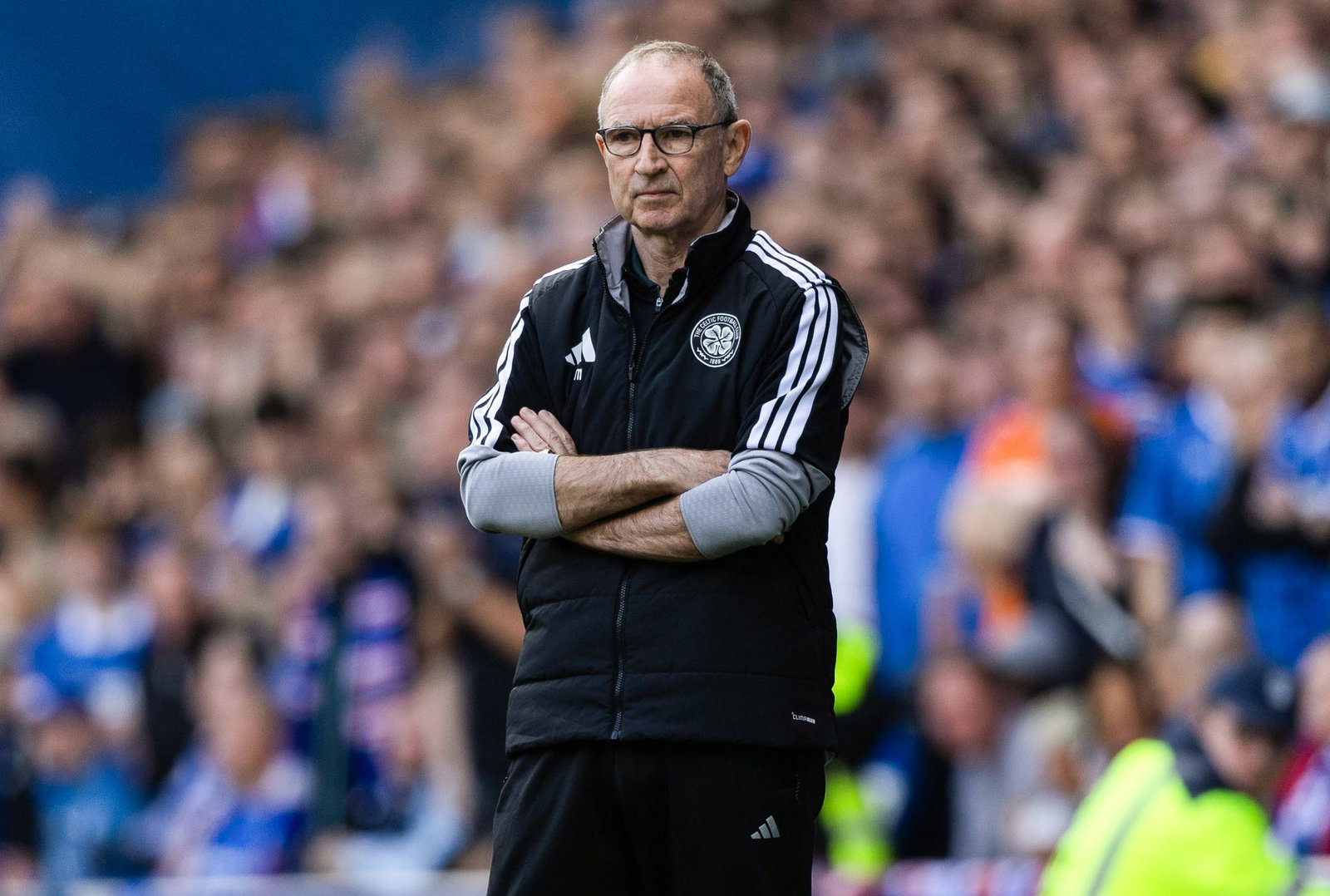
GLASGOW, SCOTLAND - SEPTEMBER 13: Celtic manager Martin O'Neill during a Premier Sports Cup Quarter-Final match between Rangers and Celtic at Ibrox Stadium, on September 13, 2026, in Glasgow, Scotland. (Photo by Craig Williamson/SNS Group via Getty Images)
Frank McAvennie questions who is calling the shots at Celtic
Celtic have lost their identity. And the most alarming part is that nobody appears to know how to get it back.
The performance against Ferencváros was some of the worst football I have witnessed from Celtic in years.
Not simply because of the result. Not even because of the defensive mistakes.
It was the complete absence of purpose.
This team has no recognisable style, no attacking conviction and seemingly no understanding of what it is trying to achieve.
That is an extraordinary situation for a club with Celtic’s resources.
Celtic’s Identity Has Disappeared Behind Endless Backward Passing
Watch Celtic’s defenders.
Sideways. Backwards. Back to the goalkeeper. Start again.
The instinct is no longer to attack. It is to play safe.
Where are the killer passes? Where are the midfield runners? Where is the urgency to get behind defenders?
Everything is painfully predictable.
Opponents can organise themselves while Celtic spend another thirty seconds moving the ball between defenders.
Meanwhile, players appear in positions that do not suit their strengths. Others struggle to maintain their performance throughout matches.
The result is a disjointed team without balance or direction.
The 4-3-3 is not working.
Defending is fragile. Midfield lacks authority. Attacking movements appear improvised rather than rehearsed.
The defeats against LASK, Rangers and Ferencváros have exposed these weaknesses brutally.
Eleven goals conceded across three matches should set alarm bells ringing throughout Celtic Park.
This is not a temporary inconvenience. It is a fundamental footballing problem.
Is Sean Maloney’s Influence Changing Martin O’Neill’s Celtic Identity?
Stiliyan Petrov has reportedly questioned whether this football reflects Martin O’Neill’s established style.
It is a fascinating observation.
O’Neill’s successful Celtic sides possessed unmistakable characteristics. They were organised, aggressive, physically competitive and direct when circumstances demanded it.
Nobody could mistake what those teams were trying to achieve.
Can anyone seriously say the same about this Celtic side?
Sean Maloney, Fotheringham and Stephen McManus all have roles within the coaching structure.
However, how much influence do they have over Celtic’s formation and tactical philosophy?
Is Maloney’s preferred approach shaping the team? Is O’Neill attempting to accommodate different coaching ideas?
There is no verified evidence that Maloney controls team selection or tactics. Nevertheless, the lack of a coherent identity makes the question worth asking.
Ultimately, O’Neill is the manager.
He must decide how Celtic play.
If 4-3-3 is failing, change it. Select players in their strongest positions. Establish clear responsibilities and demand that the team follows one coherent plan.
Collaboration is essential. Tactical confusion is unacceptable.
Celtic cannot continue playing football that looks like a compromise between competing philosophies.
The board must also accept responsibility for the club’s wider direction. Short-term managerial decisions require a convincing football strategy behind them.
But the immediate responsibility belongs in the dugout.
O’Neill must impose an identity, restore attacking ambition and give his players a system they understand.
Because right now, Celtic’s first thought is not how to hurt the opposition. It is how to avoid taking a risk.
And for a club built on attacking football, that is a damning indictment.
Key Takeaways
- Celtic have lost their attacking identity, with sideways and backward passing dominating their approach.
- The current 4-3-3 is failing to provide defensive stability or attacking cohesion.
- Players appear uncomfortable in certain positions, while the team lacks clear tactical direction.
- Sean Maloney’s influence raises questions about Celtic’s footballing philosophy, although the extent of his authority remains unverified.
- Martin O’Neill must establish a coherent system and take responsibility for the team’s performances.

i will try this again as my other comments do not appear yes i think that Maloneys style of play is appears to be what is happening to Celtic his approach seems to be the one that is being applied
and the results are terrible ,if MON does go watch out it will be pure bedlam and Celtic park will end up empty
Sean Maloney is running the team MON is just a front and Media man.
Both should go
Ach it’ll be all over and out come 2pm on Sunday me thinks…
Lucan and Sly will still be stinking the place out all the same !
I think MON is great but lately the celtic team is not performing the dont look like a team, i would suggest that they pick a team of old faithfuls and keep them playing whilst teaching the others at training. What i have seen and it infuriates me is the passing back all the time this is rubbish as no matter who is the striker is is not getting the chance to score.the 433 is not working and if you look at the way celtic played under MON before the trasfer window opened to get us to winning the league and scotish Cup
That’s the celtic I know and love they have to stick to players we know forget about new signings for now.
Other teams can read us now so it’s time to change and with players that have celtic in there hearts not players that just want to play football