
 Bhoycie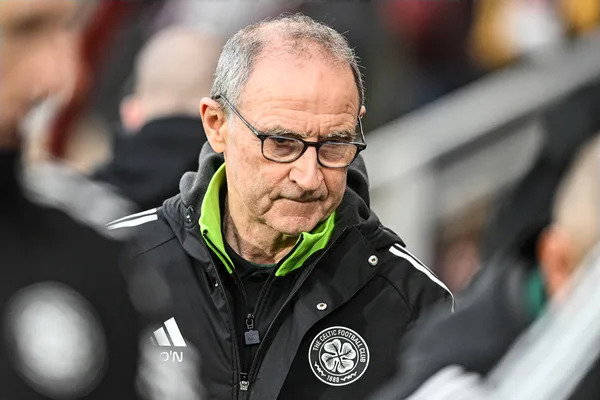
Manager Martin O'Neill of Celtic during the William Hill Premiership match at Tynecastle Park, Edinburgh 25/01/2026 ============================================= Use the following embed code to publish this image online: <smartframe-embed customer-id="e8c3ce70f1ad837bdffb21e2453272b6" image-id="XhXPFmlohbcN" style="width: 100%;display: inline-flex;max-width: 7223px;aspect-ratio: 7223/4816"></smartframe-embed> More info: at https://smartframe.io/embedding-support/
Graham Spiers’ revelation that Martin O’Neill was privately “despairing” over Celtic’s summer recruitment will have shocked plenty of supporters.
Regular readers of this site might be slightly less surprised.
Was Martin O’Neill actually happy with what was happening behind the scenes at Celtic?
Go all the way back to July and there were already warning signs.
At that point Celtic’s transfer business was moving painfully slowly. O’Neill wanted established players capable of immediately improving his team, yet once again Celtic appeared reluctant to move decisively.
Then came what I described at the time as O’Neill’s ultimatum moment.
“Ultimado”.
I wasn’t claiming Martin had marched into Michael Nicholson’s office, slammed his fist on the table and threatened to resign.
I do believe it was reminded to them of how it would look on them if he were to though.
Because something appeared to change almost instantly.
Within 24hrs of Martin O’Neill rumours of resignation, reports grew the Club had went back in for Kasper Høgh with a club record deal on the table.
The forward did indeed arrive for around £11million and, for a brief period, it looked like O’Neill might genuinely have forced Celtic away from their old habits.
Callum McGregor was pictured with Anton Rodgers – son of former manager and arch enemy of Dermot Desmond, Brendan Rodgers – amid a change of agency representation, at a time when speculation about his future was already swirling.
The photo was then taken down swiftly.
Whether those events directly forced Celtic into action cannot be established.
What we can say is that Celtic suddenly started behaving differently.
And for a while, I bought into it.
Looks like the Manager and the Captain did too.
I wrote in August that Celtic finally appeared to be signing players for the team rather than the balance sheet.
I hoped O’Neill had changed the rules.
Perhaps the reality is Celtic simply changed them temporarily.
Because eventually they reverted to type, they always do.
The Old Celtic Returned.
After the initial burst of ambition came more waiting.
More negotiations.
More delays.
Then Arne Engels was allowed to leave for West Ham immediately before Celtic’s Champions League play-off against LASK.
Of course they sold him before the most important game of our season.
Whilst we were apparently happy to let our targets fulfil their qualifiers with their parent clubs.
O’Neill admitted at the time Celtic were still trying to find his replacement and acknowledged how difficult replacing Engels’ running power would be.
They didn’t replace him in time, they didn’t in the end replace him at all.
Celtic subsequently threw away a three-goal first leg advantage against LASK and disappeared from the Champions League.
Only then came the deadline-day scramble.
By the end of the window Celtic had signed ten players, with six arriving during the final 48 hours.
On paper, that sounds like a serious rebuild.
Then look at Sunday’s starting XI against Rangers.
Of those ten summer recruits, just two new arrivals started: Mika Baur and Camilo Durán.
Ten through the door.
Two trusted from the start against Rangers yesterday as we lost our third game in the space of a week in three different competitions.
That tells its own story.
This wasn’t a carefully constructed squad assembled around the manager’s requirements.
It increasingly looks like another Celtic window where activity and strategy became two completely different things.
Now We Know What Martin Was Apparently Thinking.
Throughout August, O’Neill publicly defended Celtic.
He talked about the efforts being made to recruit players and, after the window closed, even expressed satisfaction with aspects of the business.
According to Spiers, O’Neill was “despairing” as targeted players repeatedly failed to arrive.
I had heard the same, as the articles on here show.
Spiers also reports that O’Neill believed his squad was weaker than the one which won last season’s league and Scottish Cup double, while disagreements over salaries for members of his coaching staff created a “bad vibe” before the campaign properly began.
I daresay he wasn’t overly impressed having to wait around on his own appointment whilst Celtic gauged the fan mood over Robbie Keane potentially taking over.
Suddenly a lot of things make sense.
This didn’t start with three defeats.
The warning signs were there all summer.
Celtic Changed For A Few Weeks – Not Their “Philosophy”.
That’s the part that frustrates me most.
For a few weeks I genuinely thought O’Neill had managed to change Celtic’s outlook with his warning shots.
Perhaps he’d rocked the boat sufficiently that the people upstairs realised the old model wasn’t going to wash anymore.
Høgh arrived.
Durán arrived.
Haissem Hassan arrived.
Mika Baur arrived.
Real money was being spent.
Maybe Celtic had finally recognised that a football club with their resources should recruit for what happens on the pitch rather than obsessing over what a player might be worth three years later.
Then came the familiar behaviour.
Selling an important player before a massive European qualifier.
Not replacing them.
Waiting.
Scrambling.
And eventually filling out the squad in the dying hours of the window.
Smoke and mirrors.
A temporary reaction rather than a permanent change of philosophy.
Martin Will Surely Now Go – The Bigger Problem Won’t.
Now we reach the saddest part.
After three consecutive defeats, O’Neill says he will “genuinely reflect” on whether he can turn Celtic around.
My feeling remains that he will not be Celtic manager when the international break ends.
And based purely on the football we’ve watched recently, I think change in the dugout is necessary.
But Celtic better not pretend changing the manager fixes everything.
We’re watching another Celtic manager reach breaking point against the same structure supporters have been complaining about for years.
That’s the bit that worries me about whatever happens next.
I have absolutely no confidence Celtic possess the footballing infrastructure required to conduct a genuinely ambitious, modern managerial search.
My fear is they’ll open the little black book again.
Someone they’ve employed before or has Irish connections.
Don’t allow three terrible results to erase everything that came beforehand.
Because if Martin really was privately despairing while publicly protecting Celtic, then this story didn’t begin against Rangers yesterday.
It didn’t begin against Ferencváros or in the two derbies.
The warning signs were there all summer.
For a few weeks, Celtic made us believe they’d changed.
Looking back now, perhaps Martin O’Neill discovered before the rest of us that they never really had.
Keep Your Eyes On The Board.



Good article Bhoycie and totally agree.
I too thought we (CFC/board) had turned the corner (footballing ambition etc)…. then…. back to ‘default’ setting !