Celtic CEO Michael Nicholson’s Extraordinary O’Neill Statement Raises One Uncomfortable Question: Where Is the Plan?
Celtic's chief executive has publicly backed a manager who is considering his future. Supporters deserve to know that the club is prepared for what comes next.
 Phillip Cooney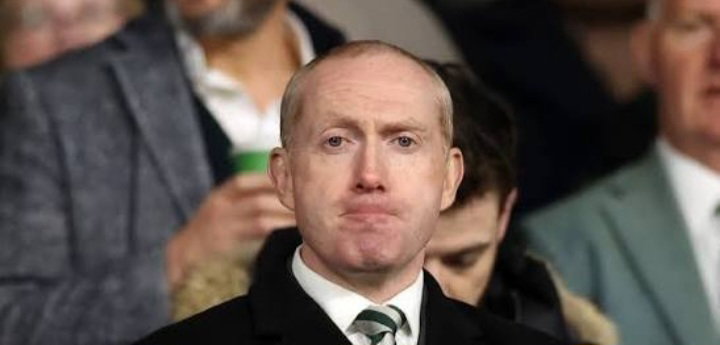
Michael Nicholson has publicly declared that Celtic will support Martin O’Neill.
How reassuring.
There is just one rather enormous problem with that statement.
Martin O’Neill has already told the world that he is considering whether he wants to remain Celtic manager.
The decision may not ultimately be Nicholson’s to make.
Yet Celtic’s chief executive has offered supporters another statement of support without publicly explaining what happens if the manager decides he has had enough.
That is the question Nicholson should be addressing.
Not whether Celtic will back O’Neill.
What happens if O’Neill no longer wants Celtic to back him?
Nicholson’s Words Cannot Remove the Uncertainty
In Celtic’s annual report, Nicholson declared:
“We will now come together and support Martin and the players.”
It is a perfectly reasonable sentiment in isolation.
A football club should support its manager. Nobody is suggesting otherwise.
But context matters.
Following Sunday’s defeat to Rangers, O’Neill acknowledged that he would reflect on his position, speak to the board and consider whether he could still improve the team.
When discussing the possibility of being unable to turn things around, he admitted:
“It might be time to wrap it up.”
Those are not the words of a manager offering an unequivocal commitment to the remainder of the season.
They are the words of a man openly contemplating his future.
Nicholson’s public backing does not answer the uncertainty O’Neill himself has created.
And while the annual report may have been prepared before the latest comments, its publication makes the absence of a clear public contingency plan particularly conspicuous.
Where Is Celtic’s Succession Plan?
This is where Nicholson’s leadership deserves serious scrutiny.
The international break provides Celtic with an opportunity to assess their options without the immediate pressure of another competitive fixture.
That opportunity should not be squandered.
Nicholson should already be identifying potential replacements, establishing their availability and preparing for every possible outcome.
Kieran McKenna is one name who could be examined, although there is no verified evidence that Celtic have approached him.
The point is not that McKenna must be appointed.
The point is that Celtic should not be beginning their search from scratch if O’Neill decides to leave.
Succession planning is not disloyalty. It is a fundamental responsibility of executive management.
Nicholson does not need to announce private negotiations or undermine O’Neill by publicly discussing his successor.
But he could reassure supporters that contingency planning is taking place.
Instead, his statement leaves the central question unanswered.
Celtic Cannot Afford Another Improvised Appointment
What happens if O’Neill returns from his break and informs the board that he is finished?
Does Celtic immediately launch a managerial search?
Does the club turn to an existing member of the coaching staff?
Does another temporary appointment become the solution while the board considers its options?
There is no confirmation that any of those scenarios is being contemplated.
And that is precisely why supporters deserve clarity about the process, even if the names must remain confidential.
Celtic cannot afford to treat managerial succession as an administrative inconvenience that only becomes urgent once a resignation letter lands on someone’s desk.
A club with Celtic’s resources and ambitions should maintain a succession strategy regardless of who occupies the dugout.
That is basic organisational planning.
Michael Nicholson Must Demonstrate Leadership
Nicholson’s responsibilities extend far beyond offering reassuring words in an annual report.
He is the chief executive of a football club facing uncertainty over its manager, questions about recruitment and considerable pressure following disappointing results.
His responsibility is to protect the club against foreseeable disruption.
O’Neill has made the possibility of his departure public.
The uncertainty is no longer hypothetical.
Nobody outside the relevant discussions can say with certainty whether Nicholson has already begun identifying replacements. It would be unfair to claim that absolutely nothing is happening behind the scenes.
But supporters are entitled to ask what preparations have been made.
They are entitled to expect a coherent process.
And they are entitled to demand that Celtic are not caught unprepared by a departure their own manager has openly discussed.
Backing Martin O’Neill and preparing for life without him are not contradictory positions.
A competent succession process would accommodate both.
The manager deserves support while he considers his future. The club deserves protection if he decides to walk away.
Nicholson must ensure Celtic are ready for either outcome.
Because if O’Neill does depart and Celtic find themselves scrambling for another temporary solution, the obvious question will not be why the manager left.
It will be why the chief executive was not ready.
And another statement about supporting the manager will be no substitute for an answer.
Key Takeaways
- Michael Nicholson has publicly backed Martin O’Neill, but the manager is considering his future.
- Celtic should have a contingency plan ready in case O’Neill decides to leave.
- There is no verified evidence that Celtic have approached Kieran McKenna.
- Supporters deserve reassurance about the succession process without the club revealing confidential negotiations.
- Nicholson’s responsibility is to prepare Celtic for every outcome, not simply express support for the current manager.