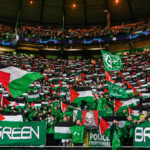
Liam Scales, Palestine and Celtic: Stop Pretending Politics Has No Place in Football
Football tells supporters to keep politics out of the game, but its own governing bodies have repeatedly shown that politics is already inside it.
 Phillip Cooney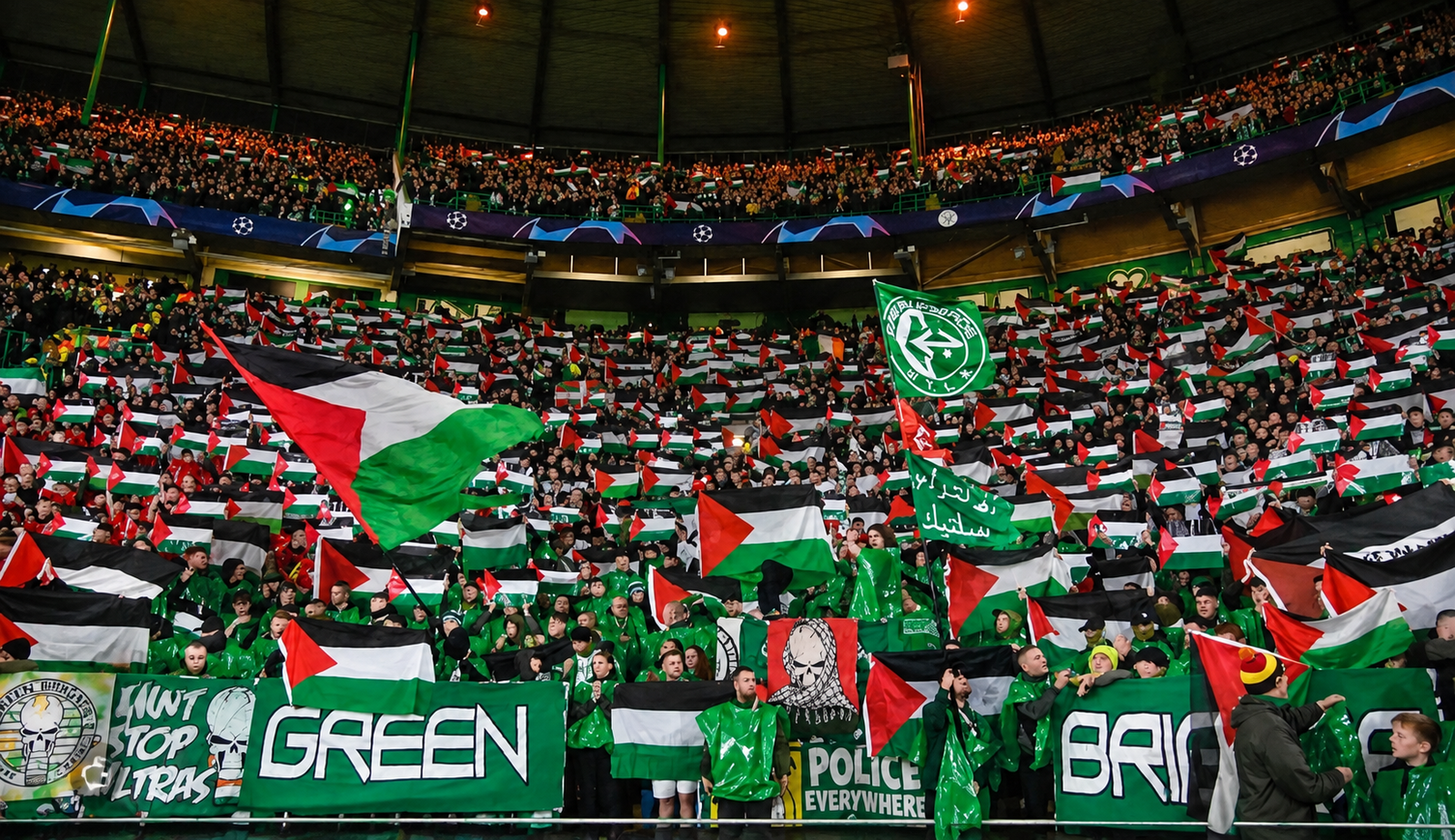
Liam Scales deserves credit.
The Daily Record reports that the Celtic defender was among the Republic of Ireland players who offered support to Gavin Bazunu after the goalkeeper decided he could not participate against Israel.
There is no evidence Scales was subsequently left out of the starting XI because of that support, and it would be wrong to suggest otherwise.
But if Scales supported his teammate’s right to follow his conscience, I commend him.
Personally, I wish those who shared Bazunu’s convictions had gone one step further and withdrawn alongside him.
And the controversy brings us straight to one of football’s most repeated arguments.
“Keep politics out of football.”
It sounds simple.
There’s just one problem.
Football’s own governing bodies don’t do it.
Politics Is Already In Football
After Russia invaded Ukraine, UEFA did not declare itself politically neutral.
It explicitly condemned Russia’s invasion and declared solidarity with Ukraine.
FIFA and UEFA then suspended Russian clubs and national teams from their competitions.
European football openly displayed solidarity with Ukraine.
I had no problem with that.
But once governing bodies make those decisions, the pretence that football exists in some politically sterile environment disappears.
They have already established the principle that events outside football can become serious enough for football to respond.
So the question isn’t whether politics enters football.
It already has.
The more difficult question is why some expressions of political or humanitarian solidarity are embraced while others have been punished.
Celtic, Palestine And The Obvious Question
Celtic supporters have displayed solidarity with Palestinians for years.
Palestine flags at Celtic Park did not suddenly appear during the current conflict.
A Palestine flag at Celtic Park is documented as far back as 2009, while organised Green Brigade solidarity followed in subsequent years.
Then came Hapoel Be’er Sheva in 2016.
Palestinian flags appeared throughout sections of Celtic Park.
UEFA charged Celtic under regulations covering political, ideological and other messages and subsequently fined the club €10,000.
Now compare the principles involved.
Celtic supporters displaying Palestinian flags resulted in disciplinary proceedings.
Following Russia’s invasion of Ukraine, UEFA itself explicitly condemned Russia and declared solidarity with Ukraine.
The situations are obviously different and shouldn’t be presented as identical.
But the contrast exposes the weakness in simply shouting “keep politics out of football.”
You cannot seriously argue that politics must remain outside football when football’s most powerful institutions themselves decide when world events justify taking a position.
If humanitarian solidarity belongs in football, apply that principle consistently.
Celtic Supporters Did More Than Wave Flags
The response to UEFA’s 2016 punishment remains important.
Celtic supporters launched #MatchTheFineForPalestine.
The campaign ultimately raised around £170,000 for Palestinian causes.
That matters.
They didn’t simply display flags.
They raised money.
They transformed punishment into practical assistance for people thousands of miles away.
Whatever anyone thinks about politics appearing inside football stadiums, that was solidarity translated into action.
The Celtic Board Got It Wrong
Celtic’s own board cannot escape criticism either.
In October 2023, Celtic condemned a pro-Palestine display and stated that political messages and banners were not welcome at Celtic games.
Before Atlético Madrid visited Celtic Park, supporters were also asked not to display Palestinian flags.
I thought the board got that badly wrong.
For a club that continually celebrates its beginnings among Glasgow’s impoverished Irish immigrant community, attempting to discourage supporters from peacefully expressing solidarity with Palestinians was difficult to reconcile with the social history Celtic proudly promotes.
Thousands of supporters ignored the request.
Celtic Park was filled with Palestinian flags.
For accuracy, Celtic subsequently said the Green Brigade’s suspension was not imposed because of those flags. UEFA also clarified that Celtic’s later 2023 fine was not simply for displaying Palestinian flags.
Those distinctions matter.
But they don’t alter my view that Celtic’s board should never have attempted to discourage the display in the first place.
I Actually Wish Politics Wasn’t In Football
Here’s the irony.
I would prefer politics wasn’t in football.
I’d happily go to Celtic Park, watch Celtic for 90 minutes, celebrate a goal, complain about the referee and go home.
Football is an escape.
If somebody wants it to remain nothing more than that for them, fair enough.
Nobody should be required to become a political activist because they support Celtic.
But wanting politics out of football is different from pretending politics isn’t already there.
Football’s governing bodies take positions.
They impose sanctions.
They promote messages.
They decide when international events require football to respond.
So when someone says “keep politics out of football”, there is an obvious question.
Whose politics?
And who gets to decide?
Why This Matters To Me
My own experiences inevitably influence my view.
Growing up in west-central Scotland, many people of my generation understood how football, religion, Irish identity and employment could intersect.
I remember the questions people worried about when looking for work.
What school did you go to?
What team do you support?
I experienced discrimination myself.
I’m not suggesting my experiences are remotely equivalent to what Palestinians are experiencing.
They aren’t.
But Scotland has a documented history of sectarian discrimination, including accounts involving employment and Catholic schooling.
Experiences like that can influence how people respond when they see what they regard as discrimination or injustice elsewhere.
It isn’t about claiming two histories are identical.
It is about understanding why solidarity resonates.
Celtic’s Origins Matter
Celtic’s own history reinforces that point.
Brother Walfrid helped establish the club amid severe poverty and deprivation affecting Glasgow’s Irish immigrant community.
Helping impoverished people was fundamental to Celtic’s beginnings.
Poverty intersects with politics.
Immigration intersects with politics.
Discrimination intersects with politics.
Sectarianism intersects with politics.
Celtic wasn’t founded in isolation from society.
Its beginnings were rooted in society.
That doesn’t mean every Celtic supporter has to adopt the same political opinions.
Of course not.
But social questions haven’t suddenly been imported into Celtic.
They were there at the beginning.
Palestine And The Human Question
The suffering of Palestinian civilians deserves condemnation.
Amnesty International and a UN Independent International Commission of Inquiry have concluded that Israel has committed genocide in Gaza.
Israel rejects the genocide allegation, while the International Court of Justice has not yet delivered its final merits judgment in the genocide case.
Those distinctions should be reported accurately.
Criticism should also be directed accurately.
Condemning actions of the Israeli government and military is not the same as condemning Jewish people, Judaism or every Israeli citizen.
That distinction is essential.
This argument should concern governments, institutions, military actions, human rights and civilians.
It should never become hostility towards people because of their ethnicity or religion.
Nobody Has To Agree
This remains an opinion.
Nobody has to share it.
If someone wants absolutely nothing to do with politics when they enter Celtic Park, that’s their choice.
I understand it.
But I don’t accept the argument that politics simply “has no place in football.”
Football itself disproves it.
UEFA condemned Russia’s invasion.
FIFA and UEFA suspended Russian teams.
Football expressed solidarity with Ukraine.
Celtic supporters have expressed solidarity with Palestinians for years.
And Celtic itself emerged from a community dealing with poverty, immigration and deprivation.
Politics didn’t suddenly arrive at Celtic Park when somebody raised a Palestinian flag.
It was already there.
Now Liam Scales has reportedly supported an international teammate who followed his conscience.
I commend him for that.
Others will disagree.
That’s their right.
But “keep politics out of football” cannot be selectively applied when football’s own governing bodies have repeatedly demonstrated that they don’t.
Key Takeaways
- Liam Scales reportedly supported Gavin Bazunu following his decision not to participate against Israel.
- There is no evidence Scales was benched because of that support.
- UEFA explicitly condemned Russia’s invasion of Ukraine, while FIFA and UEFA suspended Russian teams.
- Celtic were fined €10,000 following the 2016 Palestine flag display.
- Celtic supporters responded by raising around £170,000 for Palestinian causes.
- The writer believes Celtic’s board was wrong to discourage Palestinian flags in 2023.
- The central argument is not against football supporting Ukraine, but for consistency in how political and humanitarian expression is treated.
- Nobody is required to share these political views.