
Celtic showdown could be box office as Brendan Rodgers returns to Glasgow with chance to answer Dermot Desmond
Brendan Rodgers is returning to Glasgow for a major ACSOM event — and after Dermot Desmond's extraordinary attack on the former Celtic manager, supporters will hope Rodgers is finally free to tell his side of the story.
 Phillip Cooney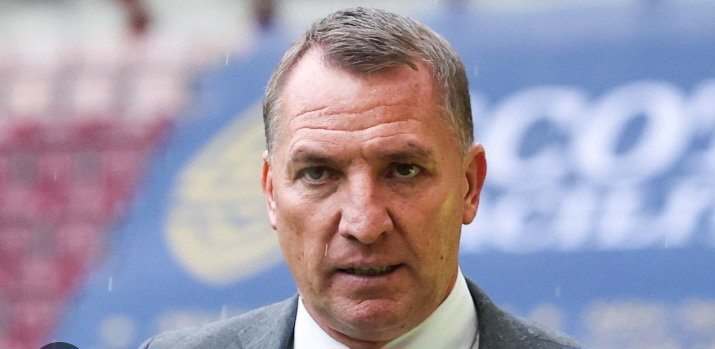
Brendan Rodgers is coming back to Glasgow — and this could be absolutely box office.
A Celtic State of Mind has announced An Audience with Brendan Rodgers at Glasgow Royal Concert Hall on June 14, 2027.
Huge credit has to go to ACSOM and Paul John Dykes for securing it. Dykes and his team consistently produce ambitious Celtic content, but getting Rodgers back in front of a Glasgow audience after the extraordinary circumstances surrounding his departure takes things to another level.
The biggest question is obvious.
How much will Rodgers actually be able — or willing — to say?
Desmond’s extraordinary attack deserves an answer
When Rodgers left Celtic in October 2025, Dermot Desmond did not simply thank him and move on.
Celtic’s largest shareholder issued an astonishing public broadside.
Desmond described Rodgers’ words and actions as “divisive, misleading, and self-serving” and claimed they had contributed to a “toxic atmosphere” around Celtic.
He went further, arguing that Celtic’s problems were not caused by its structure or operating model but by “one individual’s desire for self-preservation at the expense of others.”
Those were brutal accusations to level publicly at a manager who had delivered enormous success across two spells.
And now Rodgers may finally have the platform to give his side.
Perhaps Desmond should revisit his own words
There is an uncomfortable irony in Desmond accusing somebody else of self-preservation while simultaneously using an extraordinary public statement to defend Celtic’s hierarchy and absolve its structure of responsibility.
Perhaps Desmond should take some of his own rhetoric and apply it closer to home.
He finished by declaring that “Celtic is greater than any one person.”
Absolutely.
That applies to Brendan Rodgers.
It also applies to Dermot Desmond.
No shareholder, director, chief executive or manager should ever become bigger than Celtic or beyond legitimate scrutiny.
And Desmond’s statement deserves scrutiny because the public record shows Rodgers repeatedly asking for improvements.
Rodgers wasn’t imagining the recruitment problems
In February 2025, after Kyogo Furuhashi departed without the striker Rodgers wanted arriving, Rodgers admitted the transfer window “wasn’t ideal”.
By August, his frustration was unmistakable.
Rodgers said Celtic needed reinforcements and memorably added that he should not have to “beg for players that we need.”
After Celtic failed to strengthen sufficiently before their Champions League qualifier against Kairat Almaty, Rodgers was even clearer.
“It’s not my decision in the end.”
That matters.
It does not automatically prove Rodgers was right about every disagreement behind closed doors. Desmond presented a very different account and insisted Rodgers had final say over football matters and had approved Celtic’s transfer business.
That is precisely why this event is so fascinating.
There are two radically different versions of what happened.
Now let Rodgers tell his side
Nobody should pretend Rodgers was flawless. He made mistakes and Celtic’s performances ultimately remained his responsibility.
But Desmond’s statement went far beyond football criticism. It attacked Rodgers’ motives, conduct and credibility.
Rodgers deserves the opportunity to answer that.
Whether contractual obligations, confidentiality agreements or simply his own discretion restrict what he discusses remains unknown.
But if Rodgers is free to talk openly about those final months — the recruitment meetings, the players he wanted, the deals that failed, his relationship with Michael Nicholson and those conversations with Desmond — Glasgow Royal Concert Hall could become compulsory viewing for Celtic supporters.
Congratulations to Paul John Dykes and ACSOM for landing it.
Because after everything Dermot Desmond said about Brendan Rodgers, there is another side of this story that deserves to be heard.
And on June 14, Rodgers might finally tell it.


How do you apply for tickets or is it shareholders only