
Kris Boyd’s Attack on Celtic Fans Exposes One Glaring Absence
The former Rangers striker condemns Celtic supporters but largely ignores the boardroom failures that drove their protest.
 Phillip Cooney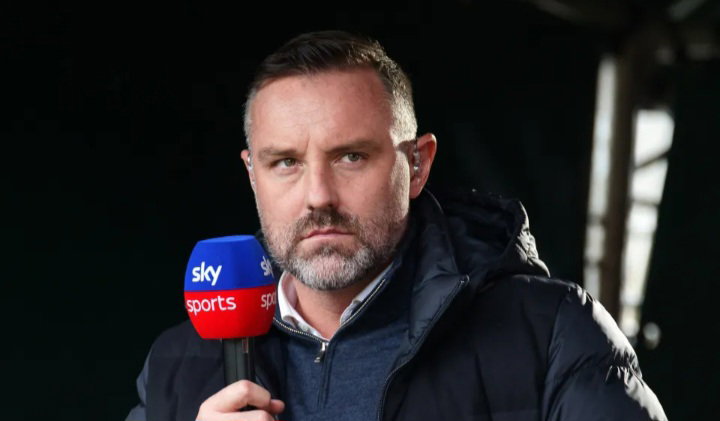
The former Rangers striker condemns Celtic supporters but largely ignores the boardroom failures that drove their protest. has launched an extraordinary attack on Celtic fans protesting against Dermot Desmond, branding them “self-entitled” and accusing them of embarrassing the club.
The former Rangers striker is entitled to question the methods used at St Andrews. However, his assessment conveniently ignores the prolonged failure of those running Celtic to address the legitimate concerns that caused the protest.
Boyd concentrated his criticism on supporters. The people with power inside Celtic escaped anything approaching the same scrutiny.
Kris Boyd’s Celtic fans criticism misses the cause
The Scottish Sun reports that Boyd believes the protesters embarrassed Celtic by disrupting the Alfred Dunhill Links Championship. He also suggested their actions would only make Desmond more determined not to back down.
That argument treats the protest as though it appeared without warning.
It did not.
Supporters have repeatedly demanded greater transparency, accountability and ambition from the Celtic hierarchy. They have watched the club fail to convert its considerable financial strength into sustained European progress.
They have also seen another Champions League opportunity disappear while communication from the board has remained painfully inadequate.
Boyd can dislike the St Andrews protest. Nevertheless, describing frustrated Celtic supporters as “self-entitled” is a remarkably dismissive response to a much deeper crisis.
These are not casual observers demanding success without contributing anything. Celtic fans fill the stadium, buy merchandise, follow the team across Europe and provide the money that sustains the entire operation.
Expecting competent leadership in return is not entitlement.
The criticism Boyd did not deliver
The glaring absence from Boyd’s argument is meaningful criticism of Desmond or the Celtic board.
Where was his outrage over the strategic failures that have weakened Celtic in Europe? Where was this uncompromising language when supporters were asking perfectly reasonable questions about recruitment, governance and accountability?
Instead, the strongest condemnation is reserved for the fans.
Boyd also appears to believe that Desmond’s refusal to back down demonstrates strength. In reality, refusing to engage with legitimate criticism is not strong leadership. It risks becoming stubbornness from a powerful individual who faces remarkably little direct accountability.
Celtic supporters do not require Boyd’s permission to challenge that arrangement.
Celtic’s real embarrassment remains unanswered
The club’s angry response to the protest threatened indefinite bans and severed engagement with the Celtic Fans Collective. Yet the underlying complaints remain unanswered.
That is the issue Boyd’s intervention fails to confront.
A handful of tennis balls generated an immediate and furious reaction. Years of supporter frustration, avoidable European decline and poor communication have never produced the same urgency from the Celtic hierarchy.
Boyd may believe the protest embarrassed Celtic. Many supporters will conclude that the far greater embarrassment is a wealthy, historic football club being dragged into an escalating civil war because its leadership refuses to listen.
Criticising the method is legitimate. Using it to dismiss the people demanding change is not.
Until Boyd applies the same ferocious standards to those holding the power, his attack on Celtic supporters will remain badly unbalanced and fundamentally incomplete.



Boyd’s reaction is blinkered by tunnel vision. As a staunch diehard of the Govan regimes, he is encouraged by any suggestion of disharmony in the Celtic ranks. The current Celtic Board are exactly what Boyd fervently wishes will remain in place for as long as possible. The Govan team’s best (only?) chance of achieving success is, basically, if Celtic beat themselves.
Boyd’s simplistic criticism of the way in which fans protested is fueled by a desperation to remove any suggestion of negativity towards a Board which gives the Govan team an opportunity of emerging from life in Celtic’s shadow. There is no chance of Desmond and Co being called out for the incompetent dinosaurs that they are with, such as, Boyd anxious to see their continued presence at Celtic Park.
When significant Boardroom change eventually evolves at Celtic, those driven by a desire for the Club’s demise will again retreat underneath the rocks from which they occasionally emerge. When sensing a glimmer of opportunity caused by Celtic’s disharmony, rallying calls to fellow foot soldiers are devoured by a fanbase and mainstream Scottish media normally devoid of any reasons to be cheerful.
In the meantime, the Celtic team continue to face many challenges, the most significant of which is the weakness of an ineffective, arrogant Board. Such as Boyd prefers to attack fans, while avoiding biting the hand of that which might ultimately feed the Govan team’s hunger for success. For as long as there is little or no Boardroom change at Celtic, then the Govanites will accept any scraps of encouragement dished up by the so-called pundits, who are regularly promoted by a supportive mainstream media in Scotland.
Over to you, Mr Desmond.