
Even Hugh Keevins Sees It Now: Dermot Desmond’s Grip on Celtic Must End
Even Hugh Keevins is questioning Dermot Desmond's extraordinary influence at Celtic. Supporters have been warning about this for years. Is Scottish football's mainstream media finally catching up?
 Phillip Cooney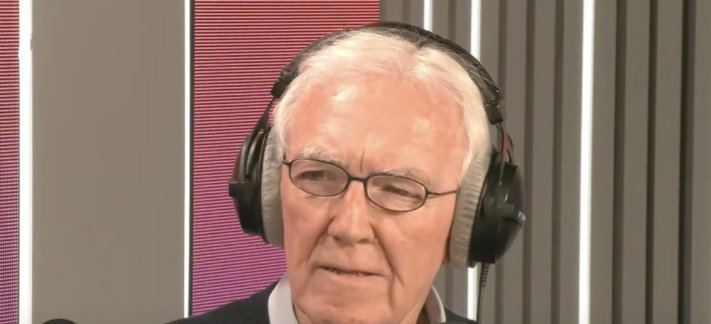
I never imagined I would find myself agreeing with Hugh Keevins about Celtic’s leadership. Yet here we are.
Anyone who has listened to Keevins on Superscoreboard over the years will know his predictions and pronouncements can be extraordinary. I’ve disagreed with him more times than I care to remember.
But his latest Sunday Mail column raises a question Celtic supporters have been asking for years.
Why does Dermot Desmond appear to wield almost absolute power over Celtic Football Club?
And perhaps more significantly, why is the Scottish mainstream media only now beginning to examine it?
Even Hugh Keevins Can See the Problem
Keevins describes Celtic as a “plutocracy”, a system in which wealth determines power.
It’s a provocative description. Unfortunately, I think he has identified something deeply troubling about how Celtic operates.
Dermot Desmond is Celtic’s principal shareholder. He is not the sole owner of the club, nor should his financial influence place him beyond scrutiny.
Yet managerial appointments, major decisions and the direction of the football operation appear to revolve around one enormously influential individual.
Where is the independent thinking? Where is the accountability?
And, most importantly, where are the football experts empowered to challenge decisions that simply aren’t working?
Celtic Cannot Keep Looking Backwards
Look at Celtic’s managerial history under Desmond.
Martin O’Neill. Neil Lennon. Brendan Rodgers. Then O’Neill again.
These men have delivered extraordinary success, and that deserves recognition. But repeatedly returning to familiar figures is not the same as developing a coherent, modern football strategy.
I love Martin O’Neill for what he gave Celtic. That will never change.
However, I never believed bringing him back for another full season was the right decision.
Keevins is correct that O’Neill deserves scrutiny. Recent results demand it.
But the manager should not become the convenient scapegoat for the people responsible for appointing him.
If the strategy fails, those who devised it must answer for it.
The Silence That Exposes Celtic’s Priorities
And this brings me to something I find particularly infuriating.
Remember the controversy surrounding the Hearts match, when serious allegations and criticism of Celtic supporters dominated sections of the Scottish media?
The board’s response was silence, defended as a communications strategy.
Yet when Desmond was targeted by protesters throwing tennis balls during a golf tournament, Celtic produced an extensive, furious statement that same day.
It condemned the protesters, challenged the Celtic Fans Collective’s legitimacy and threatened indefinite bans for those found responsible.
Now, I don’t believe disrupting somebody at a golf tournament was necessarily the right approach.
But that is not the central issue.
Why does the club communicate with such extraordinary urgency when its principal shareholder is inconvenienced, yet so often appear reluctant to defend its own supporters?
Who decides when the official Celtic website becomes the vehicle for such interventions?
And where does the responsibility of the board end and Desmond’s personal influence begin?
These are legitimate questions. They deserve proper answers.
Celtic Needs Leadership, Not One Man’s Judgment
No individual, regardless of wealth or previous success, gets every decision right.
Modern football demands specialist recruitment, sporting expertise, long-term planning and executives prepared to challenge one another.
It cannot depend on one powerful shareholder continually deciding what he believes is best.
Desmond’s financial stake gives him substantial influence. It should not mean his judgment is treated as infallible.
The fact that even Hugh Keevins is now questioning Celtic’s concentration of power tells me the argument is reaching well beyond the supporters who have raised these concerns for years.
And that matters.
Because this was never simply about Martin O’Neill, Brendan Rodgers or a handful of tennis balls.
It is about who is accountable for Celtic’s future.
Dermot Desmond is a shareholder. He is not Celtic Football Club.
And the sooner that distinction becomes central to the national conversation, the better.


Simon Jordan on Talkshite the other day stated Despot originally invested in total £30m but has since taken out £10m, so why are we having to tolerate someone who has only £20m skin in the game?