
Martin O’Neill’s Celtic Verdict Beggars Belief – Is His Reputation Protecting Him?
The Celtic legend's remarkable second-half assessment raises serious questions about standards, results and accountability.
 Phillip Cooney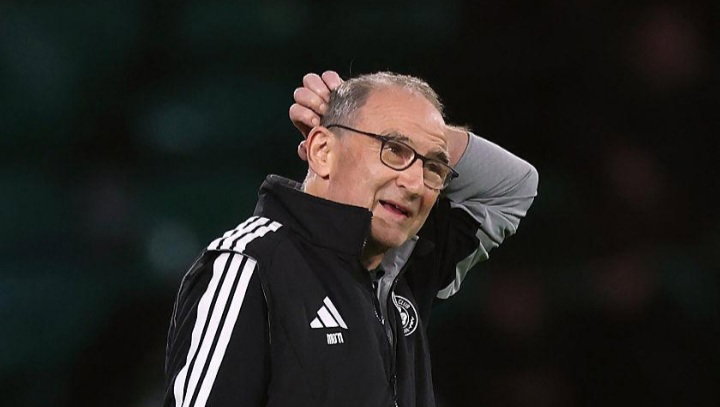
Martin O’Neill’s Celtic Verdict Beggars Belief – Is His Reputation Protecting Him?
There are few figures in Celtic’s modern history I hold in higher regard than Martin O’Neill. His achievements, his passion and the extraordinary memories he gave this football club deserve enormous respect.
But respect must never become immunity from criticism.
And after listening to O’Neill’s assessment of Celtic’s humiliating 4-1 defeat against Benfica, I genuinely found myself wondering whether we had watched the same football match.
A Remark That Demands Scrutiny
Speaking to Celtic TV after the defeat, O’Neill declared: “I thought we were brilliant.”
He was referring specifically to the second half, and that distinction matters. But Celtic were already three goals behind at the interval. The contest had effectively escaped them before the supposed brilliance began.
Yes, Celtic improved. Yes, the substitutes introduced energy and attacking purpose. But should we really be celebrating an improved second half when another European opponent has inflicted such a damaging defeat?
I find that deeply troubling.
The Manager Cannot Escape Responsibility
O’Neill acknowledged that his substitutions made a massive difference. Haissem Hassan and Callum Osmand certainly transformed Celtic’s attacking threat.
But that raises an uncomfortable question.
If those changes were so effective, why did Celtic begin the match with a combination that struggled so badly?
Managers are paid to make difficult decisions before matches, not simply identify problems after their team has conceded three goals.
Of course, O’Neill inherited serious deficiencies. Recruitment failures and years of questionable strategic decisions cannot suddenly be attributed to him.
Nevertheless, the responsibility for preparation, selection and tactical organisation now rests with the manager.
That is not disrespect. It is accountability.
Celtic’s European Standards Are Collapsing
The wider picture is even more alarming. Celtic have conceded twelve goals across their last three European matches, against LASK, Ferencvaros and Benfica.
Add the two damaging defeats against Rangers this season, and it becomes increasingly difficult to argue that Celtic are responding adequately when the stakes are highest.
These are not isolated setbacks. They are recurring failures in important fixtures.
Yet O’Neill remains optimistic about European qualification, despite Celtic having lost their opening two Europa League league-phase matches.
Optimism is admirable. But optimism without a convincing improvement in results risks sounding detached from reality.
Would Another Manager Receive This Protection?
Here is the question I believe Celtic supporters must confront.
If another manager had overseen these performances and then praised his side as brilliant after a 4-1 defeat, what would the reaction have been?
Would the media have been so understanding? Would supporters have been so reluctant to question his decisions?
I suspect not.
O’Neill’s place in Celtic history is secure. Nothing happening today can erase what he achieved during his first spell.
But those achievements cannot be used as a shield against legitimate scrutiny of the present.
Celtic supporters are entitled to demand more than encouraging passages of play during comprehensive defeats.
They deserve a manager whose decisions improve results, a team capable of competing in major fixtures and a club that refuses to normalise humiliation.
Martin O’Neill will always deserve our gratitude.
But gratitude is not a substitute for accountability.
And Celtic desperately need accountability right now.