
Are Celtic Making Good Players Look Bad? The Recruitment Problem Nobody at the Club Wants to Address
 Aodhán Ó Conchobhair
Auto Draft
One of the most frustrating things about watching Celtic at the moment is that we seem to have players capable of producing good individual performances, yet collectively we look completely disjointed.
Sunday’s defeat to Falkirk was another example.
We had 70% possession, 24 attempts at goal and nine shots on target. Yet we lost 2-0, with former Celtic goalkeeper Scott Bain producing ten saves to keep us out.
Those numbers tell part of the story, but they do not explain why our football looks so disorganised.
There is no consistent pattern to our attacking play, there is no real connection between certain positions, and far too many players appear to be working out what they are supposed to do as the game unfolds.
Are we actually getting the best out of the players we have?
Take our attacking options.
We have repeatedly seen players being used in positions that do not necessarily suit their strengths. Strikers are being pushed into wide roles, while natural wingers have struggled to establish themselves in the team.
The difference when players such as Jota and Haissem Hassan offer genuine width is obvious. They can take defenders on, create space and give the opposition something different to think about.
Yet we continue to make life difficult for ourselves by trying to squeeze different attacking profiles into the same system.
Sebastian Tounekti and other attacking options have also struggled to find consistent opportunities. That raises questions about recruitment but also about how we are integrating players into the team.
Signing a player is only half the job. We need to understand what they are good at and build a system that allows them to show it.
The midfield is another example.
Callum McGregor is being asked to provide control, dictate our passing and help protect the defence. But who is consistently giving him the support he needs?
We lack the physical presence and mobility required to dominate the middle of the pitch. When opponents press us aggressively or attack quickly through midfield, we struggle to regain control.
It is not fair to expect McGregor to solve every problem himself.
The same applies defensively. Carter-Vickers had a particularly poor afternoon against Falkirk, but the problems in front of him cannot be ignored. If our midfield is repeatedly allowing opposition players to run directly at the defence, we are making life unnecessarily difficult for our centre-backs.
These are not isolated issues. They are connected.
And that brings us back to the recruitment department.
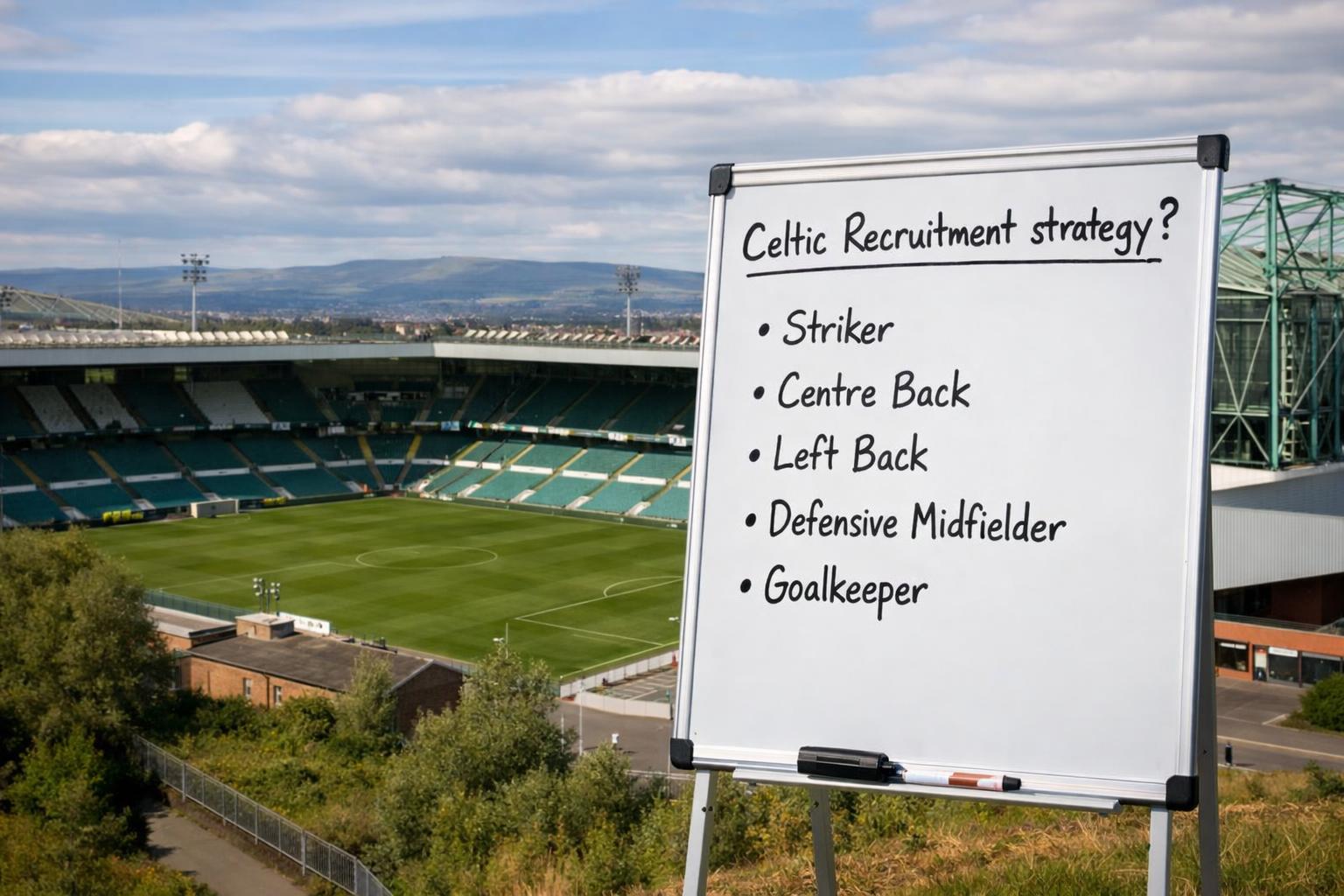
Celtic have spent money bringing players into the club, but where is the evidence of a coherent plan behind those decisions? We need to recruit players who complement one another rather than simply adding more names to an already unbalanced squad.
A good manager cannot fix every recruitment mistake, and good recruitment cannot compensate for a manager without a clear tactical identity. We need both.
That is why simply changing the man in the dugout might not be enough.
If a new manager arrives but inherits the same imbalance, the same lack of physicality in midfield and the same shortage of natural width, how much can realistically change?
The board needs to take responsibility for creating a footballing structure that works beyond one managerial appointment.
We should have a clear playing philosophy, a recruitment department identifying players who fit it and a pathway that allows those players to develop into the team.
At the moment, it feels as though we are constantly trying to solve one problem by creating another.
Sunday’s defeat was not just about missed chances or a goalkeeper having an outstanding afternoon.
It was another reminder that Celtic look like a team without a clear identity.
We might have good players in this squad, but until we start building a team rather than collecting individuals, we will continue to fall short.
Key Takeaways
- Celtic lacks cohesion despite having talented players; individual strengths are often misused in unsuitable positions.
- The midfield struggles with support and physical presence, leading to difficulties in controlling the game.
- Recruitment needs a coherent strategy; simply adding players won’t solve the team’s imbalance.
- A change in management won’t suffice unless there’s a clear tactical identity and plan in place.
- Celtic must build a team that functions collectively rather than relying on individual performances.