
Derek McInnes ‘Immediate’ Ban Farce Raises Celtic Question – How Can Immediate Mean Weeks?
Derek McInnes was handed an “immediate” touchline suspension, yet competitive matches continue to pass with him in the dugout. The Scottish FA has serious questions to answer.
 Phillip Cooney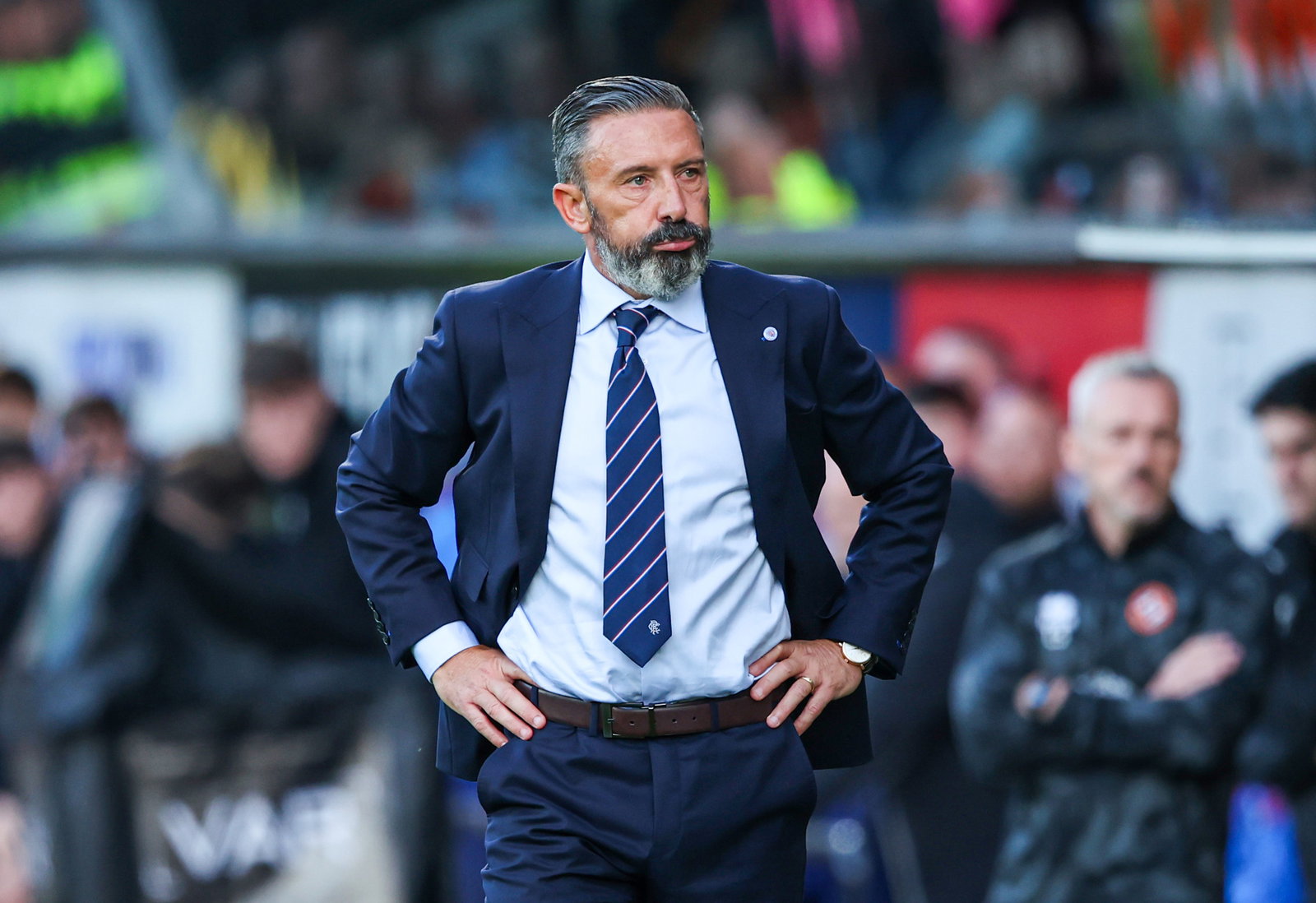
DUNDEE, SCOTLAND - JULY 31: Rangers Manager Derek McInnes looks dejected during a William Hill Premiership match between Dundee United and Rangers at the CalForth Construction Arena at Tannadice Park, on July 31, 2026, in Dundee, Scotland. (Photo by Craig Williamson/SNS Group via Getty Images)
Derek McInnes was handed what the Scottish FA described as an “immediate” touchline suspension. Weeks later, there has been precious little immediate about it.
This is amateur hour.
McInnes has already occupied the dugout against Dundee United and Hibernian while his appeal remains unresolved.
Of course, every manager has the right to appeal a disciplinary decision. That isn’t the issue.
The issue is how an “immediate” punishment can effectively disappear for weeks while the appeals process crawls along.
Scottish football deserves an explanation.
McInnes ban makes a mockery of ‘immediate’
McInnes was found in breach of Disciplinary Rule 72 following comments made while Hearts manager after a match involving Celtic.
He described a refereeing decision as “disgusting” and claimed his side were “up against everybody”.
The disciplinary tribunal found the charge proved.
McInnes received a four-match touchline suspension. Three matches were described as immediate, while the remaining match was suspended until the end of the 2026/27 season.
Then came the appeal.
That explains why McInnes has been allowed to remain in the technical area. It does not adequately explain why the matter is taking so long to resolve.
At the time of writing, there appears to be no publicly announced date for the appeal hearing or decision.
How can that possibly be acceptable?
If a punishment is described as immediate, surely an appeal against that punishment should also be treated with urgency.
Instead, competitive matches are passing.
McInnes was in the dugout against Dundee United. He was there again for the home defeat against Hibernian.
How many more matches can pass before this supposedly immediate punishment actually becomes immediate?
It is tin-pot stuff.
Celtic connection leaves uncomfortable questions
There is another reason this deserves scrutiny from a Celtic perspective.
The original offence came from McInnes’ comments following a match involving Celtic.
There is no evidence that the Scottish FA deliberately delayed the process to benefit McInnes or the Ibrox club. That should be made absolutely clear.
However, the optics are dreadful.
McInnes successfully remained in the dugout for the opening matches of the season, including his first competitive home fixture.
Was that simply an unfortunate consequence of the appeals process?
If so, why wasn’t the appeal dealt with before the season started?
Why has an “immediate” suspension been allowed to sit unresolved for weeks?
And why does there still appear to be no publicly confirmed date for a decision?
Those are legitimate questions, not accusations.
Consistency also matters.
Would every Scottish Premiership manager receiving an immediate three-match touchline suspension be able to continue managing matches while an appeal remained unresolved?
If the answer is yes, then the system itself needs examined.
The word “immediate” has a meaning.
It does not mean three weeks later. Certainly does not mean after several competitive fixtures. It certainly should not mean whenever the disciplinary authorities eventually get around to resolving an appeal.
McInnes was entitled to challenge the decision. Nobody should deny him that right.
However, an efficient governing body should be capable of dealing with such an appeal quickly.
Instead, Scottish football has been left with the ridiculous situation where an “immediate” punishment has been anything but immediate.
The Scottish FA needs to explain the delay.
Until then, this looks like amateur hour from a disciplinary system that should be doing considerably better.




I agree about what you are saying but I really want him staying on the touchline as he is a clown
Shhh…🤫 They might start winning if he get banned to the stands. 😂
Keep him on the touchline , the entertainment value alone is worth it ,the his Stella management skills this could be the best laugh alone .
Yes be careful what you wish for with the biggest fraud coach in Scotland – McInnes ? The tribute act might just start to play better when he’s not there as he finally begins his ban in the stands ……sitting on nice thick fluffy soft cushions of course !
‘Amateur hour’ isn’t an accident, it’s used in every aspect of what they do when it comes to the Huns, a helping hand dressed up as incompetence, nothing new.