
Dermot Desmond’s Celtic Stranglehold Tightens as the Board Closes Ranks
Mark Keane and Raymond Buchanan arrive as Celtic supporters organise for greater shareholder power, accountability and genuine boardroom reform.
 Phillip Cooney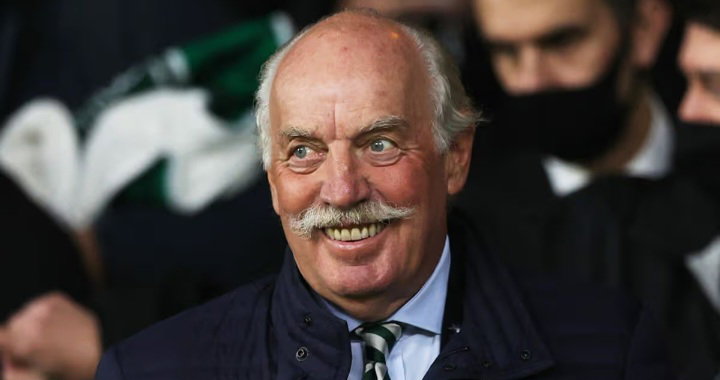
Dermot Desmond’s Celtic stranglehold appears to be tightening. The appointment of Mark Keane and the forthcoming arrival of communications executive Raymond Buchanan do not yet look like a revolution. They look like reinforcement.
Celtic call Desmond their principal shareholder. That distinction matters because he does not own Celtic. The club belongs collectively to all its shareholders, including thousands of ordinary supporters.
Yet Desmond’s influence has long extended far beyond the description on the paperwork. Managers consult him. Senior appointments carry his blessing. Major football decisions repeatedly appear to travel through an absent powerbroker who is rarely visible at Celtic Park but remains central whenever authority is exercised.
That is not healthy governance. It resembles a private fiefdom operating inside a public company.
Dermot Desmond’s Celtic stranglehold gains another powerful vote
Keane is not an insignificant appointment. He is a substantial Celtic shareholder who has previously been reported as holding approximately 6.25% of the company. Desmond controls approximately 34.7%.
If Keane consistently supports Desmond’s position, their combined voting influence could exceed 40%. That does not prove Keane will automatically vote with him. However, supporters are entitled to ask whether the board has recruited a genuinely independent voice or strengthened the existing power structure.
This matters because supporter organisations are attempting to rebalance Celtic’s grotesquely uneven governance.
The Celtic Trust’s “Drive for 5” seeks to unite enough small shareholders to control at least 5% of the vote. That threshold would allow supporters to demand a general meeting and give fan-backed resolutions genuine weight.
Celtic Supporters Limited has taken another route. It buys shares, coordinates proxy votes and campaigns for governance reform. Meanwhile, the Celtic Fans Collective, the Celtic Supporters’ Association and Irish supporters’ organisations have demanded greater accountability, transparency and meaningful consultation.
These movements are trying to turn emotional investment into actual influence.
The board appears to be building a higher wall.
Dermot Desmond’s Celtic stranglehold now comes with a communications shield
Buchanan is not simply a former broadcaster. He is an experienced corporate-affairs executive who has occupied senior communications and public-affairs positions at Scottish Water, SSE and Weir.
That expertise could help Celtic communicate honestly. Yet supporters have every reason to fear a different purpose.
Celtic do not need another polished voice telling supporters about balance sheets, European participation and “continued success.” They need directors willing to challenge a timid, complacent and chronically unambitious hierarchy.
Buchanan must not become a human shield positioned between the board and legitimate criticism. If his job becomes repackaging stagnation as stability, protecting executives from scrutiny and smothering dissent beneath corporate language, his appointment will deepen the distrust.
Celtic’s bank balance has been treated like the ultimate trophy while the football operation has been allowed to deteriorate. Recruitment failures, European humiliation, managerial upheaval and a squad stripped of quality are not signs of responsible stewardship. They are consequences of a board obsessed with financial insulation and terrified of sporting ambition.
Desmond is not Celtic’s owner. He is its largest individual shareholder. No shareholding should entitle one largely absent individual to exercise near-presidential power over a club sustained by generations of supporters.
These appointments may be advertised as renewal. Until Keane demonstrates independence and Buchanan delivers transparency rather than propaganda, supporters should see them for what they currently resemble: fresh masonry around the same fortress.
Key Takeaways
- Dermot Desmond owns shares in Celtic; he does not own the club.
- Mark Keane’s substantial shareholding could strengthen Desmond’s influence if they vote together.
- The Celtic Trust and Celtic Supporters Limited are organising supporter-shareholder power.
- Raymond Buchanan must deliver transparency, not become a shield for the board.
- Celtic require independent scrutiny and football ambition—not another layer of corporate protection.



Is DD de facto owner. Who does he answer to? Who can overrule him? Who
approves major decisions, the owner. Who is DD, the owner.
Hopefully Desmond drops dead on a Trump golf course and his gobshite son decides to sell his inherited shares in our club. These fuckers need removing by any means necessary. This old criminal Dublin fraudster is driving our club to Hell in s handcart. We should throw the fucker into it and give it one last heave from behind to send him straight to Satan & all his demons.
Someone said to me recently, “where’s the ra when you REALLY need them ??”
I have absolutely no idea what she was talking about.
And on and on and on and on the misery goes then !
Stop buying season tickets
Push for supporters clubs being more prominent
Once u pay in advance the power has shifted
Now u sit cap in hand hoping for change.
Give up season tickets and there is no return with a waiting list and another background waiting list +. Green brigade should have selective members protesting daily outside main doors with banners and inviting press. Club must b made to feel embarrased. Unfortunately no effect on DD but everything must be tried. The audacity to close an agm early for share paying holders should be taken on legally unheard of in business