
While Celtic remain ultra cautious, will the ‘Rangers’ spend themselves into oblivion again?
Do we really believe the Ibrox side is headed for another administration event, or will they eventually seriously challenge Celtic?
 Eric Knott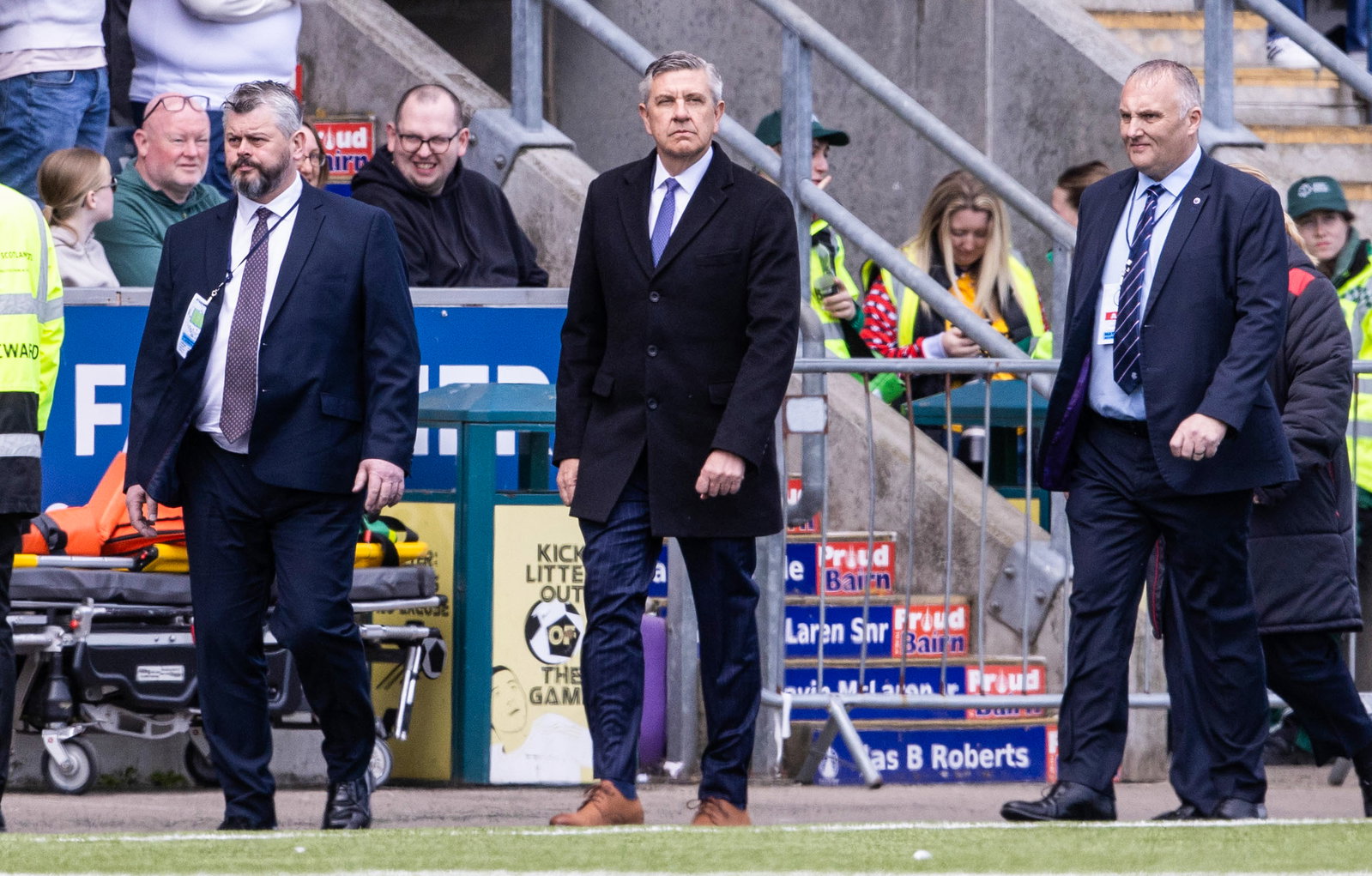
FALKIRK, SCOTLAND - MAY 16: Rangers Chairman Andrew Cavanagh comes onto the pitch and goes to talk to Rangers fans at half time during a William Hill Premiership match between Falkirk and Rangers at The Falkirk Stadium, on May 16, 2026, in Falkirk, Scotland. (Photo by Alan Harvey/SNS Group via Getty Images)
On Thursday, after the Scottish transfer window had shut, I wrote an article about the fact that the Ibrox side spent more than Celtic did in the summer transfer window.
The article in question caused a lot of debate.
But it was also met with a lot of derision, which I expected it would be.
Irrespective of that, there was nothing about the article that was untrue.
The Ibrox side have outspent us in the summer window.
Many Celtic fans, especially happy clappers, do not want to hear or read that, but it’s a fact.
The happy clappers will tell you because they’re conditioned to, of course, that this kind of spending will end up with the Ibrox side facing another administration event.
While from a Celtic perspective, this sort of madness is the very reason for our frugality.
But will it really end up with the Ibrox side headed for oblivion?
Are we really to believe that Andrew Cavenagh and all of his Ibrox investors are that stupid?
Are we also to believe that Cavenagh and his team have never looked at what happened to the old club back in 2012?
Andrew Cavenagh made his money in the insurance game, health insurance to be precise.
If you are involved in the insurance industry, you aren’t somebody who would be renowned for taking crazy risks.
You might take risks, but they are calculated risks.
The risk must have a reward at the end of it.
Bearing that in mind, are we to believe that somebody who made his money in this kind of industry is just going to throw caution to the wind when it comes to running a football club he and his investors have acquired?
Now I don’t doubt the Ibrox side will show an operating loss in its next set of accounts, how could it not?
Deficits in transfer spending in season 25/26, and the summer just gone are going to contribute heavily to that.
Looking at it from the outside as a Celtic supporter, it does still seem like an insane asylum over there.
But it’s not quite as insane as the regime that ran the place into the ground in 2012.
The same old managerial cycle happened last year.
The spending for a third place finish was ridiculous.
This season, Derek McInnes isn’t quite of of the woods yet either.
But so far, Cavenagh and his investors are sticking with their man.
A double defeat in the upcoming derby games could put his position in serious doubt, that much is true.
But in my opinion, both of those games hang in the balance.
The banning by the SFA of all away fans will, no doubt, have an impact on these fixtures too.
But looking at Cavenagh, and the way that he operates, I can’t help feeling that he’s playing the long game here.
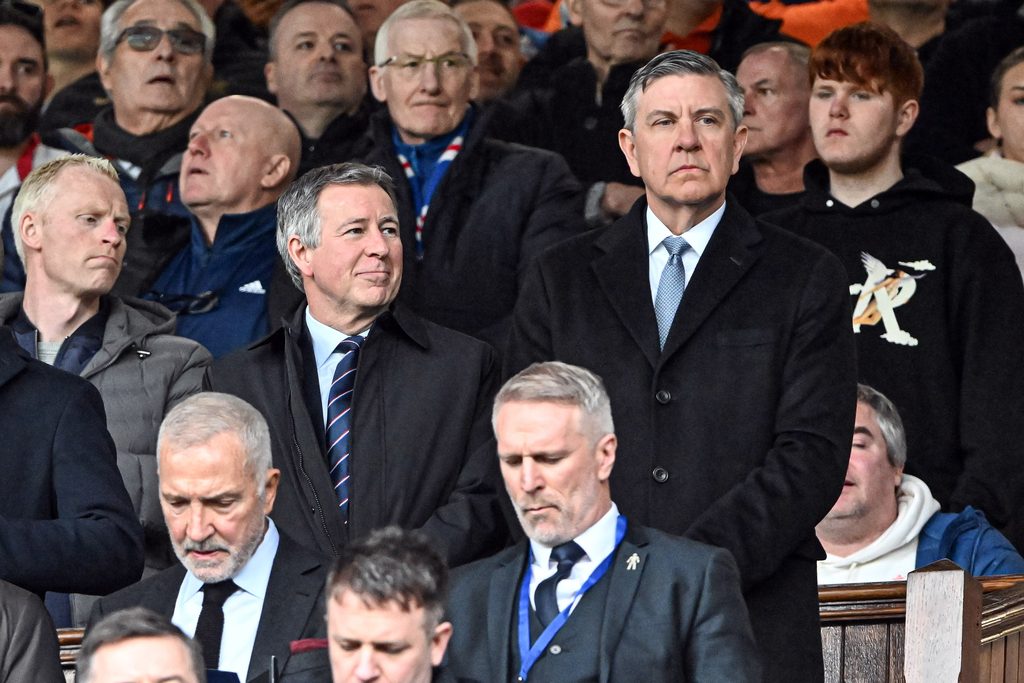
08/03/2026
Now, he’s not a billionaire like Dermot Desmond, and he installed himself as Chairman of the Ibrox club so that he would have a hands on role in his investment.
He certainly takes his role seriously.
You wouldn’t see Dermot Desmond sitting in the stands at the Falkirk stadium on a midweek night, that’s for sure.
No, he only arrives when he thinks there are plaudits to be lapped up.
Just like he arrived in Linz a couple of weeks ago.
That one worked out well for him, didn’t it?
I suppose we got the consolation of the Europa League out of that disaster.
Whereas the Ibrox side have no European football for the first time since 2017 after their exit from the Conference League at the hands of Jablonec.
What was interesting in the aftermath of that was the contrast in how our transfer priorities changed, and how theirs remained the same.
Gone from our list of priorities were Niko Sigur, Ermin Mahmić, and Gvidas Gineitis.
Instead, we got four loan signings, one permanent project signing, and another on a year long deal.
The less said about the Gineitis debacle, the better at this point.
The Ibrox side had Kevin Kelsey as one of their targets all summer.
Their £9.2 million target was landed on deadline day, and in addition to him, Badredine Bouanani came in on a season long loan from Stuttgart, with an option to buy at the end of it.
The Ibrox side broke the Scottish single window spending record by spending £35.5 million in comparison to Celtic’s £30.1 million.
Spending to oblivion once again, or investing for the long game?
Well, I guess that’s up for debate.
Which is exactly what happened with the article I wrote on Thursday.
The Celtic board will convince the happy clappers that the Ibrox side is headed for another administration event, whereas I personally don’t see that happening.
The people now involved in that club aren’t driven by hubris, egotism, sectarianism, or a black hatred of Irish Catholics, they are driven by a desire to succeed.
And a desire to make money, above all else.
They are not in this to lose fortunes.
They believe their investment will pay off eventually.
I have no doubt their confidence in this outcome is wholly driven by Celtic’s vehement risk aversion policy.
Which, I might add, was fully endorsed by Martin O’Neill’s admission that we are not capable of competing in Europe.
Even the board has managed to convince him of that, which I find extremely sad.
The same man stated that we owed it to the spirit of ’67 to do ourselves proud in the Champions League a couple of weeks ago, now states we aren’t capable of competing at a European level?
Go figure.
So, while a lot of people scoffed at my article on Thursday evening, and I’m sure plenty more will deride this one, I certainly don’t buy into the theory that the Ibrox side is headed for oblivion again.
I think they’re here to stay.
Not only do I think that, I think eventually they’ll find the formula to seriously challenge us.
You can use the the old adage that if you throw enough shit at a wall, eventually some of will stick.
Eventually, it will stick for the Ibrox side.
And when it does, do you have faith in the people in our boardroom to rise to that challenge?
Because I certainly don’t.
They pride themselves in their domestic bliss and unprecedented domestic success.
Take that away, or at least seriously threaten it, and what do they have?
Oh yeah, and I haven’t even got around to what Wouter Vrancken is building at Hearts.
I’ll save that story for later in the season.
While avoiding risk protects Celtic in the short term, over time it creates a structural weakness that will eventually make us vulnerable to our competitors.
Cavenagh and Co are playing the long game, but Celtic continue with short-termism and no long-term vision.
Will it catch up on us eventually.
Who am I to predict the future?
If it does, I’ll just refer you back to this article…
Key Takeaways
- The Ibrox side outspent Celtic in the summer transfer window, igniting heated debate among fans.
- Despite concerns of financial mismanagement, the new management under Andrew Cavenagh appears focused on calculated risks and long-term success.
- Celtic’s approach remains risk-averse, potentially creating vulnerabilities against more aggressive competitors like the Ibrox side.
- The spending dynamics reflect contrasting priorities between the clubs, with Celtic opting for cautious investments while the Ibrox side pursues significant signings.
- Ultimately, the article suggests that the Ibrox side is likely to be a lasting challenge for Celtic, highlighting structural weaknesses in the latter’s approach.
Choose Read Celtic as a ‘Preferred Source’ on Google News for quick access to the news you value.