
Celtic’s Decline Has One Constant — Dermot Desmond Has To Go
Domestic dominance can no longer disguise 22 years of European knockout failure, dismantled squads and an absence of forward planning.
 Phillip Cooney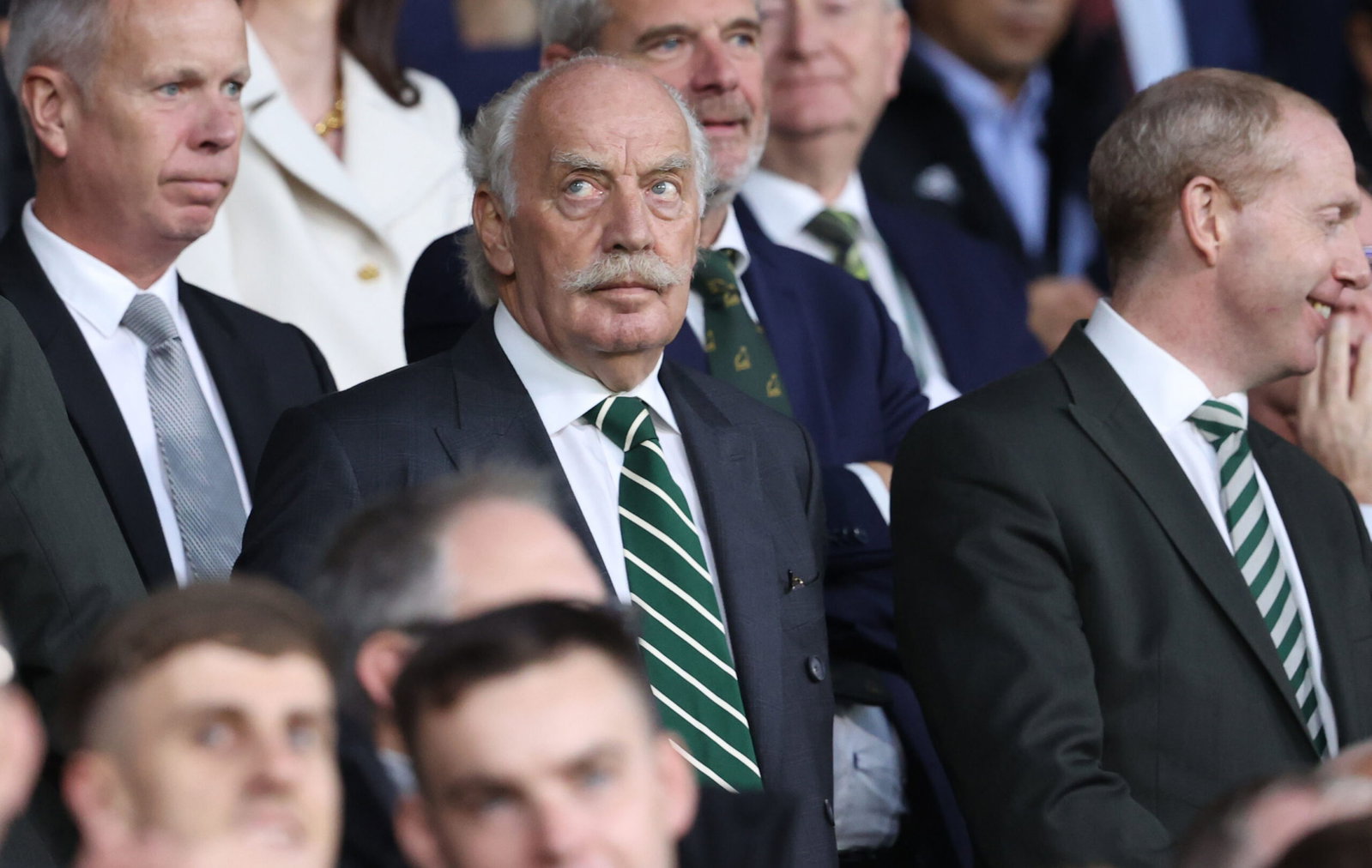
(Photo by Alan Harvey/SNS Group via Getty Images)
Domestic trophies matter. Nobody should dismiss Celtic’s dominance in Scotland, and the medals won during Dermot Desmond’s time at the club are real.
But domestic success can no longer be used as camouflage for European decline, repeated transfer-window negligence and a leadership structure that appears incapable of learning from its own mistakes.
The uncomfortable conclusion is becoming unavoidable.
Dermot Desmond has to go.
Celtic’s European record is the real verdict
Celtic have not won a European knockout tie since Martin O’Neill’s side eliminated Barcelona from the UEFA Cup in March 2004. That is more than 22 years without progressing through a post-Christmas European knockout round.
There have been individual knockout-match victories since then, but not one completed tie. Celtic’s last European knockout-tie success came under O’Neill in 2004.
European football has changed, and the biggest leagues now enjoy an even greater financial advantage. However, that cannot explain away more than two decades of failure.
Celtic have an enormous support, regular European income and resources far beyond every domestic opponent. Yet the club continually arrive at the level that matters looking underprepared, undermanned and surprised by entirely predictable problems.
Selling players is not the problem — the timing is
No sensible supporter expects Celtic to retain every leading player forever. Player trading is part of the modern game, particularly for clubs operating outside Europe’s richest leagues.
The objection is not that Celtic sell. It is that they sell key footballers without having replacements ready, then attempt to reconstruct the squad while the team is already contesting Champions League qualification.
This summer provided another brutal example. Arne Engels left for West Ham in a deal reported at £22 million. Daizen Maeda also departed. Engels supplied energy, athleticism and running power from midfield—qualities Martin O’Neill has since acknowledged the club failed to replace adequately.
That is not strategic squad building. It is demolition followed by improvisation.
Celtic repeatedly enter Champions League qualifiers treating qualification like a hopeful bonus rather than a project requiring months of preparation. The club should assemble its strongest team before the defining matches instead of patching it together afterwards with late deals and loans.
Under Desmond’s influence, the cycle has become painfully familiar: sell valuable assets, delay replacements, gamble through qualification and then explain the consequences as though nobody could have foreseen them.
Power without proper accountability
Desmond is Celtic’s largest individual shareholder, holding roughly a third of the company, and serves as a non-executive director. He is not Celtic’s owner. He is a shareholder—an extremely influential one—but the club does not belong to him.
Yet his reach has often appeared to extend far beyond that description.
Paddy McCourt later said Desmond personally drove his 2008 move from Derry City and that then-manager Gordon Strachan did not know who he was when the transfer was being arranged. McCourt became a popular player, but that is not the point. The story illustrates how blurred the line between shareholder influence and football decision-making has sometimes become.
A modern football club should have a clear recruitment department, an empowered manager, specialist executives and an accountable chain of command. It should not depend upon who appears in one powerful shareholder’s contacts book.
Celtic must finally look beyond the familiar circle
Martin O’Neill, Neil Lennon and Brendan Rodgers all delivered major domestic success. This argument does not diminish their achievements.
However, Celtic’s repeated return to familiar names reflects a wider absence of imagination. When pressure rises, the solution too often appears to be somebody Desmond already knows rather than a genuinely expansive search for the best available candidate.
The appointments of Mark Keane and Raymond Buchanan as non-executive directors may bring capable people into the boardroom. Both have substantial professional backgrounds. Nevertheless, both are also lifelong Celtic supporters from familiar circles, while Keane is already a significant shareholder and the son of former honorary chairman John Keane.
Where is the independent football expertise? Where is the outside voice prepared to challenge the culture rather than settle comfortably inside it?
Celtic do not need another custodian of the existing order. They need a modern sporting structure, genuine succession planning and leadership capable of preparing for Europe before the opportunity has disappeared.
Desmond’s influence may once have offered stability. It now looks like the constant behind a club standing still while European football moves further away.
For Celtic to change direction, the man at the centre of that direction must step aside.
Key Takeaways
- Celtic have not won a European knockout tie since eliminating Barcelona in March 2004.
- More than 22 years of knockout failure cannot be dismissed as an unavoidable financial reality.
- Selling players is sustainable only when replacements are secured before crucial qualifiers.
- The departures of Arne Engels and Daizen Maeda again exposed Celtic’s lack of succession planning.
- Desmond is an influential shareholder and director, not the owner of Celtic.
- Celtic need independent football expertise and a leadership structure extending beyond familiar contacts.
Old grey useless ‘men’ !