
 Aodhán Ó Conchobhair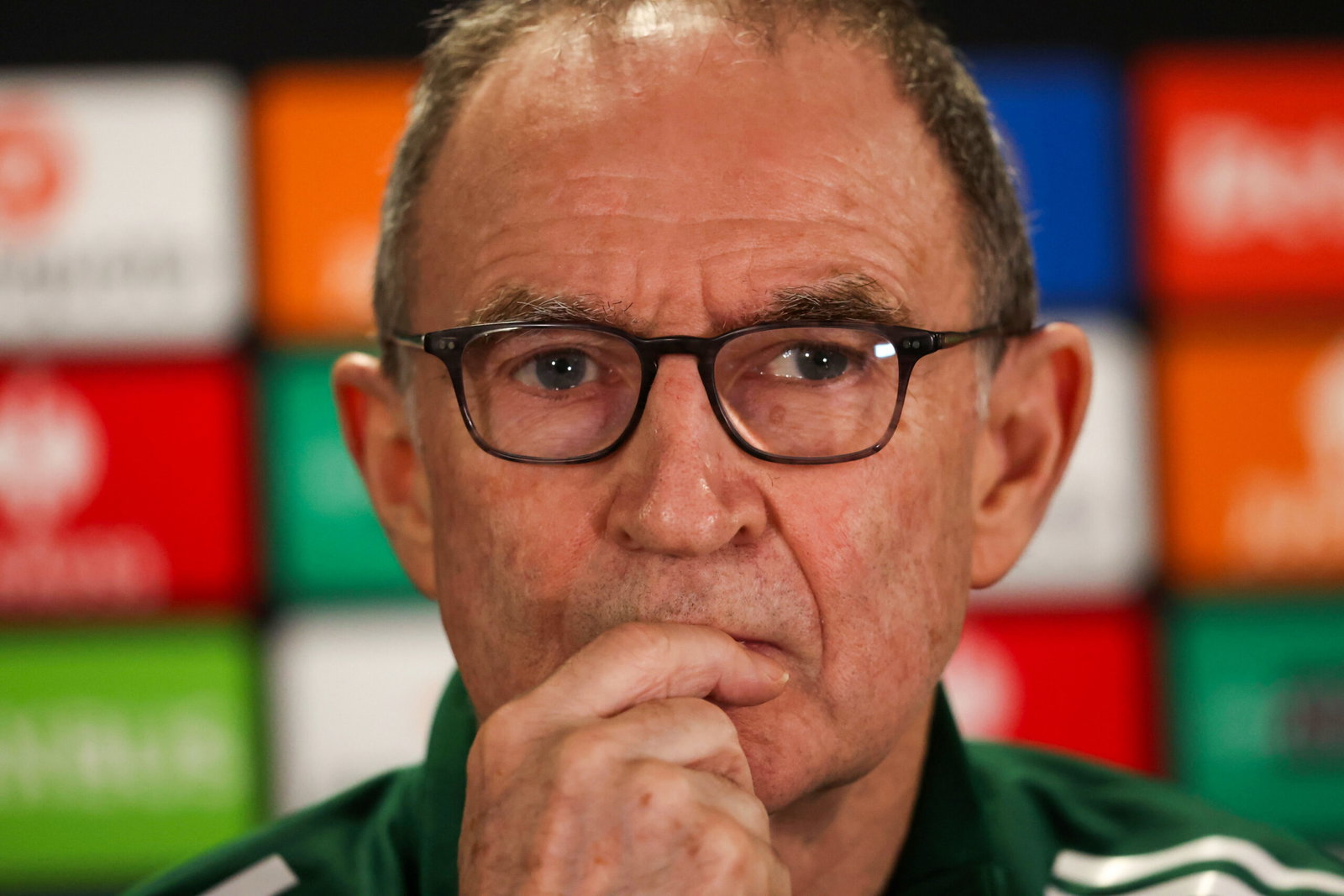
GLASGOW, SCOTLAND - FEBRUARY 18: Celtic Manager Martin O'Neill during a Celtic MD-1 press conference at Celtic Park, on February 18, 2026, in Glasgow, Scotland. (Photo by Craig Foy/SNS Group via Getty Images)
The international break has arrived at Celtic Park at a very interesting time.
Three defeats in eight days. A 3-0 defeat at Castle Greyskull. A 3-1 defeat to Ferencváros. Then a 1-0 defeat at home to Castle Greyskull again.
And, perhaps most importantly, Martin O’Neill himself has questioned his future.
After the latest defeat, O’Neill said he would reflect on the situation and speak to the Celtic board, while admitting there were legitimate questions over whether he could turn things around.
Michael Nicholson subsequently offered public support to O’Neill, saying Celtic would continue to support their manager.
But how long can that support realistically last if the results don’t change?
Because Celtic now have an absolutely brutal run of fixtures coming up.
Motherwell away. Benfica away. Hearts at home. Celta Vigo at home. Hibs away. Dundee United at home.
Six games in just 18 days.
And I think this is where the Celtic board needs to be very clear about what it actually wants.
If they genuinely believe O’Neill is the man to take this team forward, then back him properly and give him the opportunity to do it.
But if there are doubts, this international break was the opportunity to have that conversation.
Instead, there has been remarkably little coming from Celtic.
Maybe that’s because the board genuinely wants to give O’Neill time.
Maybe they haven’t made a decision.
Maybe they are waiting to see what happens when football returns.
But from a supporter’s perspective, that silence is noticeable.
How many games?
Motherwell is first.
On paper, it is the kind of game Celtic should be expected to win. But after three consecutive defeats, every match suddenly carries more pressure.
Then comes Benfica away.
That’s an enormous European test and one where Celtic will have to show considerably more than we have seen in recent weeks.
Then Hearts at Celtic Park.
Hearts are already sitting third in the league and only five points behind Celtic after seven games.
Then Celta Vigo.
Then Hibs away.
Then Dundee United at home.
Six matches that could completely change the mood around Celtic… better or for worse.
And that’s why I don’t think this is about saying, “O’Neill must go after the next defeat.”
It’s about whether the board has already established a threshold.
What does O’Neill need to achieve over those six games?
How many points are acceptable?
Does there need to be a reaction in Europe?
Can Celtic afford another heavy defeat?
At what point does the board decide that a change is necessary?
Because if they haven’t asked themselves those questions already, they should be asking them now.
The worst possible situation for Celtic is drifting through another month simply because nobody wants to make the difficult decision.
We’ve seen enough football now to know there are serious problems.
The LASK collapse exposed the squad.
The defeat at Castle Greyskull exposed the lack of competitiveness.
The Ferencváros defeat raised further questions.
And the second Castle Greyskull defeat suggested that this wasn’t simply one bad night.
That doesn’t automatically mean O’Neill is the problem. The board has to look at the players, the recruitment, injuries, tactics and the overall structure before reaching that conclusion.
The manager cannot be immune from accountability.
And neither can the board.
That’s why these next 18 days could be absolutely decisive.
If O’Neill turns it around, wins games, gets Celtic playing with confidence again and navigates a difficult European schedule, the conversation changes completely.
But if Celtic come out of this run having dropped further points domestically, struggled badly in Europe and continued to look like a team without answers, the board will eventually have to act.
Because at some point, “give it time” stops being a plan.
The international break has given Celtic a pause.
There hasn’t been a huge amount of noise from the club.
Perhaps that’s because the decision has already been made to give O’Neill another chance.
If so, fair enough.
But then we need to see what that chance actually means.
Six games. Eighteen days.
Motherwell. Benfica. Hearts. Celta Vigo. Hibs. Dundee United.
That is enough football for Celtic to know whether this situation is genuinely turning around — or whether the board has to accept that a change is required.
Because we cannot afford to drift into November still asking the same question.
How many more games can Martin O’Neill afford?
At some point, the Celtic board has to have an answer.
Key Takeaways
- Celtic faces a challenging period with six matches in 18 days after recent poor performances, including three consecutive defeats.
- Martin O’Neill questioned his future, prompting the need for the board to clarify their stance on his position.
- Celtic must deliver results in upcoming games against Motherwell, Benfica, Hearts, and others to avoid further pressure on O’Neill and the board.
- The board needs to establish clear thresholds for O’Neill’s success; without measurable goals, indecision may harm the team’s performance.
- Silence from the Celtic board raises concerns; supporters want clarity on what support for O’Neill truly means moving forward.