One Year Since Rodgers “Resigned”: Is Celtic in a Worse Position Than Ever?
 Aodhán Ó Conchobhair

Auto Draft
One year ago today, Brendan Rodgers “resigned” as Celtic manager, and Dermot Desmond responded with one of the most extraordinary statements we have seen from a major shareholder in modern football.
Rodgers was accused of being “divisive, misleading, and self-serving”. Desmond insisted Celtic’s structure was not the problem, placing the blame firmly on the departing manager. It was a remarkable public attack, and one that set the tone for everything that followed.
Twelve months on, Celtic have won a league and Scottish Cup double, Martin O’Neill has been hailed as a hero, and we have experienced some unforgettable moments.
But we have also suffered managerial chaos, another failure to reach the Champions League, a disastrous spell under Wilfried Nancy and growing frustration with the direction of the club.
So, a year after Rodgers walked away from Celtic Park, I think it is fair to ask a question that will not go down particularly well in the boardroom.
Are Celtic in a worse position now than we were when Rodgers “resigned”?
For me, when it comes to stability, European standing and confidence in the people running the club, the answer is increasingly difficult to ignore.
The statement that started it all
The manner of Rodgers’ departure was extraordinary.
Celtic had just lost 3-1 to Hearts at Tynecastle. We were eight points behind the league leaders after nine matches, had struggled in Europe and endured a frustrating summer transfer window.
Rodgers had made his feelings about recruitment increasingly clear. His famous comparison between being handed a Honda Civic and being expected to drive it like a Ferrari summed up his frustration with the squad available to him.
Then came the announcement that he had resigned.
Rather than allowing the situation to settle, Desmond issued a lengthy statement attacking the former manager’s conduct. He disputed Rodgers’ version of events surrounding recruitment and contract discussions, insisting that every player signed or sold had been done with the manager’s knowledge and approval.
The language was particularly strong. Rodgers was accused of contributing to a toxic atmosphere and acting in his own interests.
There was no mistaking the message: Celtic’s structure was not to blame.
At the time, supporters were divided. Some believed Rodgers had brought the situation upon himself, while others felt his complaints about recruitment had been justified.
But regardless of where we stood, the club’s response raised serious questions about how Celtic handled the departure of a manager who had won multiple trophies across two spells.
A year later, those questions have not gone away. If anything, the events since then have made them more relevant.
Martin O’Neill rescued Celtic — but why did we need rescuing?
When Rodgers left, Celtic turned to Martin O’Neill on an interim basis.
Twenty years after his first spell in charge, the legendary manager returned to a club in turmoil. It was a nostalgic appointment, but also an extraordinary one. O’Neill later revealed that he had around ten minutes to decide whether to take the job.
Nobody can question what he achieved.
O’Neill brought belief back into the dressing room, reconnected with supporters and helped Celtic navigate a season that threatened to spiral out of control.
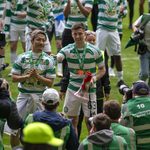
When he returned for a second time after Nancy’s dismissal, he once again delivered when Celtic desperately needed him. The league title was secured in dramatic fashion on the final day, before the Scottish Cup completed a domestic double.
He deserves enormous credit for that. So do his coaching staff and the players who responded when the pressure was at its highest.
But here is where I struggle to give the club the same praise.
O’Neill was initially brought in as a temporary solution. Celtic then appointed Nancy in December, hoping to begin a new chapter, only to sack him in January after eight matches, six of which ended in defeat. O’Neill was called upon again to steady the ship.
How was this allowed to happen?
What was the recruitment process behind Nancy’s appointment? Why did Celtic believe a mid-season change of manager was the right time to introduce a completely different footballing philosophy? And what contingency plan existed if the appointment failed?
These are not criticisms of O’Neill. They are questions for the people who made the decisions.
We cannot keep confusing a manager performing a remarkable rescue act with a club operating effectively.
The double was an outstanding achievement. The circumstances that made it necessary were not.
A domestic double cannot hide our European problems
There is a temptation to look at last season’s trophies and conclude that everything worked out in the end.
I understand that argument. Winning the league and Scottish Cup is what Celtic are supposed to do, and O’Neill delivered both during a campaign that could easily have ended in disappointment.
However, winning domestically should never mean we stop asking whether the club is progressing.
Our Champions League qualification hopes were dealt a devastating blow by the defeat to LASK in the play-off, leaving us in the Europa League for another season. We subsequently exited the League Cup, and the early stages of the current campaign have brought further frustration.
The latest run of results, including defeats against our biggest domestic rivals, has only intensified the concerns surrounding the team.
Celtic should be capable of building a side that dominates Scottish football while also competing with greater consistency in Europe.
Instead, we continue to find ourselves discussing the same issues: recruitment, squad depth, tactical limitations and whether the team has the quality required to make meaningful progress beyond Scotland.
We have the resources, the support and the platform to do more.
That is what makes the repeated failures so frustrating. It is not unreasonable to expect Celtic to be better prepared for Champions League qualification, nor is it unreasonable to expect a club of our size to have a clear plan when a manager leaves.
The European disappointment is not just about one defeat against LASK. It is about the bigger picture.
Have we built a football operation capable of delivering sustained progress, or are we simply hoping the next manager can get more out of the players we have?
At the moment, I am not convinced we have answered that question.
The financial figures tell their own story
The financial impact of missing out on the Champions League has also been significant.
Celtic’s latest annual results showed revenue falling from £143.6 million to £111 million, a decrease of 22.7%. The club also reported a £4.8 million loss after tax, compared with a £33.9 million profit the previous year. Cash reserves fell from £77.3 million to £66.4 million.
It is important to be fair here. The club attributed much of the revenue decline to playing in the Europa League rather than the Champions League, alongside other factors including reduced player-trading gains and higher operating costs.
These figures do not prove that every problem is the board’s fault. Football finances fluctuate, and missing out on the Champions League has a substantial impact.
But that is precisely why Champions League qualification matters so much.
Celtic have spent years building financial strength. Our ability to generate revenue, develop players and compete for trophies should give us a major advantage in this country.
Yet we have seen how quickly the picture can change when European football goes wrong.
The question is not whether Celtic can afford to make mistakes. It is whether we should be making the same mistakes repeatedly when the consequences are so significant.
We should be using our resources to build a stronger squad, improve our recruitment and establish a clear footballing identity.
Instead, too much of the past year has been spent reacting to problems after they have already developed.
Desmond said the structure was not the problem. Has anything changed?
This is the central issue for me.
A year ago, Desmond’s statement appeared to place the responsibility for Celtic’s problems almost entirely on Rodgers. The manager had departed, the board had defended its record, and the message was that the club’s model remained sound.
But what followed?
We had an interim manager, a new permanent appointment that lasted barely weeks, another return for O’Neill and a season in which the club’s long-term direction repeatedly came into question.
There were also changes at board level, with Peter Lawwell stepping down as chairman in December 2025. Celtic’s own latest accounts acknowledged that the departure of Rodgers initiated a period of instability and that the Nancy appointment and subsequent changes had not worked as hoped.
That is a significant admission.
It does not mean every decision made by the board was wrong, and it does not mean Rodgers was blameless in the breakdown of his relationship with Celtic.
But it does challenge the idea that the club’s structure should be beyond scrutiny.
Every football club makes mistakes. The best-run clubs recognise them, learn from them and make changes to prevent the same problems from happening again.
Celtic supporters deserve to know what lessons have been learned from the past twelve months.
What has changed in the managerial recruitment process? How will the club avoid another mid-season appointment that fails to deliver? What is the long-term footballing plan? And how will the board ensure that the manager receives the squad required to compete domestically and in Europe?
These are reasonable questions. They are not an attack on Celtic.
Supporting the club should not mean accepting every decision made by those in charge.
Have we actually moved forward?
There is an important distinction between winning trophies and making progress.
Celtic won the double under O’Neill, and nobody should diminish that achievement. The dramatic title triumph and Scottish Cup victory gave supporters memories that will last a lifetime.
But the club also lost its manager unexpectedly, made an appointment that failed almost immediately, missed out on the Champions League and experienced a substantial financial downturn.
Now, as we approach the anniversary of Rodgers’ departure, we are still discussing the club’s direction, the quality of recruitment and the people responsible for making the major decisions.
That does not feel like progress to me.
Perhaps the strongest argument in the board’s favour is that Celtic ultimately recovered from last season’s turmoil and delivered the trophies that matter most to supporters.
That is fair. The season could have been far worse.
However, recovery is not the same as improvement. Surviving a crisis does not prove that the decisions which contributed to it were correct.
O’Neill’s achievement should be celebrated, but Celtic cannot rely on moments of managerial brilliance to compensate for a lack of planning.
We need to build something sustainable. We need a squad capable of competing on multiple fronts, a recruitment strategy that makes sense and a clear understanding of where the club wants to be in three, five and ten years.
Most importantly, we need to stop treating every managerial departure as an unexpected emergency.
One year later, the same questions remain
I do not believe Celtic are suddenly a bad football club. We remain Scotland’s most successful side in recent years, have significant financial resources and have just completed a domestic double.
But I do believe we are in a worse position than we should be, particularly when it comes to stability, European progress and confidence in the club’s long-term direction.
A year ago, Rodgers “resigned”, Desmond publicly criticised him and the board insisted that the structure was not the problem.
Since then, Celtic have needed O’Neill not once but twice to steady the season, endured the failure of the Nancy experiment, missed out on the Champions League and reported a significant fall in revenue.
The double was a brilliant achievement. It was also a result of O’Neill and the players finding a way through the chaos.
Those two things can be true at the same time.
I am grateful for what O’Neill has given Celtic, and I will never criticise a manager for delivering trophies under difficult circumstances. But I refuse to believe that winning the league and Scottish Cup should end the conversation about how this club is run.
The responsibility now lies with the people at the top to demonstrate that they have learned from the past year.
We need more than another statement. We need more than promises of backing. We need to see a clear strategy, better decisions and evidence that Celtic are serious about improving our position in Europe as well as at home.
Because one year on from Rodgers’ “resignation”, I am left wondering whether Celtic have actually solved any of the problems that led to his departure.
We have trophies in the cabinet, but we still have serious questions about the direction of the club.
And if the board wants supporters to believe that the structure was never the problem, it is time for them to show us why.
Key Takeaways
- Celtic’s situation worsened since Brendan Rodgers’ ‘resignation’, facing managerial chaos and failure in Europe.
- Despite winning the domestic double under Martin O’Neill, questions remain about the club’s stability and direction.
- The board’s decisions after Rodgers’ departure, including the failed appointment of Wilfried Nancy, raised concerns about recruitment processes.
- Financial losses followed missed Champions League qualification, with revenue dropping significantly in the last year.
- Supporters demand clear strategies and accountability from the board, as doubts persist regarding Celtic’s long-term plans.