
Dissecting Celtic’s Falkirk Disaster: Where Do We Go From Here?
 Aodhán Ó Conchobhair
Dissecting Celtic’s Falkirk Disaster: Where Do We Go From Here?
For anyone waking up this afternoon nursing a hangover from last night, Sunday’s performance was certainly a sobering watch.
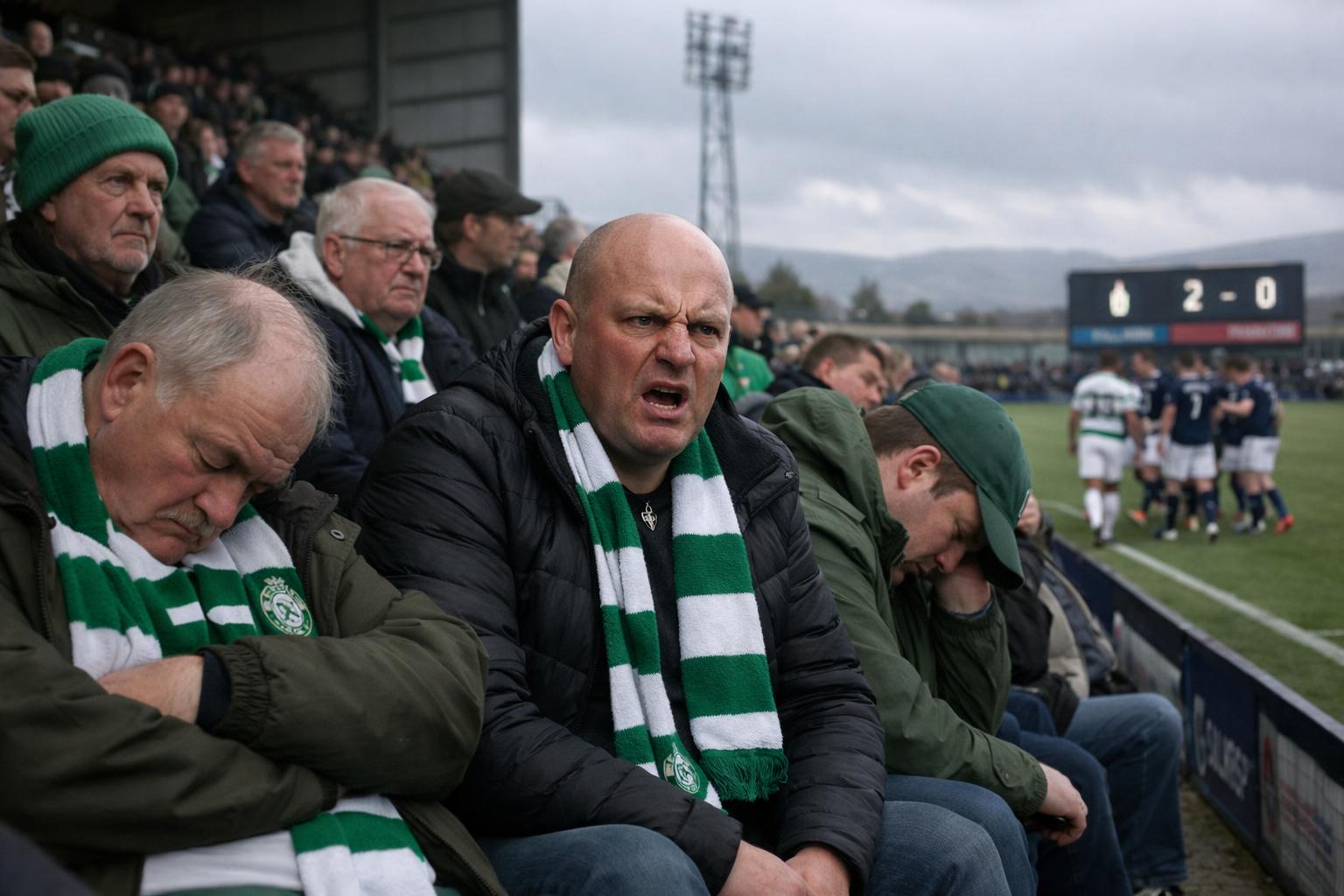
Celtic travelled to Falkirk with the opportunity to move seven points clear at the top of the Premiership. Instead, we delivered one of the most embarrassing performances of the season, losing 2-0 to a side who thoroughly deserved their victory.
There were calls for a statue for Martin O’Neill last season. He had the perfect opportunity to ride off into the sunset after rescuing us from a difficult position and delivering both the league title and Scottish Cup.
His achievements deserved recognition. Nobody should forget what he did for this football club.
Yet an unfit-for-purpose board opted for the easy option, bringing him back rather than using the summer to appoint a modern-day manager who could build on last season’s success and take Celtic forward.
It was short-term thinking when we had the perfect opportunity to plan for the future.
And now we are watching the consequences play out in front of us every week.
A team without an identity
What exactly is the Celtic game plan at the moment?
There is no connection between the players, no obvious structure and far too many occasions when we look like a collection of individuals simply passing the ball and hoping it reaches somebody in a green and white shirt.
We have heard Callum McGregor speak about the team becoming like a basketball match, constantly losing possession and struggling to regain control. Sunday’s performance did little to suggest that the problem has been addressed.
We still look uncertain about how we want to attack, how we want to press and how we want to control matches.
Even O’Neill appears to be struggling to get the best out of the players available to him.
That is not just a problem with one formation or one selection decision. It is a reflection of a club that has failed to establish a clear footballing direction.
Carter-Vickers and the defensive decline
The decision to bring Cameron Carter-Vickers straight back into the starting line-up was always going to attract attention.
His mistake in the third minute gifted Ethan Ross the opportunity to put Falkirk ahead. Ryan Strain’s delivery caused problems, but Carter-Vickers’ attempted intervention only directed the ball into Ross’s path.
It was an awful start, and it immediately put Celtic on the back foot.
There is a bigger question here, though. The time to consider replacing Carter-Vickers was 2025. We have relied heavily on him for years, but injuries and inconsistent performances have made it increasingly difficult to build a settled defence around him.
He has been an excellent servant to Celtic, but we cannot keep pretending that the answer to every defensive problem is simply getting him fit again.
We also have a midfield balance problem. We do not appear to have two players who can comfortably operate alongside McGregor in a midfield three and give him the protection and support he needs.
The recruitment has not addressed that properly, and the performances around our captain are suffering as a result.
The goalkeeper question
Sam Johnstone is another player who will face questions after the defeat.
Celtic cannot afford to have uncertainty in such an important position, particularly when our defensive performances are already causing enough problems.
We need a goalkeeper who commands his area, gives the defence confidence and makes the important saves when called upon.
There were certainly moments on Sunday when questions could be asked of the protection in front of him, but the responsibility for this defeat cannot be placed on one individual.
Falkirk scored twice, Scott Bain made ten saves and we failed to score a single goal. That tells you plenty about the afternoon.
The board must take responsibility
It is becoming increasingly difficult to separate what we are seeing on the pitch from the decisions being made in the boardroom.
We should not be relying on a 74-year-old manager to repeatedly get us out of trouble. O’Neill did something special last season, but that should have been the beginning of a new chapter, not an excuse for the board to avoid making a long-term appointment.
There were opportunities to recruit a manager with a modern footballing philosophy, establish a clear identity and build a squad capable of competing domestically and in Europe.
Instead, we have continued with short-term decisions, questionable recruitment and a lack of planning.
The supporters are entitled to expect more. The chants directed towards the board at Falkirk were another indication of how far the relationship has deteriorated.
This is not simply about one defeat. It is about the direction of the football club.
So, where do we go from here?
Firstly, we need an honest assessment of the managerial situation. O’Neill deserves enormous credit for last season, but sentiment cannot dictate the future of Celtic Football Club.
If the board believes he is still the right man, it needs to explain how this team is going to improve. If it believes a change is necessary, it must have a proper succession plan rather than scrambling around for another appointment.
Secondly, we need to address the squad. A new central midfielder, defensive reinforcements and a clearer balance in attacking positions should be priorities. We cannot keep expecting the same players to solve problems that have been evident for months.
Finally, the board needs to take responsibility. The people running Celtic must provide a credible plan for the future, because supporters are watching a club that appears to have lost its direction.
Martin O’Neill should never be forgotten for what he achieved last season. He helped save our campaign and delivered two trophies when many thought the season was heading for disaster.
But football moves on.
Thanks for your service, Martin. But perhaps it is time to go.
The statue can wait. Right now, Celtic need a footballing structure, a proper plan and a board willing to take this club forward.
Because what we witnessed at Falkirk was not just a bad afternoon. It was another warning sign that the problems at Celtic run much deeper than the manager.
Key Takeaways
- Celtic delivered a lacklustre performance against Falkirk, losing 2-0 and raising questions about the team’s identity and strategy.
- The board’s decision to retain Martin O’Neill instead of appointing a modern manager reflects short-term thinking that hampers progress.
- Defensive issues persist, particularly with Cameron Carter-Vickers, and the team lacks a balanced midfield to support Callum McGregor.
- Goalkeeper Sam Johnstone’s performance raises concerns, as uncertainty in goal contributes to the team’s struggles.
- The board must take responsibility and create a credible plan for the future, addressing managerial and squad needs to restore Celtic’s direction.


The protection calum mc gregor needs is the cover of the bench