Celtic put £236m on the table — will Glasgow finally recognise what supporters bring?
Celtic’s new statement makes a major economic claim. Now the club and council should explain what their partnership will deliver for supporters.
 Phillip Cooney
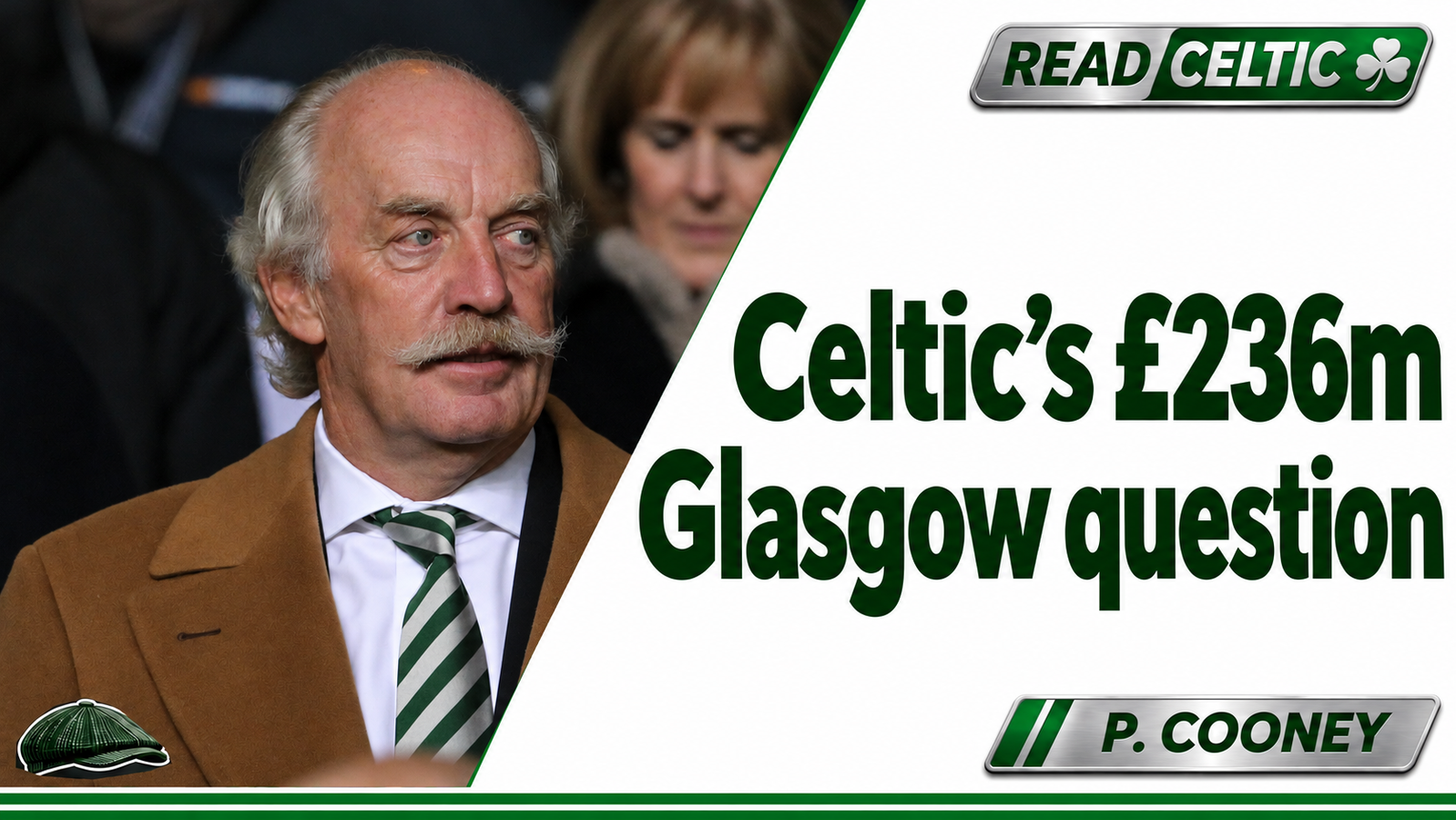
Celtic’s £236m claim puts a serious question to Glasgow: how much recognition should the people who generate that economic activity receive in return?
In a statement published today, 16 November, Celtic welcomed the council’s Destination Glasgow initiative and backed closer cooperation on transport, infrastructure, tourism, planning and licensing.
I welcome that response. However, the most interesting part is what should follow it. Recognition means little unless supporters and the communities around Celtic Park can identify a practical benefit.
What Celtic’s £236m claim actually means
Celtic refers to a Fraser of Allander Institute study covering 2016–17, which measured a £165m contribution to Scotland’s economy, mostly in Glasgow.
The club says: “Linked to inflation, this would now be £236million, though we believe the actual figure to have increased beyond that.”
That distinction matters. Today’s figure updates an older estimate for inflation. It is not the finding of a new study.
It also describes economic activity, rather than money paid directly into council coffers. Nevertheless, Celtic has put a substantial argument into the public discussion: football brings benefits that extend well beyond the stadium.
For me, supporters belong at the centre of that argument. Their journeys, spending and commitment help sustain the attraction the city now wants to promote.
Glasgow’s partnership should serve the people behind the numbers
There is useful background to today’s response.
As STV reported on 14 November, council leader Ricky Bell acknowledged: “the council’s relationship with them has been defined by challenges rather than opportunities”.
That is a significant admission. A council has responsibilities to residents and businesses, including when football creates difficulties. It should also recognise the people who contribute to the city throughout the season.
I want this partnership judged by ordinary experiences: clearer travel information, accessible routes and coordination that makes attending matches easier.
Those are questions for the partnership to address, rather than improvements it has already promised.
Residents around the ground should help shape that discussion too. A successful matchday should work for the neighbourhood as well as the visiting supporter.
Celtic’s board has responsibilities here too
The board cannot simply display a large economic figure and consider its part complete.
It should explain what it wants from this partnership, what Celtic will contribute and how supporters can influence the priorities.
As our recent examination of shareholder answers argued, trust requires commitments people can assess. Our discussion of published strategic goals raised the same need for measurable progress.
That standard applies here.
Celtic has made its economic case. Glasgow has an opportunity to respond constructively. Both should now explain how cooperation will improve life for the people behind the headline figure.
Supporters should be participants in that conversation, with a clear route to challenge proposals and assess results.
If their contribution helps sell Glasgow to the world, their experience deserves a place in the plan.
Key takeaways
- Celtic issued its statement on 16 November, backing the Destination Glasgow initiative.
- The £236m figure is an inflation adjustment of an older study, not a new economic assessment.
- Supporters and local residents should help shape practical priorities.
- Celtic and the council should explain their commitments and report progress.