
Kris Boyd’s Celtic crisis narrative returns to haunt him
Boyd’s reaction to Rangers scraping past Aberdeen offers an interesting contrast to his recent Celtic criticism.
 Phillip Cooney
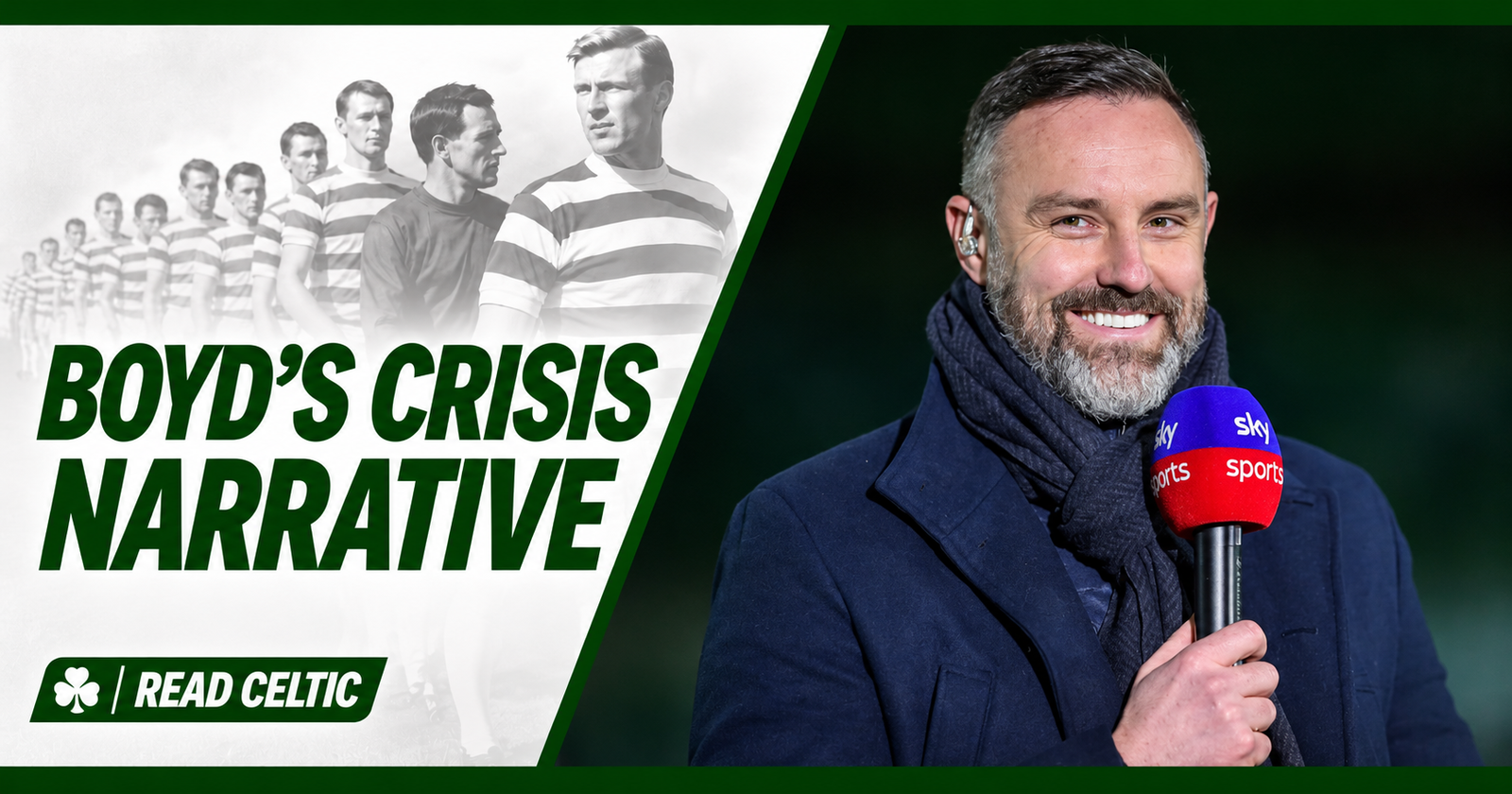
Kris Boyd’s Celtic crisis narrative has taken an interesting twist following the Ibrox club’s narrow 3–2 victory over Aberdeen on Tuesday evening.
It was only a couple of weeks ago that the former Rangers striker suggested Celtic were constantly flirting with crisis, despite sitting at the top of the Scottish Premiership.
Apparently, winning football matches without producing particularly convincing performances was a significant cause for concern.
However, following Tuesday’s encounter at Ibrox, Boyd appears to have discovered that there can also be positives in winning unconvincingly.
Funny how that works, isn’t it?
Kris Boyd’s Celtic crisis narrative deserves scrutiny
Speaking earlier this month, Boyd suggested that Celtic had hit the crisis button following their defeat to Falkirk.
His argument centred on Celtic making difficult work of matches and the opportunity this presented to Derek McInnes and his players.
Now consider what happened at Ibrox on Tuesday.
Aberdeen took the lead before Rangers scored three times during a short second-half spell. However, Aberdeen pulled another goal back and ensured a nervous conclusion.
The Ibrox club collected three points, but the performance raised legitimate questions.
Discussing the match on Sky Sports, Boyd acknowledged Rangers’ vulnerability.
He also said:
“There were a lot of positives in the game.”
So, when Rangers win without entirely convincing, there are positives to take and improvements to make.
When Celtic struggle through matches, the conversation quickly turns towards crisis.
That difference in language deserves examination.
Why should Celtic face different standards?
To be fair, Boyd did criticise Rangers on Tuesday evening.
He recognised their defensive vulnerability and warned that they would need to improve against an impressive Falkirk side this weekend.
However, it is the tone and context of his analysis that I find particularly interesting.
Nobody is suggesting Celtic have performed brilliantly throughout this campaign. Indeed, supporters have repeatedly highlighted our own shortcomings.
Nevertheless, Celtic remain at the top of the table at the time of writing.
Rangers’ recent unbeaten run deserves recognition, but it does not automatically eliminate their weaknesses.
Equally, Celtic’s inconsistent performances do not automatically mean the club is entering another crisis every time a match becomes difficult.
Consistency should not be too much to ask
Boyd is perfectly entitled to offer his opinions, just as Celtic supporters are entitled to challenge them.
However, when a pundit discusses two clubs competing for the same trophy, surely applying similar standards is a reasonable expectation.
If winning difficult matches demonstrates character and resilience for one team, why can it not demonstrate the same qualities for the other?
The Scottish mainstream media regularly provides Celtic supporters with opportunities to examine the language surrounding both Glasgow clubs.
Boyd’s latest comments offer another interesting example.
Perhaps the next time Celtic grind out three points, we will hear a similarly balanced assessment.
I certainly won’t be holding my breath.
Related Read Celtic articles
Key takeaways
- Boyd previously suggested Celtic were under the constant threat of crisis.
- Rangers narrowly defeated Aberdeen 3–2 on Tuesday.
- Boyd acknowledged Rangers’ vulnerability but also highlighted positives.
- The contrasting language raises legitimate questions about consistency in his analysis.