
Celtic Fury as Derek McInnes Ban Is Cut — And He WILL Be in the Dugout for Ibrox Clash
Derek McInnes remains guilty, yet his immediate punishment has been reduced from three matches to two — and he will be back in the Ibrox dugout when Celtic arrive.
 Phillip Cooney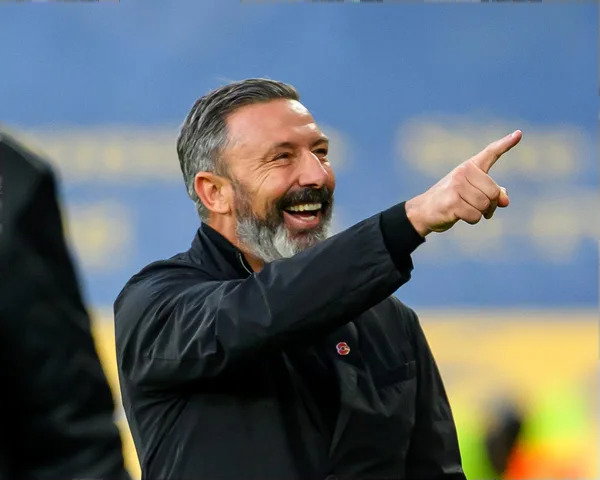
Hearts head coach Derek McInnes during the William Hill Scottish Premiership match between Heart of Midlothian and Dundee at Tynecastle Park, Edinburgh, Scotland on 1 November 2025. ============================================= Use the following embed code to publish this image online: <smartframe-embed customer-id="1ffbae35d432d0d71911ca2a0b209fbb" image-id="prsistDUuY01" style="width: 100%;display: inline-flex;max-width: 2700px;aspect-ratio: 2700/2160"></smartframe-embed> More info: at https://smartframe.io/embedding-support/
There are decisions in Scottish football that provoke disagreement.
Then there are decisions that leave supporters wondering how those running the game can possibly expect to be taken seriously.
The Derek McInnes ruling belongs firmly in the second category.
McInnes was found guilty of breaching Scottish FA Disciplinary Rule 72 following his comments after Celtic’s controversial late penalty against Motherwell last season.
His original punishment was four matches, with three to be served immediately and one suspended.
Now, after an appeal, three immediate matches have somehow become two.
McInnes remains guilty.
The offence has not disappeared.
Yet the meaningful part of his punishment has been reduced.
And, inevitably, he will be back in the dugout when Celtic arrive at Ibrox.
Derek McInnes ban decision demands answers
McInnes described the Motherwell penalty decision as “disgusting” and claimed Hearts were “up against everybody”.
Those were not throwaway remarks.
They were strong, inflammatory comments made publicly by a senior manager about a refereeing decision.
The original disciplinary panel clearly considered them serious enough to warrant three immediate matches away from the technical area.
So what changed?
That is the question the Scottish FA should answer properly.
McInnes’ appeal was only partially upheld. He was not cleared. His four-match sanction remains, but it has been rearranged into two immediate matches and two suspended.
That distinction is important.
If three immediate matches were considered appropriate when the case was originally heard, supporters deserve to know why an appeal suddenly made two sufficient.
A disciplinary system cannot demand respect while producing decisions that appear inconsistent and then offering supporters little meaningful explanation.
Celtic will see McInnes back in the dugout
McInnes will miss the matches against Falkirk and Motherwell.
After that, his immediate punishment is finished.
By the time Celtic walk into Ibrox for the Premier Sports Cup quarter-final, McInnes will be standing in the home technical area.
How wonderfully convenient.
That does not mean anyone should make allegations they cannot prove.
It does mean Celtic supporters are perfectly entitled to be furious at another Scottish football decision that seems to raise more questions than it answers.
The anger should not simply be about McInnes.
It should be about the process.
Scottish football supporters are constantly lectured about respecting officials, respecting disciplinary procedures and respecting the authorities running the game.
Respect works both ways.
Transparency matters.
Consistency matters.
Accountability matters.
If the Scottish FA believes two immediate matches represent the correct punishment, then explain clearly why the original three-match immediate suspension was wrong.
Do not simply announce a reduction and expect everyone to shrug their shoulders.
Because McInnes remains guilty.
The punishment has been softened.
And when Celtic arrive at Ibrox, he will be exactly where he wanted to be.
In the dugout.
KEY TAKEAWAYS
• Derek McInnes remains guilty of breaching Disciplinary Rule 72.
• His original three-match immediate suspension has been reduced to two.
• Two further matches are now suspended.
• McInnes will be back in the Ibrox dugout when Celtic visit.
• The SFA must explain clearly why the immediate punishment was reduced.




You could argue this just proves the SFA favour Celtic by letting McInnes be in the dugout for the game
Are we really enraged ??? !!!
Are we really surprised ??? !!!
To be honest, I am absolutely delighted he will be in the dugout against us rather than being in the stands. The guy has absolutely no idea of how to manage/coach at a decent level.