Celtic’s Dermot Desmond Is a Shareholder, Not the Owner — So Why Does He Wield the Power of One?
From managerial appointments to the Rodgers statement and Celtic's reliance on familiar faces, serious questions remain about the extraordinary influence of the club's principal shareholder.
 Phillip Cooney
There is one fundamental fact about Celtic that has been blurred for so long that even people inside football routinely speak as though it isn’t true.
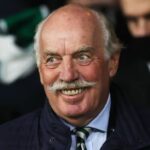
Dermot Desmond does not own Celtic.
He is Celtic’s principal shareholder and a non-executive director.
That distinction matters.
Because for years Desmond has appeared to wield an extraordinary level of influence over some of the biggest football decisions at Celtic.
Even Martin O’Neill has referred to Desmond as “the owner”.
That language tells its own story. The perception of Desmond as Celtic’s owner has become so deeply embedded that the distinction between shareholder and proprietor has almost disappeared.
Sections of the mainstream media have helped create that impression over the years too. Desmond has repeatedly been presented as Celtic’s owner, or effectively the owner, rather than what he actually is.
More recently, however, there has been a noticeable and welcome precision in the terminology.
Sky Sports, for example, now describes Desmond as Celtic’s “principal shareholder” or “major shareholder”.
Good.
Because that is what he is.
And once that fact is established, Celtic supporters are entitled to ask a much bigger question:
Why does so much power appear to lead back to Dermot Desmond?
Follow the managerial decisions
Look at Celtic’s managerial history.
Desmond was influential in Martin O’Neill arriving at Celtic in 2000.
Brendan Rodgers’ original appointment also involved Desmond.
Roy Keane held discussions with him about becoming Celtic manager in 2014.
And this summer, when Celtic were deciding who should permanently lead the club, who was directly involved in talks with Martin O’Neill and Robbie Keane?
Dermot Desmond.
O’Neill subsequently got the job.
These are enormous football decisions.
So where does Celtic’s executive football structure end and the principal shareholder begin?
Then came the Rodgers statement
Perhaps nothing illustrated Desmond’s extraordinary position more dramatically than Brendan Rodgers’ departure in 2025.
After Rodgers resigned, Celtic’s official website carried a remarkable personal statement from Desmond.
He accused Rodgers of behaviour that was “divisive, misleading, and self-serving”.
Forget for a moment whether you agreed with Desmond or Rodgers.
Ask a completely different question.
Why was a principal shareholder using Celtic’s official communications platform to deliver such a personal condemnation of a departing manager?
Could another Celtic shareholder expect access to the club website to publicly attack somebody with whom they had fallen out?
Of course not.
So why was Desmond different?
Celtic’s obsession with familiarity
Then there is the wider culture.
Peter Lawwell spent years as Celtic chief executive and is now chairman. His son Mark was subsequently appointed head of first-team scouting and recruitment before leaving in 2024.
Gordon Strachan managed Celtic.
His son Gavin then spent six years on Celtic’s coaching staff before leaving for West Bromwich Albion in June 2026.
Again, the point is not that somebody is automatically incapable because they have a family connection or previously worked for Celtic.
The point is the recurring culture of familiarity.
Look at the present setup.
Martin O’Neill is back. Shaun Maloney is his assistant. Stephen McManus is involved. Mark Fotheringham is there. Stevie Woods has served Celtic under numerous managers.
Celtic even appointed specialist set-piece coach Ross Grant this summer after Fotheringham knew him and helped bring him to O’Neill’s attention.
Individually, every appointment can be defended.
Collectively, however, supporters are entitled to ask whether Celtic’s world has become too small.
Where is the relentless international search for the best sporting director, recruitment executives, analysts, scouts and coaches available?
Where are the genuinely fresh ideas?
Where is the independent football expertise?
And perhaps most importantly:
Who tells Dermot Desmond no?
Celtic must escape the bubble
This is bigger than one bad transfer window.
It is bigger than one manager.
It is about a culture that appears to have become deeply embedded at Celtic: familiarity, caution, relationships and financial conservatism.
Desmond is entitled to exercise the rights and influence attached to his legitimate positions within Celtic plc.
But supporters are equally entitled to question whether so much practical influence should appear to accumulate around one individual.
Celtic should be driven by clearly defined responsibilities, accountability and elite football expertise.
Not somebody’s contacts book.
Not who somebody knows.
Not who somebody played golf with.
Not somebody’s surname.
And not because someone has “always been around Celtic”.
The club needs to burst this bubble.
Celtic does not belong to Dermot Desmond.
He may be the club’s most influential shareholder.
He may be the man managers themselves refer to as “the owner”.
But that doesn’t make him the owner.
Dermot Desmond is a shareholder, not the owner.
And perhaps Celtic finally needs to start behaving like it.
Key Takeaways
- Dermot Desmond is Celtic’s principal shareholder and a non-executive director, not the sole owner of Celtic.
- Desmond has repeatedly been involved in discussions surrounding major managerial appointments.
- Martin O’Neill himself has referred to Desmond as “the owner”, illustrating how deeply that perception has become embedded.
- Gavin Strachan left Celtic for West Bromwich Albion in June 2026 after six years at the club.
- Celtic’s repeated use of familiar figures raises a legitimate question about whether the club searches widely enough for elite outside football expertise.
- The fundamental issue is governance: where does Desmond’s influence end and Celtic’s executive football structure begin?