
Celtic Fans Have Answered Dermot Desmond – And This Could Get Ugly
The Celtic Fans Collective has fired back after Celtic cut ties with the group – and Dermot Desmond is now directly in the firing line.
 Phillip Cooney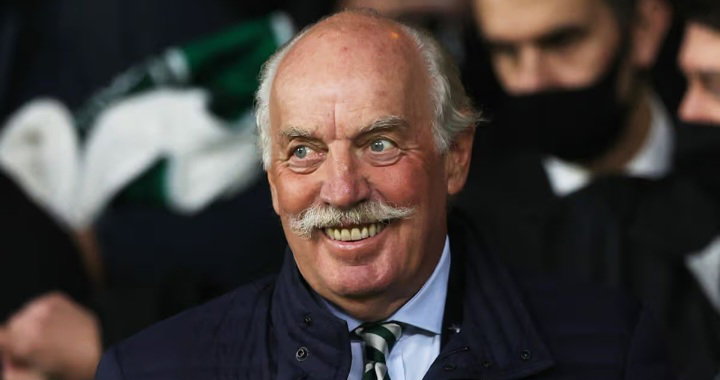
The Celtic Fans Collective has answered Celtic’s extraordinary statement – and if the intention was to silence opposition to Dermot Desmond and the board, it appears to have achieved precisely the opposite.
Celtic announced that it would no longer recognise the Collective as a representative supporters’ body following Saturday’s protest at the Alfred Dunhill Links Championship.
The club also warned that individuals established to have planned, facilitated or participated in the action could be banned indefinitely from Celtic Park.
Now the Collective has responded.
And this increasingly looks less like the end of a dispute and more like the beginning of a much bigger one.
Collective turns the spotlight onto Desmond
The most significant aspect of the response is how directly it targets Celtic’s largest individual shareholder.
The Collective described Desmond as “thin-skinned” and suggested the furious club statement was issued following his personal displeasure at the protest.
That is the accusation Celtic now has to contend with.
Because underneath all the anger surrounding tennis balls at St Andrews sits an uncomfortable question.
Why does Celtic appear capable of communicating with such speed, length and ferocity when Desmond himself becomes the target of supporter anger?
Supporters have spent months demanding answers about recruitment, European failure, the direction of the football operation and the way their club is being run.
Rarely has that produced anything resembling the urgency witnessed on Saturday night.
Celtic may have made this confrontation bigger
Celtic was perfectly entitled to condemn disruption at an unrelated sporting event.
The club was also entitled to make clear that it considered a line to have been crossed.
But there is an enormous difference between condemning an individual protest and effectively declaring war on an organised section of your own support.
That is where this statement risks becoming spectacularly counterproductive.
Ending dialogue with the Collective does not make the supporters represented within it disappear.
Threatening indefinite bans does not answer their questions.
And attacking the credibility of a supporters’ organisation certainly does not address the underlying reasons why relations have deteriorated this badly.
The Collective has accused Celtic of a “disgraceful mischaracterisation” of its organisation and has already promised a more detailed response.
In other words, this isn’t finished.
Celtic supporters deserve dialogue, not another war
This is the part the hierarchy appears repeatedly unable to grasp.
You do not solve a breakdown in trust by shutting down communication with people because their protests have become uncomfortable.
You solve it by addressing what caused the breakdown in the first place.
Celtic supporters are entitled to question Desmond.
They are entitled to question the board.
They are entitled to demand accountability from the people entrusted with running one of the biggest football institutions in Britain.
There can also be legitimate debate among supporters about whether Saturday’s method of protest was appropriate.
But that debate should not obscure the bigger issue.
Celtic’s relationship with a significant section of its support is now in an appalling state.
Saturday night’s statement was supposed to demonstrate authority.
Instead, the Collective’s response suggests Celtic may just have opened another front in a battle that shows absolutely no sign of disappearing.



Desmond out and the rest of his cronies too. This is just the beginning of getting them out and eventually we will get them out.