
Martin O’Neill’s Celtic Sacking Is Becoming Inevitable — The Next Five Fixtures Could Seal His Fate
 Aodhán Ó Conchobhair
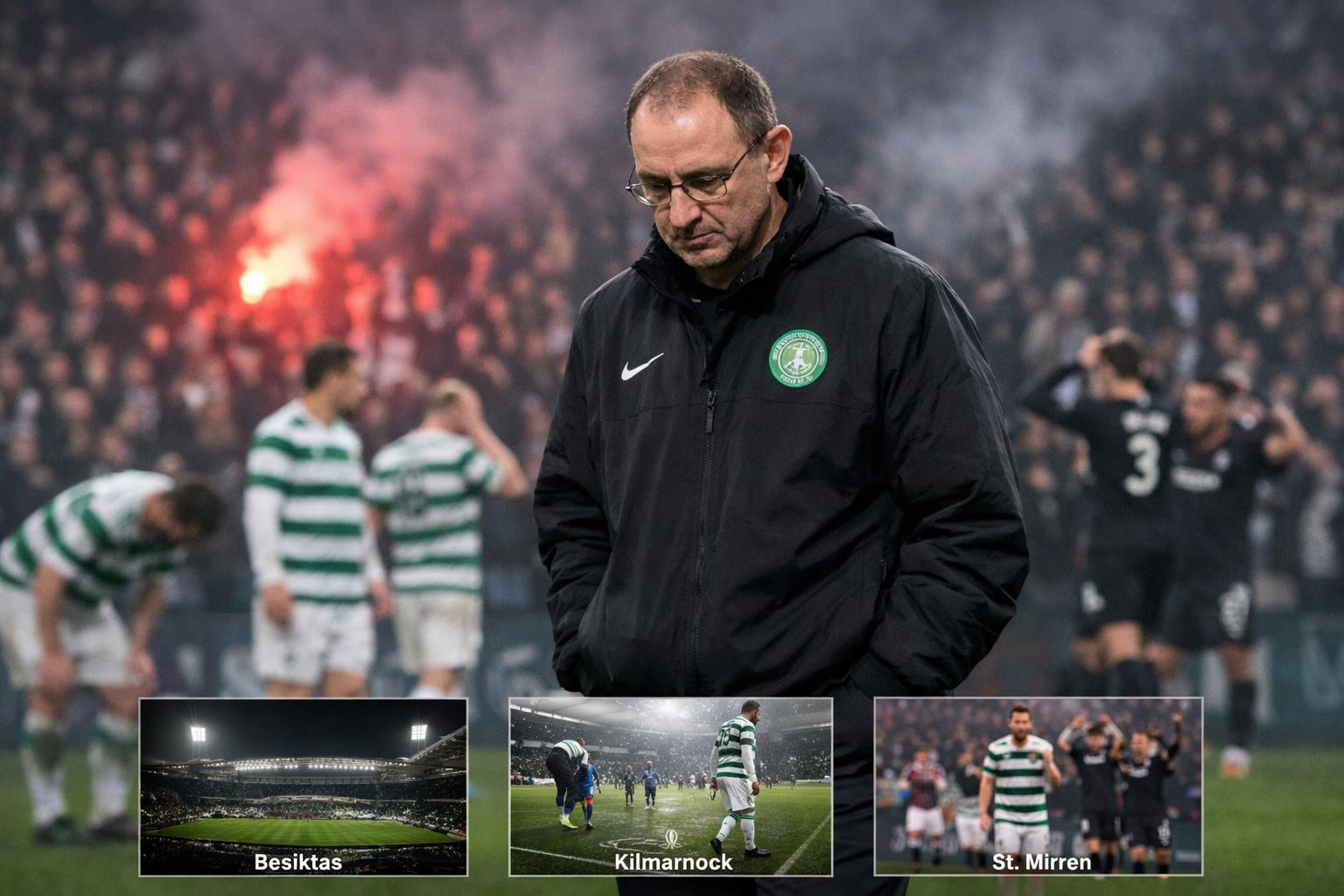
Martin O’Neill’s Celtic Sacking Is Becoming Inevitable — The Next Five Fixtures Could Seal His Fate
There is a growing feeling that Martin O’Neill’s time at Celtic is coming towards an end. Sunday’s defeat to Falkirk has taken the situation to another level, and when you look at the fixtures coming up, it is difficult to see where the manager finds a way out of this.
We have won just three of our last ten matches in all competitions. Six defeats in that period is simply unacceptable for Celtic, regardless of what we achieved last season.
O’Neill has repeatedly pointed towards our position at the top of the Premiership, but that argument is becoming harder to use when the performances are deteriorating and the results are following suit.
The real concern is what happens next.
Beşiktaş – Thursday 5 November
Our first opportunity to respond comes against Beşiktaş at Celtic Park.
Let’s be honest: based on what we witnessed against Falkirk, there is very little confidence that we can produce the performance required to win this game.
We have already lost our opening three Europa League matches, and another defeat would leave us staring at a European campaign that has gone disastrously wrong.
Beşiktaş will arrive knowing that we are vulnerable. If we defend as poorly as we did against Falkirk, we could be in for another extremely difficult evening.
Lose this one and O’Neill’s record becomes three wins in eleven matches. The pressure would be enormous.
Kilmarnock – Sunday 8 November
Next up is Kilmarnock at Celtic Park.
This is a fixture where Celtic should be winning comfortably, but that is precisely the problem. We are no longer approaching these games with any real confidence.
I would expect us to scrape through against Kilmarnock, particularly given the difference in resources and quality between the squads. But even a victory would not necessarily disguise the problems.
We cannot keep relying on individual moments or the opposition being poor enough to allow us to get away with another unconvincing performance.
St Mirren – Saturday 21 November
St Mirren are another opponent we should be beating, but their recent form means we cannot take anything for granted.
They have shown that they can be organised, competitive and difficult to break down. If they arrive at Celtic Park and see the same disjointed side that turned up at Falkirk, they will fancy their chances.
There is a genuine possibility of another damaging result here.
The biggest concern is that we currently look like a team that can be beaten by anyone who gets their organisation right and takes advantage of our mistakes.
Torreense – Thursday 26 November
European football is becoming an embarrassment.
We have already lost our first three Europa League matches, and the upcoming European schedule offers little room for further mistakes.
Torreense are another European opponent who cannot simply be dismissed. If Celtic continue performing at the level we saw against Falkirk, there is no guarantee we will get the result we need.
Another defeat would deepen the sense that this campaign has become a complete write-off.
We cannot keep talking about Celtic’s European ambitions while producing performances that suggest we are nowhere near the required standard.
Hearts – Sunday 29 November
And then comes Hearts at Tynecastle.
This could be the most important domestic fixture of the lot.
Hearts have already shown that they are capable of competing with us in the past, although the 7-1 was a bit of a fluke. Tynecastle is never an easy place to visit. Given what we have seen recently, I would be far from confident about coming away with three points.
We could be looking at a situation where we are dropping points, surrendering ground in the title race and facing serious questions about the manager’s future all by the end of the month
Hearts will know exactly how vulnerable we look.
Where does that leave Martin O’Neill?
The difficult truth is that the board should have been planning for this situation months ago.
O’Neill deserves enormous credit for rescuing our season last year and delivering the league title and Scottish Cup. Nobody should ever take that away from him.
But we should never have reached this position.
There were calls for a statue, and he had the opportunity to leave with his reputation intact after delivering something special. Instead, the board opted for the short-term solution and brought him back without establishing a convincing long-term footballing plan.
Now we are watching the consequences.
There is no clear identity, no consistency, no convincing defensive structure and no evidence that this team is progressing. The manager looks short of answers, while the board continue to leave supporters wondering what the plan actually is.
I cannot see how another five difficult fixtures will improve the situation if nothing changes.
For me, O’Neill’s departure is becoming inevitable.
It is not about disrespecting a manager who has given Celtic so much. It is about recognising that the club needs a fresh direction and a proper plan for the future.
If Celtic lose to Beşiktaş, struggle against Kilmarnock, drop points against St Mirren and suffer another European setback before travelling to Tynecastle, the board will have an increasingly difficult decision to avoid.
We cannot keep waiting for the situation to become even worse before acting.
Martin O’Neill saved us last season. But he cannot be expected to save us every season, and Celtic cannot continue operating without a long-term vision.
The next five fixtures could determine his future.
And if the performances at Falkirk are anything to go by, the clock is ticking.
Key Takeaways
- Celtic has struggled recently, winning only three of their last ten matches, raising questions about manager Martin O’Neill’s future.
- Upcoming fixtures against Beşiktaş and Kilmarnock are crucial; another loss or poor performance could increase pressure on O’Neill.
- Celtic’s European campaign has been disappointing, with three consecutive losses in the Europa League.
- The team’s lack of identity and defensive structure creates uncertainty, making it difficult for O’Neill to find solutions.
- If performances do not improve, the board may need to consider a change in management sooner rather than later.