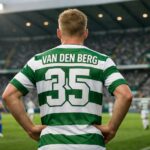
Celtic board blasted over governance vacuum after financial collapse
Former football chief Keith Wyness questions Celtic's leadership as falling revenue, European failures and a £6.6m loss put the board under fresh scrutiny.
 Phillip Cooney
Celtic board governance is facing fresh scrutiny after former Aberdeen chief executive Keith Wyness accused the club’s leadership of presiding over a “governance vacuum”.
His comments, published by Football Insider on Sunday, 22 November, will strike a chord with supporters tired of watching familiar European failures carry an increasingly expensive price.
Wyness turns the spotlight on Celtic’s board
Wyness argued that the figures reflected a management problem, not merely a disappointing season. He also questioned why decisive action had not followed previous warning signs.
That is his opinion, not proof of a governance failure. However, it raises a question Michael Nicholson and the wider board must confront: who takes responsibility when Celtic’s strategy fails to deliver?
The financial figures are stark
Celtic’s published accounts for the year ended 30 June 2026 show revenue falling 22.7%, from £143.6 million to £111 million. A £45.7 million pre-tax profit became a £6.6 million loss.
Meanwhile, operating expenses increased from £117.1 million to £122.1 million. That represents a 4.3% rise, not the 43% Wyness suggested.
Accurate criticism matters, especially when the numbers are serious enough without exaggeration.
Celtic still held £66.4 million in cash at year-end. Therefore, this is not a club approaching financial ruin. Nevertheless, healthy reserves do not automatically demonstrate successful management.
European failure has a financial cost
Celtic attributed much of their revenue decline to playing in the Europa League rather than the Champions League.
Qualification can never be guaranteed. Recruitment, planning and the timing of investment, however, are within Celtic’s control.
Consequently, directors must face scrutiny alongside managers and players.
Dermot Desmond’s considerable influence and Nicholson’s executive leadership should invite serious questions about decision-making and accountability.
Who challenges the strategy? Who measures its success? And what changes when expensive decisions fail?
Celtic’s board must provide answers
With Celtic’s AGM scheduled for 1 December, directors have an opportunity to explain what lessons they have learned.
Will recruitment undergo proper scrutiny? Who evaluates unsuccessful decisions? How will supporters know whether the next strategy is working?
The supporters continue providing dependable financial backing while European income fluctuates.
They deserve a clear plan rather than another collection of familiar assurances.
Celtic’s domestic success and substantial cash reserves deserve recognition. However, neither removes the need for accountability.
The board must explain its decisions, demonstrate meaningful improvements and accept responsibility for the results.
Celtic supporters deserve leadership that matches their ambition, not another explanation for why that ambition has fallen short.
Further reading
- After 120 fans question Celtic in Greenock, who answers for the strategy?
- Celtic ticket income barely fell as revenue crashed
Key takeaways
- Keith Wyness has questioned Celtic’s leadership and governance.
- Revenue fell 22.7%, while Celtic recorded a £6.6 million pre-tax loss.
- Official operating expenses increased by 4.3%, not 43%.
- The December AGM offers an opportunity to demand greater accountability.