
Celtic Won the League — Then Scottish Football Had a Meltdown: Three Months On, Where Are the Apologies?
Three months after Celtic’s extraordinary title triumph over Hearts, the remarkable media fallout, explosive pundit claims and unanswered questions deserve to be revisited.
 Phillip Cooney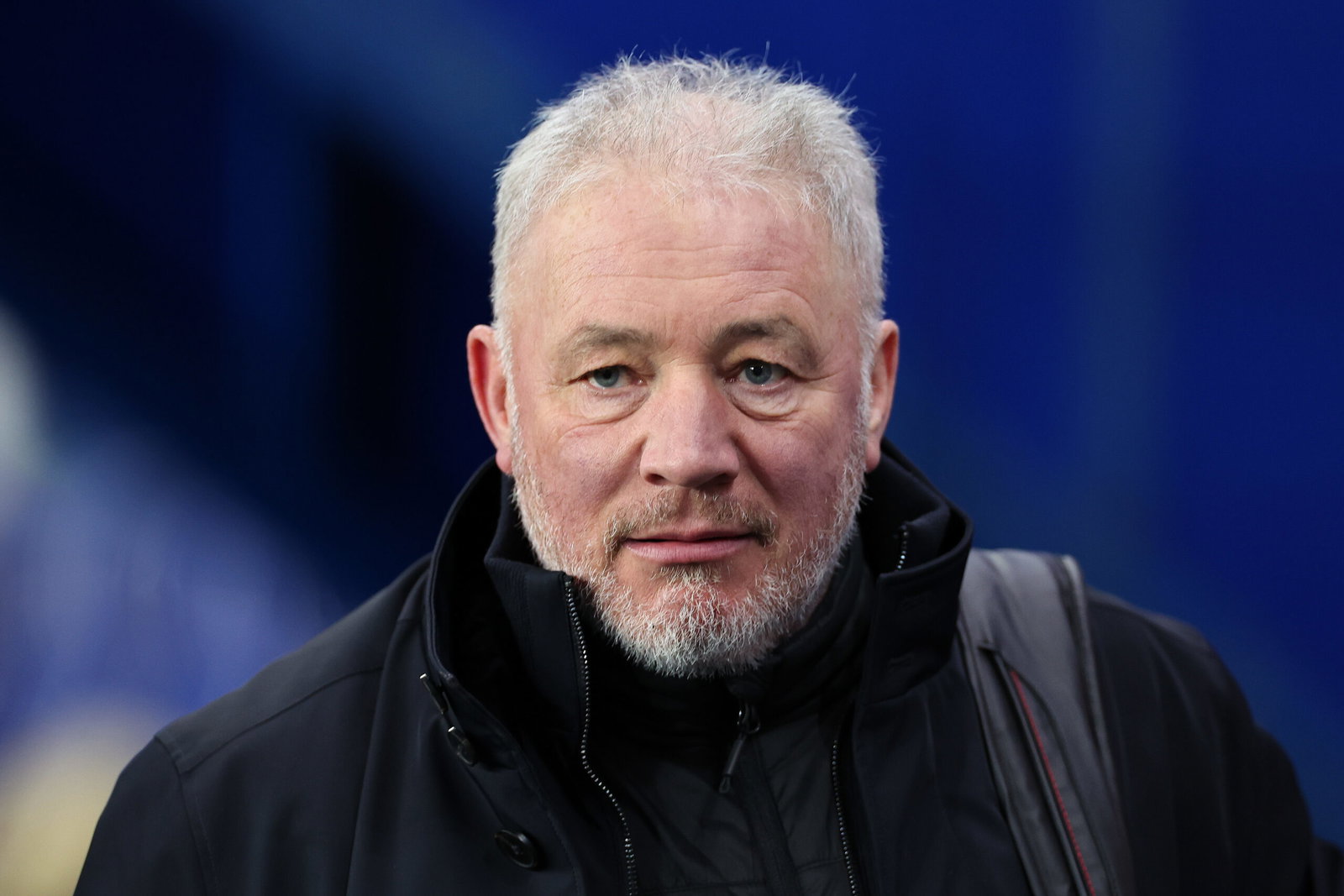
GLASGOW, SCOTLAND - MARCH 13: Ally McCoist during the UEFA Europa League 2024/25 Round of 16 Second Leg match between Rangers FC and Fenerbahce SK at Ibrox Stadium on March 13, 2025 in Glasgow, Scotland. (Photo by Robbie Jay Barratt - AMA/Getty Images)
Three months ago today, Celtic produced one of the most extraordinary title finishes in the club’s history.
They beat Hearts 3-1 at Celtic Park on May 16, completing a remarkable late-season recovery to become Scottish champions.
Hearts arrived needing only a draw. They even took the lead.
Celtic responded magnificently.
Arne Engels equalised before Daizen Maeda struck late and Callum Osmand completed the job in stoppage time.
It should have been remembered as an extraordinary sporting comeback.
Instead, Celtic’s triumph was almost immediately buried beneath allegation, outrage and controversy.
Three months later, that reaction deserves another examination.
Celtic were already in the dock
The atmosphere had been poisoned three days earlier.
Celtic defeated Motherwell 3-2 after Kelechi Iheanacho converted a dramatic stoppage-time penalty following VAR intervention.
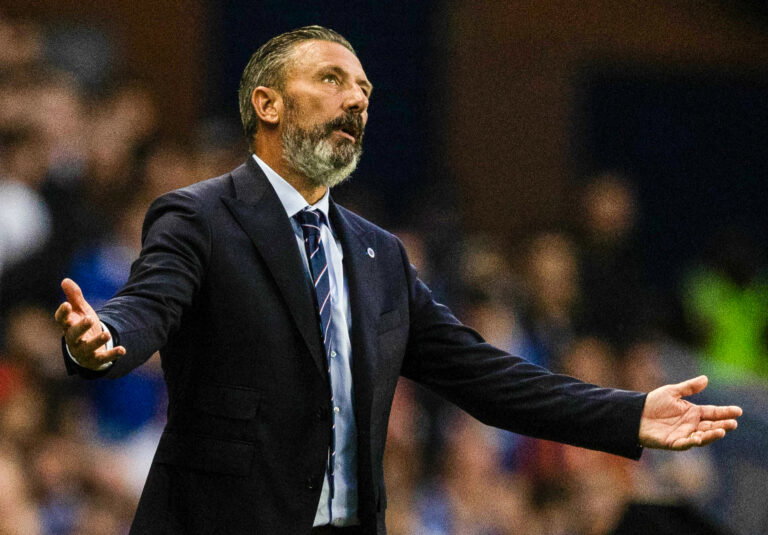
Hearts manager Derek McInnes wasn’t even at Fir Park. His team had been playing Falkirk at Tynecastle.
Yet McInnes immediately turned his attention towards Celtic and the officials.
“I think it’s disgusting.”
He also declared:
“We’re up against it, we’re up against everybody.”
These were remarkable comments from the manager of Celtic’s title rivals concerning officials handling an entirely different match.
The SFA subsequently charged McInnes.
More importantly, the governing body itself condemned what it called a “hysterical media narrative” surrounding Scottish referees.
That description didn’t come from Celtic supporters.
It came from Scottish football’s governing body.
Kris Boyd: trust the officials — until Celtic benefited
Perhaps nothing demonstrates the inconsistency surrounding Celtic’s title run-in better than Kris Boyd’s transformation in ten days.
On May 3, Celtic faced Hibernian at Easter Road.
Joe Newell’s equaliser survived a VAR examination despite serious Celtic complaints over handball.
Boyd himself acknowledged the handball argument.
Yet his message on Sky Sports was straightforward:
“You’ve got to trust the officials.”
Trust the technology. Trust the officials. Accept the process.
That is a perfectly legitimate position — provided the principle survives when Celtic benefit.
Ten days later at Fir Park, it didn’t.
VAR intervened after Sam Nicholson challenged Auston Trusty for a high ball. John Beaton went to the monitor and awarded Celtic a penalty.
Iheanacho scored.
Suddenly, Boyd’s faith in officialdom appeared to evaporate.
“There is no way that has touched his hand.”
He then complained about another “dubious call” going Celtic’s way.
Boyd became so determined to prove the decision wrong that his analysis ventured into the physics of the football’s trajectory.
He argued that if the ball had struck Nicholson’s hand, it should have dropped differently rather than travelling away at speed.
This was quite a departure from “trust the officials.”
There is legitimate debate over whether VAR should have intervened. The subsequent KMI panel itself split 2-1 against the intervention.
But Boyd’s contrasting approaches remain striking.
When Celtic questioned controversial decisions at Easter Road, supporters were effectively told to trust the process.
When that process benefited Celtic ten days later, Boyd invited viewers to question it.
You cannot credibly have it both ways.
Either difficult refereeing decisions deserve measured analysis regardless of who benefits, or every contentious call deserves the same forensic treatment.
May 3, decision hurts Celtic: trust the officials.
May 13, decision helps Celtic: there is “no way” it happened.
Those two positions deserve to be remembered.
McCoist introduces “corruption” and “integrity”
Ally McCoist then took the discussion somewhere considerably darker.
Discussing the Motherwell penalty on talkSPORT, McCoist said he had spoken to six or seven people at the station and claimed five had mentioned:
“Corruption and cheating.”
He also introduced questions about the “integrity” of the competition.
That language was explosive.
However, McCoist attributed it to unnamed colleagues rather than making a direct allegation himself.
That broadcasting technique deserves scrutiny.
If five people at a national broadcaster genuinely suspected corruption, where was their evidence?
Who were they accusing?
What exactly was supposedly corrupt?
Nothing followed.
Instead, inflammatory words entered the national conversation while McCoist retained enough distance to attribute them to somebody else.
The familiar cheeky-chappie persona shouldn’t make those words immune from examination.
Celtic win — and suddenly football becomes secondary
Then came May 16.
Hearts took the lead. Celtic came back.
Maeda put Celtic ahead late before Osmand made it 3-1.
Celtic were champions.
Supporters subsequently entered the pitch.
They shouldn’t have.
Nobody needs to defend that.
Players and officials are entitled to leave a football pitch safely.
However, condemning a pitch invasion and alleging that footballers were physically assaulted are two completely different things.
That distinction disappeared remarkably quickly.
Pat Nevin’s enormous allegation
Pat Nevin told his national radio audience:
“Some Celtic fans are attacking Lawrence Shankland. Two or three have punched him.”
Think about the seriousness of those words.
This wasn’t presented merely as an unconfirmed report.
Nevin appeared to be describing something he believed he had witnessed.
Subsequent evidence did not substantiate that account.
Police Scotland later confirmed it had received no complaints from Hearts concerning alleged assaults on players.
Hearts midfielder Cammy Devlin subsequently said none of the players had been hurt.
Nevin eventually acknowledged that what he believed he had witnessed “didn’t happen” and apologised.
He deserves credit for correcting himself.
But his apology creates another question.
Where are the others?
Halliday and Stevenson amplify the allegations
Ryan Stevenson told BBC Radio Scotland listeners that a player being attacked by supporters was “absolutely outrageous.”
Andy Halliday also discussed reports that Hearts players had been struck.
These were exceptionally serious allegations.
What evidence existed when those statements were being broadcast?
Halliday at least qualified what he said as something they had been “led to believe.”
The wider rush to judgement remained extraordinary.
Three months later, the fundamental question remains:
Who was assaulted?
If evidence exists, produce it.
If it doesn’t, why did such serious allegations travel so quickly through Scottish football’s media?
Tony Bloom takes the allegation onto talkSPORT
Hearts investor Tony Bloom subsequently appeared on talkSPORT with Jim White.
Bloom stated that “one or two” Hearts players had been assaulted.
Again, an allegation was being discussed as though the central fact had already been established.
Where was the immediate demand for evidence?
Martin O’Neill later responded with precisely the caution the original discussion required.
Assault is an extremely serious allegation.
O’Neill said Celtic had examined footage without finding evidence to substantiate the claims.
That should have been the standard from the beginning.
Evidence first. Conclusion second.
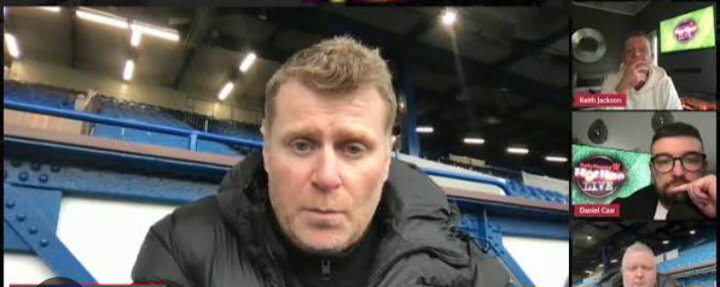
Keith Jackson finds a “missing minute”
As if allegations of assault weren’t enough, another controversy appeared.
Daily Record writer Keith Jackson constructed an article around Celtic Park chaos and a supposed “missing minute of football.”
Really?
Osmand had scored deep into stoppage time.
Safety concerns were obvious and the players were removed.
Hearts subsequently left.
What exactly was supposed to happen?
Bring the Hearts players back from the bus?
Empty Celtic Park?
Restart proceedings for seconds when Hearts required two goals to alter the destination of the championship?
The fascination with a supposed missing minute encapsulated the aftermath.
Instead of celebrating an astonishing championship climax, another controversy had to be found.
Celtic’s achievement became secondary
Tom English, Michael Stewart and numerous other prominent Scottish football voices operated within a fevered broadcasting environment surrounding the finale.
Criticism of supporters entering the pitch was entirely legitimate.
Unproven criminal allegations were another matter.
That distinction matters.
So does the speed with which Celtic’s achievement disappeared beneath controversy.
They had just produced an extraordinary championship recovery.
Celtic won their final seven league matches.
Only victory would do against Hearts.
Then They went behind.
They came back.
They won 3-1.
Yet within hours, the football itself seemed almost secondary.
Celtic’s board failed its supporters
There is another uncomfortable part of this story.
Celtic’s hierarchy should not escape criticism.
The club could easily have condemned the pitch invasion while simultaneously defending supporters against unproven allegations.
Those positions are entirely compatible.
Instead, the response was painfully weak.
Brian Wilson subsequently indicated that silence had effectively been a deliberate strategy.
For supporters watching serious allegations circulate through television, radio and newspapers, that was difficult to accept.
Martin O’Neill often appeared more prepared than the hierarchy to challenge what was being said.
Celtic supporters did something wrong by entering the pitch.
That did not mean an entire support deserved to be associated with alleged assaults without evidence.
The board should have understood the difference.
Three months later — where is the accountability?
Look again at the language surrounding Celtic during those extraordinary days.
“Disgusting.”
“Everybody.”
“Corruption.”
“Cheating.”
“Integrity.”
Players allegedly being “punched.”
Players supposedly being “assaulted.”
Even a supposed “missing minute.”
The noise was extraordinary.
Indeed, the situation became so fevered that the SFA itself condemned a “hysterical media narrative.”
Pat Nevin eventually corrected his allegation.
That deserves acknowledgement.
But three months later, where is the wider reckoning?
Where are broadcasters examining how allegations became apparent facts?
Where are pundits being challenged over their language?
Why haven’t subsequent corrections received anything approaching the prominence afforded to the original allegations?
And where was Celtic’s board when its supporters needed defending against claims that had not been established?
Celtic supporters should not forget the pitch invasion.
It shouldn’t have happened.
They should not pretend there was no goading or confrontation either.
But neither should anyone rewrite history by turning disputed allegations into proven assaults.
Above everything else, something much simpler happened on May 16.
Hearts came to Celtic Park needing a draw to become champions.
Celtic had to win.
They went behind and fought back.
Seven consecutive league victories had brought them to that moment.
Then, with virtually no margin for error, they completed the job.
Celtic won the league.
They won it in magnificent fashion.
Three months later, perhaps the most revealing feature of the aftermath remains just how many people seemed determined to talk about absolutely anything else.
 Eric Knott


They can’t stand us winning, plain and simple. Makes them sick to their core and they cannot admit when they are wrong.
GIRFUT
HH to that Ericbhoy but don’t hold your breath
Yes, the mainstream media was collectively distraught at Celtic having – against the odds – prevailed to become Champions. The individuals highlighted in the article here were especially prominent in their unfounded allegations. Even the national Rags are quite often compelled to acknowledge “honest mistakes” (yep, that ol’ chestnut), albeit usually in tight, discretely positioned, boxes squeezed into wee corners of their pages. Nevertheless, even such grudging ‘retreats’ in Celtic’s case here are conspicuous by their total absence, and reflect a ‘strength in numbers’ approach to the united refusal to say ‘sorry’. Include also Pat Nevin’s pathetic apology that would have reflected a degree of sincerity with the merest token of an explanation as to exactly why he uttered such untruths. The Board still have time and opportunity to challenge all of those disgraceful statements clearly made by the individuals, and demand that they provide explanations. Of course, the longer it goes …… Lest we forget, indeed.