
How Dare Dermot Desmond Lecture Celtic Supporters About The Club’s Reputation?
 Aodhán Ó Conchobhair
Auto Draft
Celtic’s statement following the protest at St Andrews tells you everything about the way this club is being run. The language is strong, and the threats of indefinite bans are there for everyone to see. But what is glaringly absent is any meaningful acknowledgement of why so many supporters have reached the point where they feel the need to protest in the first place.
Let’s get one thing straight. You can disagree with the methods used at St Andrews. You can argue that disrupting another sporting event was the wrong way to make a point. But you cannot seriously expect supporters to sit quietly, accept everything that happens at Celtic and pretend there is no problem.
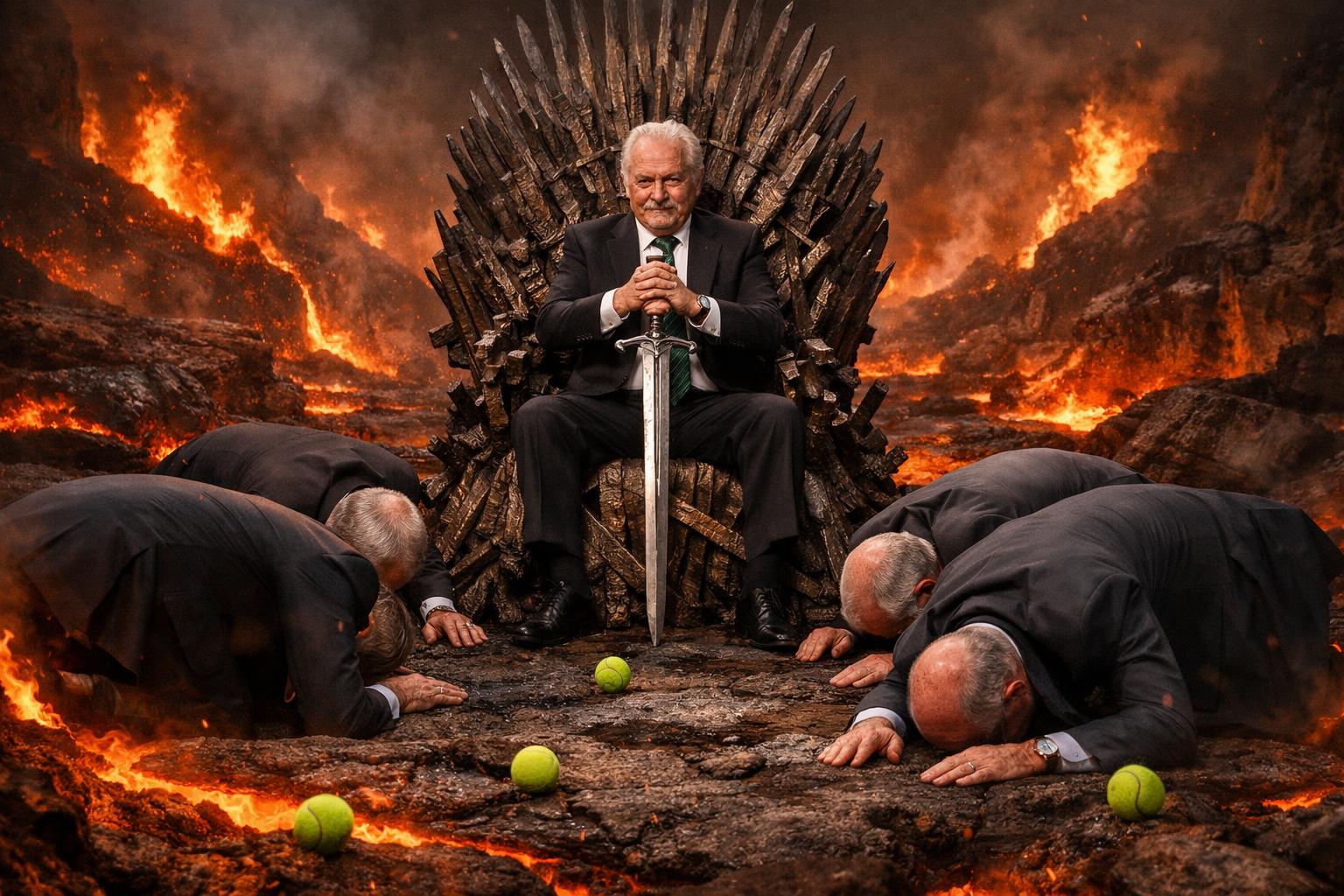
And who exactly does Dermot Desmond think he is to lecture Celtic supporters about the reputation of this football club?
For a man who has remained largely distant from the support, who rarely has to face the questions being asked by ordinary fans, this statement feels like another example of a hierarchy more comfortable issuing demands than answering criticism.
Desmond may be Celtic’s principal shareholder, but that does not make him untouchable. It certainly does not give him the right to behave as though supporters should simply fall into line whenever the board decides it has had enough.
Celtic is not a personal fiefdom. It is a football club built by generations of supporters, and those supporters have every right to question the people running it.
A statement full of condemnation, but where is the accountability?
The club has made its position abundantly clear. It believes the protest crossed a line, says the Celtic Fans Collective can no longer claim to represent the wider support and has threatened indefinite bans for anyone established to have planned, facilitated or participated in the action.
Fine. The club is entitled to explain its position. But if Celtic want to talk about reputation, responsibility and the standards expected of people associated with the club, then the conversation cannot begin and end with a group of supporters.
Where is that same uncompromising language when we discuss poor recruitment? Where is the insistence on accountability when the club repeatedly fails to address obvious weaknesses in the squad? Where is the same determination to protect Celtic’s reputation when European performances leave supporters embarrassed and questions about ambition return yet again?
The board cannot demand accountability from supporters while treating accountability at boardroom level as an inconvenience.
Supporters have watched the same arguments play out over investment, communication and the direction of the club. They have heard assurances about learning lessons and improving engagement. Yet here we are again, with relations deteriorating and another statement being issued in an increasingly hostile atmosphere.
The club says it has engaged with supporters in good faith. Supporters are entitled to judge that claim against their own experiences and the history of those conversations. One meeting does not erase months of frustration, and a statement does not magically rebuild trust.
Desmond wants respect. Where is the respect for supporters?
This is what really gets under the skin. There is an expectation that Celtic supporters must protect the reputation of the club, behave responsibly and accept that decisions are made by those in charge.
Of course supporters have responsibilities. But respect is not a one-way street.
The people who travel across Europe, spend their hard-earned money following Celtic and fill Celtic Park every other week deserve more than to be treated as a problem whenever they challenge the board. They deserve honest answers, meaningful engagement and a clear explanation of the club’s ambitions.
Instead, Desmond has become the symbol of a leadership structure that many supporters believe has become too comfortable, too distant and too unwilling to explain itself.
That is why this has grown beyond football results. It is about power. It is about who gets to question the direction of Celtic and whether those questions are genuinely welcomed or merely tolerated until they become inconvenient.
The board might have the power to issue statements and impose sanctions. It might have the authority to decide which groups it recognises. But it cannot simply decree that the underlying frustration no longer exists.
And it certainly cannot dictate how supporters feel about the people running their club.
This is what happens when trust breaks down
The tennis-ball protest did not appear out of thin air. It came amid an already strained relationship between the board and sections of the support, with concerns about communication, recruitment, ambition and accountability having been raised long before the events at St Andrews.
That does not mean every protest tactic is justified. It does mean that pretending the issue is solely about the behaviour of a few individuals misses the bigger picture.
If the board believes it has done everything necessary to maintain a healthy relationship with the support, then it needs to explain why that relationship has deteriorated so badly. It cannot simply condemn the latest incident and expect the wider argument to disappear.
There is a real danger that the club’s response will make matters worse. Cutting off engagement with an organisation does not resolve the concerns that organisation has been raising. Threatening bans may have consequences for those involved in the protest, but it does nothing by itself to address the wider loss of confidence in the hierarchy.
Celtic should be capable of defending its reputation while still listening to criticism. Those two things are not mutually exclusive.
The club belongs to more than one man
Desmond may hold enormous influence at Celtic, but influence should come with responsibility. If he and the board believe their stewardship is beyond criticism, then they have fundamentally misunderstood what it means to run a club with a support as passionate and invested as ours.
We are not asking for the impossible. We want Celtic to be ambitious, properly prepared, competently run and honest with its supporters. We want decisions that put the long-term interests of the football club first. And when things go wrong, we want the people responsible to explain themselves rather than hide behind statements about reputation.
Nobody is asking Desmond to agree with every supporter. Nobody expects the board to accept every demand. But there is a world of difference between disagreeing with criticism and acting as though the people making it have no right to do so.
That is the attitude that needs to change.
The board can condemn the protest. It can investigate what happened and take proportionate action against those responsible. But it cannot use that incident to silence an entire conversation about the future of Celtic.
Dermot Desmond does not own the loyalty of Celtic supporters. He has not earned the right to lecture them as though they are the problem while refusing to properly confront why the relationship has broken down.
Celtic’s reputation is built on far more than what happens at a golf course. It is built on the football, the supporters, the club’s values and the way it is run. If that reputation is truly non-negotiable, then accountability must apply in the boardroom just as much as it does in the stands.
So, by all means, tell supporters what standards you expect of them.
But be prepared to answer the questions they have been asking you for years.
Celtic is bigger than Dermot Desmond. And no shareholder, no matter how wealthy or influential, should ever be allowed to forget that.
Key Takeaways
- Celtic’s response to protests reflects a dismissive attitude towards supporter concerns, failing to address underlying issues.
- Dermot Desmond, as a principal shareholder, cannot lecture supporters without engaging with their genuine frustrations.
- The club’s threats of bans highlight a power struggle, yet accountability must extend to the board as well.
- Supporters deserve clear communication and respect; a breakdown in trust stems from a lack of genuine dialogue.
- Celtic’s identity relies on its supporters and needs to prioritise their interests alongside maintaining its reputation.
If you think that behaviour deserves respect you are way off the mark..I’m furious. Celtic have every right to ban the collective after this stupid stunt.
Nonsense.