
Celtic Shareholders Can Remove Nicholson – But Desmond Protects a Failed Board
Christopher Trainer and James Keane appear to possess enough Celtic voting power to demand an EGM and place Michael Nicholson’s leadership under formal scrutiny.
 Phillip Cooney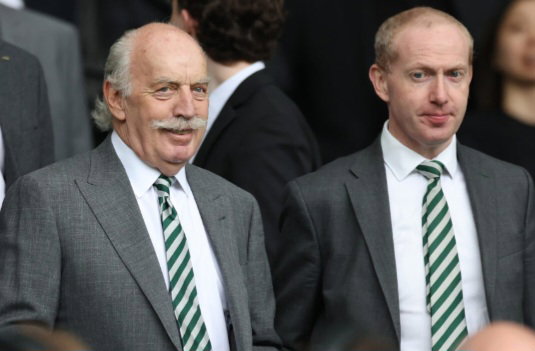
Celtic shareholders have the legal power to force the club’s failed leadership into the open. Christopher Trainer and James Keane could each demand a general meeting without needing approval from Dermot Desmond, Michael Nicholson or the Celtic board.
Trainer owns almost 11 per cent of Celtic plc’s ordinary shares. Meanwhile, Keane controls just over six per cent. Under the Companies Act 2006, any shareholder holding at least five per cent of the voting rights can require the directors to call a general meeting.
Therefore, either man could begin a process that may eventually remove Nicholson from the board.
CELTIC SHAREHOLDERS CAN FORCE A RECKONING
Trainer and Keane cannot remove Nicholson simply by requesting a meeting. However, they can force Celtic’s directors to face formal resolutions and a shareholder vote.
That matters because Nicholson has become the public face of a boardroom defined by failure, secrecy and paralysis.
Celtic have built an extraordinary financial advantage. Yet the board has repeatedly failed to convert that strength into progress on the pitch. Recruitment has moved at a painfully slow pace. Priority positions have remained neglected. Important deals have collapsed while the club appeared incapable of acting decisively.
This is no longer sensible caution. It is chronic mismanagement.
The Celtic board appears more comfortable protecting money than building a successful football team. Executives continue to praise financial stability while supporters watch opportunities disappear.
Celtic are not a bank. Cash reserves should help strengthen the squad, improve recruitment and prepare the club for European competition.
Instead, the board has allowed Celtic to stagnate.
NICHOLSON MUST ANSWER FOR THE FAILURES
A general meeting could place Nicholson’s record under direct scrutiny.
Shareholders could question Celtic’s repeated transfer failures, poor communication, lack of strategic ambition and inability to use the club’s financial power properly.
A resolution could also seek Nicholson’s removal as a director. That would require more than 50 per cent of the votes cast.
Trainer and Keane hold around 17 per cent between them. They could force the meeting, but they would need support from smaller shareholders, supporter groups and major institutional investors to win the vote.
That makes organisation vital.
Thousands of Celtic supporters own shares, but their voting strength remains fragmented. Many fail to vote or appoint a proxy. A serious campaign could turn that scattered ownership into meaningful pressure.
DESMOND PROTECTS THE FAILED CELTIC BOARD
Dermot Desmond remains the greatest obstacle to real change.
He controls approximately 34 per cent of Celtic’s ordinary shares. Although he does not own the club outright, his enormous voting bloc gives him exceptional influence.
Desmond has protected a boardroom culture built around secrecy, complacency and self-preservation. Under his influence, Celtic have become frightened of ambition despite possessing resources that most clubs could only dream about.
Nicholson may manage the daily operation, but Desmond protects the structure surrounding him.
The Celtic board has repeatedly mistaken fear for prudence, silence for leadership and money in the bank for success.
Celtic should be moving forward. Instead, the club remains trapped under directors who appear more interested in protecting their positions than delivering meaningful progress.
Trainer and Keane possess the power to begin a reckoning. They could force the board to defend its record and allow shareholders to vote on Celtic’s future.
Nicholson should be held accountable. However, removing him will not solve everything while Desmond continues to protect the same failed philosophy.
Until Desmond’s influence is challenged, Celtic will remain controlled by a board that has squandered opportunity, ignored supporters and reduced ambition to little more than an empty slogan.
 Bhoycie
 Eric Knott


Well if this can happen why has it not happened a long time ago.
I’ll vote to get rid of him with my small share holdings